 Kendric adan
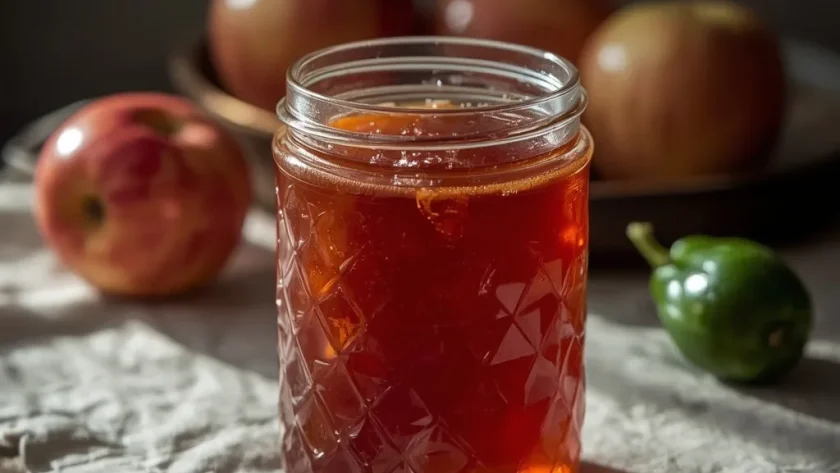
 Apple Pepper Jelly is a small-batch stovetop preserve that balances the bright sweetness of fresh Granny Smith apples with the subtle warmth of jalapeño and red bell pepper. The result is a soft, spreadable jelly with a gentle heat that lingers just enough to keep things interesting.
This recipe takes about 40 minutes from start to finish and is beginner-friendly. The only mildly tricky moment is getting the timing right on the rolling boil — but a timer takes care of that.
Why You’ll Love This Recipe
- Quick batch — Makes just four servings, so you can try it without committing to a full canning setup.
- Balanced flavor — The apple keeps the sweetness front and center while the peppers add a mild, warming kick that never overpowers.
- No special skills required — If you can dice fruit and stir a pot, you can make this jelly on the first try.
- Versatile at the table — Works as a party appetizer with cream cheese and crackers, or as a glaze for pork and chicken.
What Makes This Recipe Special
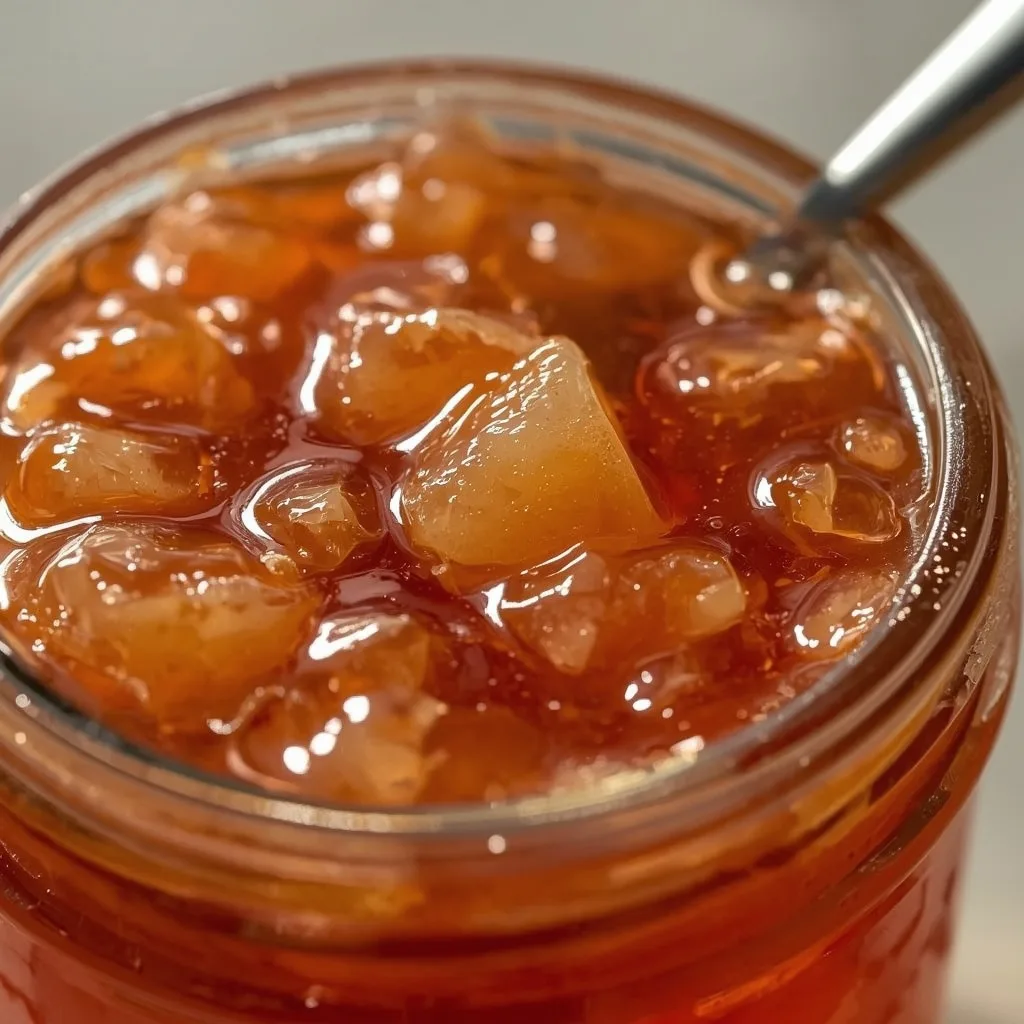
This jelly relies on whole fruit instead of juice, giving it a thicker texture and a fresher taste. The Granny Smith apple provides natural pectin that helps the jelly set without relying entirely on commercial pectin. You get a bright, clean apple flavor with a soft gel that doesn’t turn rubbery, plus a gentle pepper warmth that builds slowly.
Ingredients You’ll Need
Everything here is easy to find at any grocery store. The amounts are already scaled for a small batch, so there is no waste.
Fruit and Peppers
- 1 large Granny Smith apple (about 8 oz / 225 g), peeled, cored, finely diced — Provides the base flavor and natural pectin. Granny Smith holds its shape during cooking and won’t turn mushy too quickly.
- 1/2 medium red bell pepper (about 2 oz / 55 g), seeded, finely diced — Adds sweetness and a mild vegetal note. The red color blends well with the apple without making the jelly look muddy.
- 1/2 jalapeño pepper, seeded, minced (adjust for heat preference) — Brings the heat. Removing the seeds keeps it gentle; leave a few seeds in for a spicier finish.
Sweeteners and Thickeners
- 3/4 cup (150 g) granulated sugar — Standard white sugar works best. Do not substitute with honey or syrup, as that changes the gel structure.
- 1 tablespoon (8 g) powdered pectin (such as Sure-Jell) — Gives a reliable set. Be sure to use the powdered form, not liquid pectin.
- 1 tablespoon (15 ml) fresh lemon juice — Adds acidity to help the pectin activate and brightens the apple flavor.
Finishing Touches
- Pinch of kosher salt — Balances sweetness and deepens the overall flavor.
- 1/2 tablespoon (7 g) unsalted butter — Cuts down the foam that forms during boiling, giving you a clear jelly.
Equipment Needed
- Small nonreactive saucepan (stainless steel or enameled) — Reactivity can discolor the jelly and alter the taste. Avoid aluminum or uncoated cast iron.
- Wooden spoon or heatproof silicone spatula — For stirring constantly without scratching the pan.
- Metal spoon for testing sheeting — A cold metal spoon helps you check if the jelly is ready.
- Sterilized 4-ounce (125 ml) jars with lids and bands (optional) — Only needed if you plan to water-bath can for long-term storage. Otherwise, a simple heatproof container works.
- Tongs or jar lifter for canning (if processing) — Keeps your hands safe when handling hot jars.
Instructions to Prepare Apple Pepper Jelly
This process moves quickly once the fruit softens, so have all ingredients measured and ready before you start.
- Cook the fruit mixture — In a small nonreactive saucepan, combine the diced apple, diced red bell pepper, minced jalapeño, lemon juice, and a pinch of kosher salt. Add 2 tablespoons (30 ml) water to prevent scorching. Bring to a gentle simmer over medium heat, then reduce heat to medium-low and cook for 8-10 minutes, until the apple is very soft and the peppers have softened. Stir occasionally.
- Add the pectin — Sprinkle the powdered pectin evenly over the softened fruit mixture and stir vigorously until no clumps remain. Bring to a full rolling boil over medium-high heat, stirring constantly. A full rolling boil cannot be stirred down.
- Add the sugar — Once at a full rolling boil, pour in all the granulated sugar at once while stirring continuously. Keep stirring over medium-high heat until the sugar dissolves completely and the mixture returns to a full rolling boil. Boil hard for exactly 1 minute, timing from when the boil resumes after adding sugar.
- Finish and skim foam — Remove the saucepan from heat. Add the unsalted butter and stir until melted; this helps break up any foam. Let the jelly rest for 1-2 minutes, then skim off any remaining foam with a metal spoon. The foam is edible but will cloud the jelly.
- Test for doneness — Place a small metal spoon in the freezer for 30 seconds, dip it into the jelly, and lift it out. The jelly should sheet off in a cohesive sheet rather than dripping like syrup. If it drips individually, return the jelly to a boil for another 30 seconds and retest.
- Fill jars or container — If processing, ladle hot jelly into sterilized 4-ounce jars, leaving 1/4 inch headspace. Wipe rims clean, seal with lids and bands, and process in a boiling water bath for 10 minutes (adjust for altitude). For immediate use, pour into a heatproof container and let cool to room temperature, then refrigerate.
- Let it set — Let the jelly set undisturbed at room temperature for 12-24 hours. Do not move or tilt the jars during this time. The pectin continues to set as the jelly cools, creating a firm but spreadable gel.
- Check seals and store — For processed jars, press the center of the lid; it should not flex. For unprocessed jelly, seal the container tightly and refrigerate. Refrigerated jelly keeps up to 3 weeks; processed jars store in a cool dark place up to 1 year.
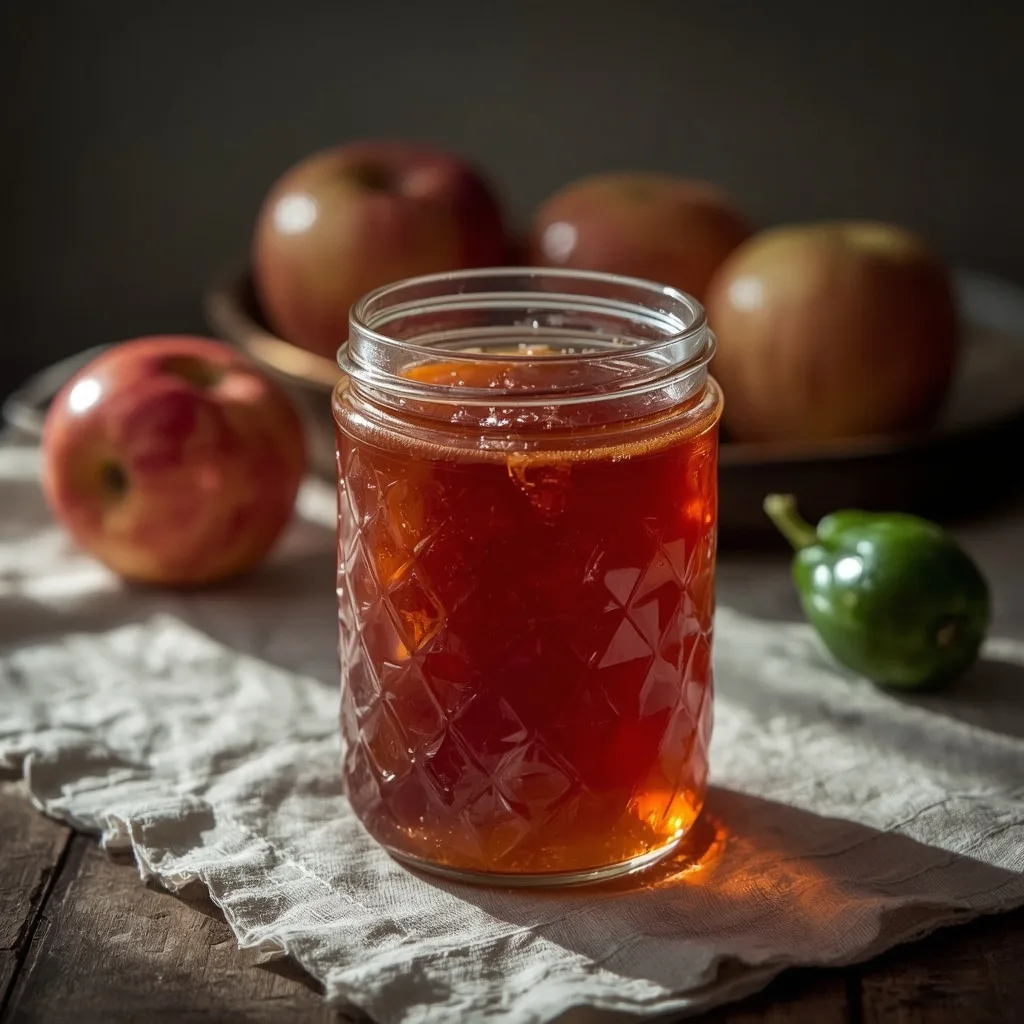
Expert Tips for a Standout Apple Pepper Jelly
- Dice the fruit uniformly — Pieces that are all about 1/4 inch or smaller cook evenly and release pectin at the same rate. Larger chunks may not soften fully within the 8-10 minutes.
- Use a timer for the boil — The 1-minute rolling boil after adding sugar is critical. Even 15 seconds extra can make the jelly too firm, while too little time leaves it runny.
- Don’t skip the butter — The butter reduces foam significantly, giving a clearer final jelly. Foam is edible but creates an unappealing cloudy appearance.
- Test the set early — The sheeting test is more reliable than guessing. If you are unsure, chill a saucer in the freezer, drop a spoonful of jelly on it, and see if it wrinkles when pushed with a finger.
- Let the jelly rest untouched — Moving the jars during the 12-24 hour setting period can break the gel network. Place them on a stable surface and walk away.
- Adjust heat to your liking — For a milder jelly, omit the jalapeño entirely. For more heat, include some seeds or swap the jalapeño for a serrano pepper.
- Work with a clean spoon for each test — Dipping the same spoon multiple times can introduce bits of fruit that interfere with a clear sheeting test.
Common Mistakes to Avoid
- Undercooking the fruit — If the apple pieces are not soft after 10 minutes, the pectin won’t release fully, and the jelly may not set. Cook a few extra minutes if needed.
- Adding sugar too early — Sugar must be added only after the pectin is dissolved and the mixture is at a full rolling boil. Adding it earlier can interfere with pectin activation.
- Stirring too little during the boil — The mixture can scorch quickly on high heat. Stir constantly, especially around the edges and bottom of the pan.
- Skipping the foam removal — Foam traps air bubbles that cloud the jelly. Take the extra minute to skim it off with a metal spoon.
- Not sterilizing jars for long-term storage — If you plan to keep the jelly beyond a few weeks, skip sterilization and you risk spoilage. Boil jars and lids for 10 minutes before filling.
- Moving jars before the gel sets — Tipping or shaking the jars within the first 12 hours can prevent the pectin from forming a proper network, leaving you with syrup instead of jelly.
Variations & Ways to Customize Apple Pepper Jelly
- Spicy jalapeño version — Keep the seeds from half the jalapeño or use a whole jalapeño with seeds for a noticeably hot jelly. A serrano pepper adds even more heat.
- Smoky twist — Replace the red bell pepper with roasted red bell pepper (skinned and diced). The smoky depth pairs beautifully with the sweet apple.
- Apple-pear blend — Substitute half the Granny Smith apple with a firm ripe pear (like Bosc). This softens the tartness and adds a floral note.
- Herb-infused version — Add 1 tablespoon of finely chopped fresh rosemary or thyme to the fruit mixture during the simmer. Strain the herbs out before adding pectin for a subtle herbaceous touch.
- Mulled spice variation — Tuck a cinnamon stick and 2 whole cloves into the fruit while it simmers. Remove them before adding pectin. The spice flavor is subtle but festive.
- Honey-sweetened alternative — Replace the granulated sugar with 1/2 cup (120 ml) honey plus 1/4 cup (50 g) sugar to maintain the pectin balance. Note that honey can darken the jelly and change the set slightly — use a mild honey like clover.
What to Serve With Apple Pepper Jelly
This jelly shines as a condiment for both savory and sweet bites. Here are some of my favorite pairings.
- Cream cheese and crackers — The classic combination. Spread a generous layer of cream cheese on buttery crackers, then top with the jelly. The cool cream cheese balances the sweet heat perfectly.
- Roasted pork tenderloin — Brush the jelly over the pork during the last 5 minutes of roasting. The sugars caramelize into a glossy glaze that complements the savory meat.
- Grilled chicken skewers — Use the jelly as a finishing glaze on chicken thighs or breast pieces. A squeeze of lime over the top brightens everything.
- Brie or goat cheese crostini — Top toasted baguette slices with soft brie, a dollop of jelly, and a sprinkle of toasted walnuts. The creamy, tangy cheese and sweet-spicy jelly are a perfect match.
- Sandwich spread — Swap mayonnaise for this jelly on a turkey and Swiss sandwich. It adds moisture and a punch of flavor without being overpowering.
- Charcuterie board — A small bowl of this jelly alongside aged cheddar, salami, grapes, and crusty bread makes an impressive addition to any board.
Make-Ahead Instructions
- Prep the fruit mixture one day ahead — Dice the apple, bell pepper, and jalapeño, combine them in an airtight container, and refrigerate. Toss with the lemon juice to prevent the apple from browning. Cook the next day directly from the fridge, adding 1-2 extra minutes to the simmer.
- Cook the jelly up to 24 hours before serving — For short-term use, prepare the jelly, pour it into a heatproof container, let it cool, and refrigerate. It will set within 12-24 hours and is ready to serve the next day.
- Can for long-term storage — Process the jelly in a boiling water bath for 10 minutes (adjust for altitude). Sealed jars keep in a cool, dark place for up to 1 year. This is the best method if you want to give jelly as gifts or stock up.
- Freeze for up to 6 months — Pour the cooled, unfilled jelly into freezer-safe containers, leaving 1/2 inch headspace. Thaw overnight in the refrigerator before using. The texture may be slightly softer after freezing, but the flavor remains bright.
Storage and Reheating
Storage
- Refrigerator (unprocessed jelly) — Pour into a clean heatproof container, let cool to room temperature, then seal tightly. Keeps for up to 3 weeks. Label with the date.
- Water-bath processed jars — Store sealed jars in a cool, dark place away from direct sunlight and temperature fluctuations. Properly processed jars last up to 1 year. Check the seal before opening.
- Once opened — Refrigerate after opening and use within 1 month. The jelly may develop a slight sugar crust on top over time; simply stir it back in.
Reheating
- Stovetop (gentle melting) — If the jelly crystallizes or becomes too firm, spoon out the desired amount into a small saucepan. Warm over low heat for 1-2 minutes, stirring until it loosens. Do not boil, as this breaks the gel.
- Microwave (quick) — Place the jelly in a microwave-safe bowl and heat in 10-second intervals at 50% power, stirring in between. Usually 20-30 seconds is enough to soften it to a spreadable consistency.
- Room temperature (no heat) — For cold jelly straight from the fridge, simply let it sit at room temperature for about 10 minutes. It will soften naturally without any risk of overheating.
- As a glaze (oven method) — Brush the cold jelly directly onto meat or vegetables before roasting. The jelly melts and caramelizes as the food cooks, so no separate reheating is needed.
Nutritional Breakdown (Per Serving)
Based on 1 serving = 1/4 of the recipe (about 2 ounces or 60 g).
- Calories: 192
- Protein: 0.3g
- Fat: 1.6g
- Carbohydrates: around 45g
- Fiber: 1.4g
- Sugar: close to 43g
- Sodium: 1mg
- Cholesterol: about 4mg
Frequently Asked Questions
Can I freeze Apple Pepper Jelly?
Yes. Pour cooled jelly into freezer-safe containers, leaving headspace, and freeze for up to 6 months. Thaw in the refrigerator overnight before using. The texture may be slightly softer after thawing.
How long does Apple Pepper Jelly last in the fridge?
Unprocessed jelly lasts up to 3 weeks in the refrigerator. Once the jar is opened, use the jelly within 1 month for best flavor and texture.
Can I use green bell pepper instead of red?
You can, but the flavor will be grassier and less sweet, and the color will be less appealing. Red bell pepper gives a warmer, sweeter note that balances the heat of the jalapeño.
My jelly didn’t set. What went wrong?
Most often, the mixture didn’t reach a full rolling boil, or the boil time was too short. Make sure you boil hard for exactly 1 minute after the sugar is added. You can re-cook the jelly: return it to the saucepan, bring it to a boil, add 1 teaspoon of pectin, and boil for 30 seconds, then retest.
Can I reduce the sugar?
Not with this method. The sugar is needed for the pectin to gel properly. Using a no-sugar-needed pectin would require adjusting the recipe entirely. Stick with the amounts listed for the best set.
Is this jelly very spicy?
No. With the seeds removed, the jalapeño adds just a mild warmth. If you are heat-sensitive, you can omit the jalapeño altogether, and the jelly will be purely sweet with a hint of red bell pepper.
Final Words
This Apple Pepper Jelly is one of those recipes that surprises you with how easy it is and how good it tastes. The balance of sweet apple and gentle heat works in so many ways — on a cheese board, as a glaze, or simply on toast. Give this small-batch version a try, and you will see why it earns a permanent spot in your refrigerator.
Similar Recipes
PrintApple Pepper Jelly
A sweet and spicy small-batch jelly made with fresh Granny Smith apples and red bell pepper, with a subtle heat from jalapeño. The jelly sets to a soft, spreadable consistency with bright apple flavor and a gentle pepper warmth, perfect slathered on crackers with cream cheese.
- Prep Time: 15
- Cook Time: 25
- Total Time: 40
- Yield: 4 1x
- Category: Snack
- Method: Stovetop
- Cuisine: American
Ingredients
- 1 large Granny Smith apple (about 8 oz / 225 g), peeled, cored, finely diced
- 1/2 medium red bell pepper (about 2 oz / 55 g), seeded, finely diced
- 1/2 jalapeño pepper, seeded, minced (adjust for heat preference)
- 3/4 cup (150 g) granulated sugar
- 1 tablespoon (8 g) powdered pectin (such as Sure-Jell)
- 1 tablespoon (15 ml) fresh lemon juice
- Pinch of kosher salt
- 1/2 tablespoon (7 g) unsalted butter (to reduce foam)
Instructions
- In a small nonreactive saucepan (stainless steel or enameled), combine the diced apple, diced red bell pepper, minced jalapeño, lemon juice, and a pinch of kosher salt. Add 2 tablespoons (30 ml) water to prevent scorching. Bring the mixture to a gentle simmer over medium heat, stirring occasionally. Reduce heat to medium-low and cook for 8-10 minutes, until the apple is very soft and the peppers have softened; the fruit will release its natural pectin.
- Sprinkle the powdered pectin evenly over the softened fruit mixture and stir vigorously to dissolve. There should be no visible clumps. Bring the mixture to a full rolling boil over medium-high heat, stirring constantly to prevent sticking. A full rolling boil is one that cannot be stirred down.
- Once the mixture is at a full rolling boil, add the granulated sugar all at once, stirring continuously. Continue to stir over medium-high heat until the sugar is completely dissolved and the mixture returns to a full rolling boil. Boil hard for exactly 1 minute, timing from when the boil resumes after adding sugar.
- Remove the saucepan from heat. Add the unsalted butter and stir until melted; the butter helps break up any foam that forms. Let the jelly rest for 1-2 minutes, then skim off any remaining foam from the surface with a metal spoon. The foam is edible but will make the jelly cloudy.
- To test for doneness, place a small metal spoon in the freezer for 30 seconds, then dip it into the jelly and lift out. The jelly should sheet off the spoon in a cohesive sheet rather than dripping like syrup. If it drips individually, return the jelly to a boil for another 30 seconds and retest.
- If desired, ladle the hot jelly into sterilized 4-ounce (125 ml) jars, leaving 1/4 inch headspace. Wipe the rims clean, seal with lids and bands, and process in a boiling water bath for 10 minutes (adjust for altitude). For immediate use, pour the jelly into a heatproof container and let cool to room temperature, then refrigerate.
- Let the jelly set undisturbed at room temperature for 12-24 hours. Do not move or tilt the jars during this time. The pectin will continue to set as the jelly cools, creating a firm but spreadable gel.
- Once set, check the seal on processed jars by pressing the center of the lid; it should not flex. For unprocessed jelly, ensure the container is tightly sealed before refrigerating. Store in the refrigerator for up to 3 weeks or in a cool dark place for processed jars up to 1 year.
Notes
For a milder jelly, omit the jalapeño. For more heat, include some seeds or use a serrano pepper. This jelly pairs beautifully with cream cheese and crackers, or as a glaze for roasted pork or chicken. Stored in the refrigerator, the jelly keeps for up to 3 weeks. For long-term storage, process in a boiling water bath (10 minutes for half-pint jars at sea level); sealed jars keep for up to 1 year in a cool, dark place. Once opened, refrigerate and use within 1 month. To serve cold, simply spoon out desired amount; the jelly will soften at room temperature in about 10 minutes.
Nutrition
- Calories: 192
- Sugar: 43g
- Sodium: 1mg
- Saturated Fat: 0.9g
- Carbohydrates: 45g
- Fiber: 1.4g
- Protein: 0.3g
- Cholesterol: 4mg
Keywords: apple pepper jelly, homemade jelly, spicy jelly, sweet and spicy condiment, small batch jelly, stovetop jelly, apple jelly with peppers, jalapeño apple jelly, condiment recipe, holiday appetizer, cheese board jelly