 Kendric adan
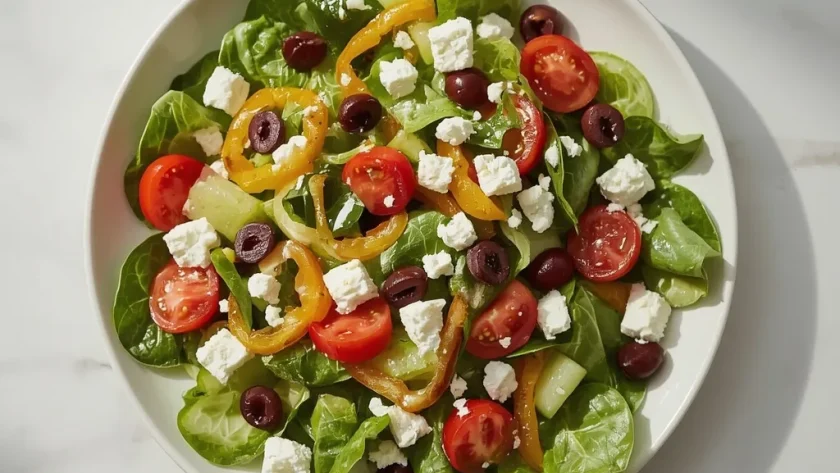
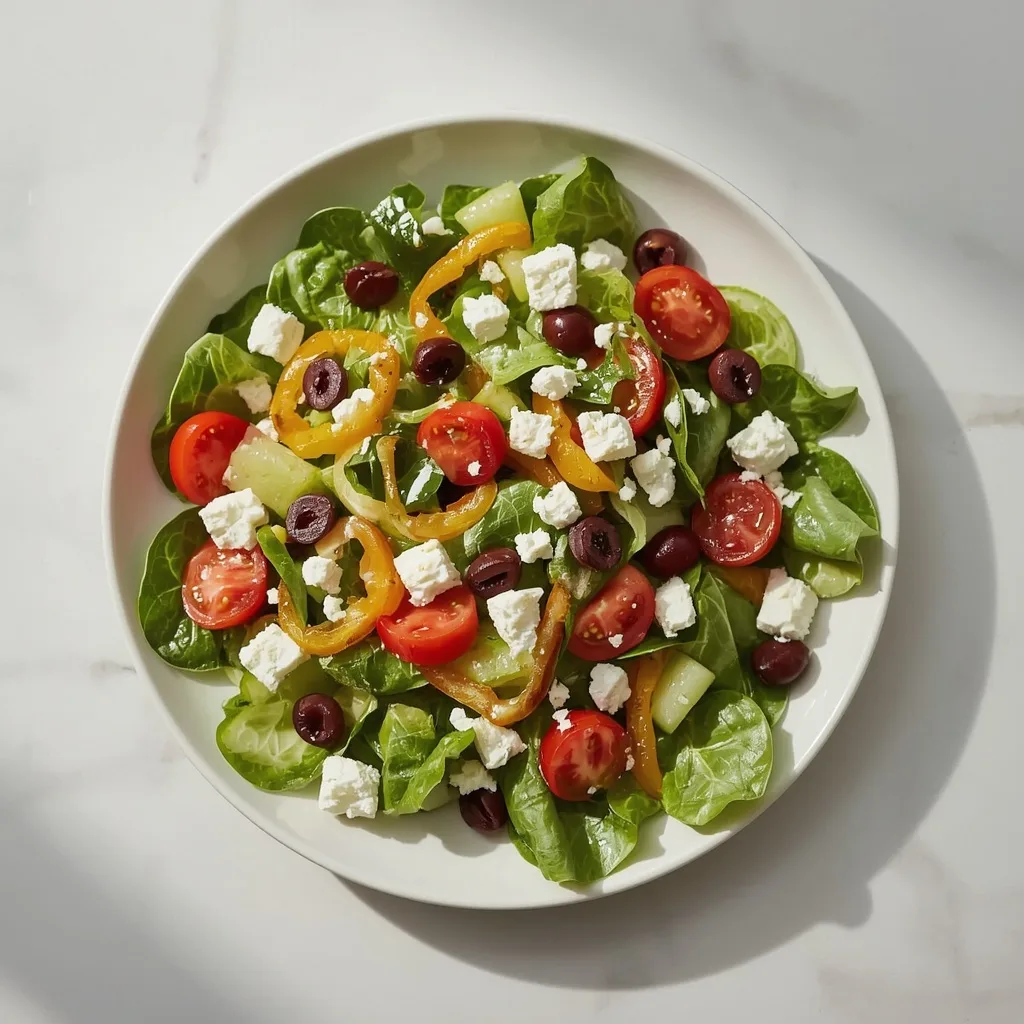
 Natashas Greek Salad is the kind of side dish that turns a simple weeknight dinner into something that feels a little more special. It is a classic blend of crisp romaine, juicy tomatoes, crunchy cucumbers, and tangy feta, all tied together with a bright lemon-oregano vinaigrette.
This no-cook recipe takes just 15 minutes of prep and is perfect for beginners. The only potential hiccup is making sure all your vegetables are cut to a similar size for the best texture, but it is straightforward once you get going.
Why You’ll Love This Recipe
- Quick and Easy — With no cooking required, it is ready in under 20 minutes from start to finish.
- Bright and Zesty Flavor — The lemon vinaigrette and briny olives cut through the richness of many main dishes.
- Crunchy and Satisfying — Every forkful delivers a mix of textures from the lettuce, cucumber, and bell pepper.
What Makes This Recipe Special
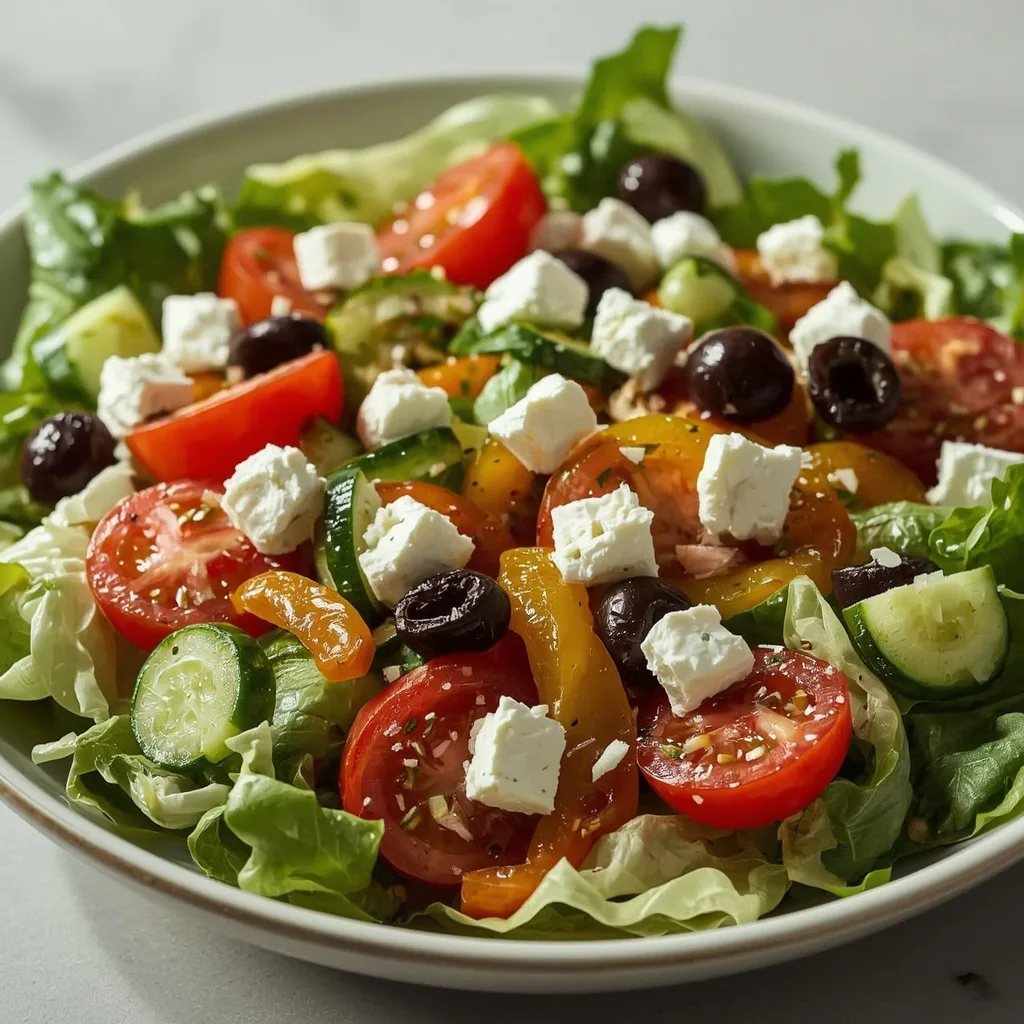
The dressing does all the heavy lifting here. The combination of fresh lemon juice, red wine vinegar, and dried oregano creates a sharp, herbaceous vinaigrette that coats every vegetable without weighing it down. It tastes clean and refreshing, with the salty feta and Kalamata olives providing a savory counterpoint. This is a salad designed to stay crisp, making it an ideal companion for grilled meats or fish.
Ingredients You’ll Need
For the Salad Base
- 1 head romaine lettuce, chopped into 1-inch pieces (about 6 cups) — Provides a sturdy, crisp foundation that holds up well to the dressing without wilting too fast.
- 2 medium Roma tomatoes, cut into 1/2-inch chunks (about 1 1/2 cups) — Choose firm tomatoes to avoid a watery salad. Roma varieties have less juice and more flesh.
- 1 medium English cucumber, quartered lengthwise and sliced 1/2-inch thick (about 2 cups) — English cucumbers have fewer seeds and a milder flavor, so they do not water down the dish. You can peel half the skin in stripes for visual contrast.
- 1 medium green bell pepper, cored, seeded, and cut into 1/2-inch pieces (about 1 cup) — Adds a fresh, grassy crunch and a pop of color.
- 1/2 medium red onion, thinly sliced into rings (about 1/2 cup) — Provides a sharp bite that mellows slightly when dressed.
- 1/2 cup Kalamata olives, pitted and halved — Brings a briny, savory punch that balances the acidity of the dressing.
- 4 ounces feta cheese, crumbled (about 1 cup) — Use a block of feta stored in brine for the best flavor and crumble it yourself for even pieces.
For the Lemon-Oregano Vinaigrette
- 1/4 cup extra virgin olive oil — Forms the base of the dressing, adding richness and carrying the flavors.
- 2 tablespoons fresh lemon juice (from 1 medium lemon) — Provides bright, sharp acidity. Bottled juice will work in a pinch but fresh is noticeably better.
- 1 tablespoon red wine vinegar — Adds another layer of tangy depth that complements the oregano.
- 1 teaspoon dried oregano — The signature herb in Greek cooking, giving the dressing its earthy, slightly floral character.
- 1/2 teaspoon kosher salt — Seasons the vegetables and helps the dressing coat them evenly.
- 1/4 teaspoon freshly ground black pepper — Adds a subtle warmth.
Equipment Needed
- Large salad bowl — Gives you enough room to toss all the ingredients without spilling. A wide, shallow bowl works best for even distribution.
- Sharp chef’s knife and cutting board — Essential for clean, uniform cuts on the vegetables. A dull knife will crush the tomatoes and cucumbers.
- Salad spinner or paper towels — You need to dry the lettuce thoroughly after washing. Wet lettuce dilutes the dressing and makes the salad soggy.
- Small bowl or jar with a tight-fitting lid — For mixing the dressing. A jar lets you shake everything together quickly for an emulsified result.
- Salad tongs or two large spoons — For tossing the salad gently without crushing the vegetables or breaking up the feta too much.
Instructions to Prepare Natasha’s Greek Salad
The key to this dish is preparation: wash and dry your vegetables well, then cut everything to a uniform size so each bite gets a little of everything.
- Prepare the lettuce — Wash and dry the romaine thoroughly using a salad spinner or by patting dry with paper towels. Chop into 1-inch pieces and place in a large salad bowl.
- Cut the tomatoes — Cut the Roma tomatoes into 1/2-inch chunks, discarding the core and any tough seeds. Add them to the bowl.
- Slice the cucumber — Quarter the English cucumber lengthwise (remove half the skin in stripes if you want), then slice crosswise into 1/2-inch-thick pieces. Add to the bowl.
- Prepare the pepper and onion — Core and seed the green bell pepper, then cut into 1/2-inch pieces. Add to the bowl along with the thinly sliced red onion rings and halved Kalamata olives.
- Add the feta — Crumble the feta cheese into small, even pieces and scatter over the top. Do not mix yet to keep the feta from breaking down too much.
- Make the vinaigrette — In a small bowl or jar with a tight-fitting lid, combine the extra virgin olive oil, fresh lemon juice, red wine vinegar, dried oregano, kosher salt, and black pepper. Whisk or shake vigorously until the dressing is emulsified and the oregano is evenly distributed.
- Dress and toss — Pour the dressing over the salad, starting at the edges and working inward. Toss gently with salad tongs or two large spoons, lifting from the bottom to coat all ingredients evenly. Taste and adjust seasoning with salt or lemon juice if needed.
- Serve immediately — This salad is best enjoyed at room temperature within 30 minutes of dressing to maintain crispness.
Expert Tips for a Standout Natasha’s Greek Salad
- Dry the lettuce well — Any moisture clinging to the leaves will water down the vinaigrette, making the salad taste flat and soggy. A salad spinner is your best tool here.
- Use a block of feta — pre-crumbled feta is often coated with cellulose to prevent clumping, which can affect texture and flavour. A block stored in brine crumbles into creamy, salty pieces that coat the vegetables better.
- Add the dressing just before serving — Dressed lettuce begins to wilt within about 15 minutes. If you are not eating right away, keep the salad and dressing separate in the fridge.
- Slice the red onion thinly — Thick rings of raw onion can overpower the rest of the ingredients. Use a mandoline or a sharp knife to get paper-thin rings that add sharpness without dominating.
- Taste before serving — The saltiness of the feta and olives varies by brand. Give the salad a final taste after tossing and adjust with a pinch of salt or an extra squeeze of lemon if needed.
- Keep the feta on top — Scatter the crumbled feta over the dressed salad right before serving. If you mix it in too early, it will dissolve into the dressing and lose its distinct texture.
Common Mistakes to Avoid
- Using overripe tomatoes — Soft, mushy tomatoes release too much liquid, making the salad watery. Stick with firm Roma tomatoes that hold their shape when cut.
- Cutting vegetables too large — Oversized chunks of cucumber or bell pepper make it hard to get a balanced bite in each forkful. Keep all pieces around 1/2 inch for consistency.
- Skipping the salt in the dressing — The salt does more than season; it helps the dressing cling to the vegetables. Without it, the vinaigrette slides right off the lettuce.
- Dressing the salad too early — If you dress the salad and let it sit for more than 30 minutes, the lettuce will weep and the cucumbers will release water. Always dress right before serving.
- Forgetting to adjust the dressing — Dried oregano can settle at the bottom of the jar. Give the dressing a final shake just before pouring to ensure the oregano is evenly distributed.
Variations & Ways to Customise Natasha’s Greek Salad
- Add protein for a main course — Top the finished salad with grilled chicken, lamb kofta, or seared shrimp. The bright dressing cuts through the richness of the meat.
- Switch the feta — Replace the cow’s milk feta with a sheep or goat milk version for a tangier, creamier result. The texture will be softer and more spreadable.
- Use a different pepper — Substitute the green bell pepper with a red, yellow, or orange one for a sweeter, milder crunch. The color change also brightens the presentation.
- Add fresh herbs — Toss in a handful of fresh mint, dill, or parsley just before serving. They add a layer of freshness that complements the oregano dressing nicely.
- Make it a bread salad — Add 1 cup of cubed, toasted pita bread or crusty sourdough croutons at the end. The bread soaks up the dressing and adds a satisfying crunch.
What to Serve With Natasha’s Greek Salad
This salad shines as a side dish, but it can also hold its own as a light lunch. Here are some pairings that work well.
- Grilled lamb chops — The herbal dressing and salty feta balance the rich, gamey flavor of lamb perfectly.
- Spanakopita — The flaky, buttery phyllo and spinach filling create a lovely contrast with the crisp, acidic salad.
- Roasted salmon — A simple fillet with lemon and dill pairs nicely with the bright vinaigrette without competing for attention.
- Warm pita bread with tzatziki — The cool cucumber-yogurt sauce and soft bread round out the meal, making it feel more substantial.
- Grilled chicken souvlaki — Skewers of marinated chicken are a natural fit, as the marinade often shares the same oregano-lemon profile.
Make-Ahead Instructions
- Prep the vegetables — Wash, dry, and chop the lettuce, tomatoes, cucumber, bell pepper, and onion up to 1 day in advance. Store each component in a separate container with a paper towel to absorb excess moisture.
- Make the dressing — Whisk or shake the vinaigrette together and store it in a sealed jar in the refrigerator for up to 1 week. The flavors will meld overnight, making it even better.
- Crumble the feta — Crumble the block of feta and keep it in an airtight container in the fridge for up to 3 days. Do not combine it with the vegetables or dressing until just before serving.
- Assemble quickly — When ready to serve, toss the prepped vegetables, feta, and olives together in a large bowl, then dress and toss. The whole process takes under 2 minutes.
Storage and Reheating
Storage
- Airtight container — Store undressed salad in an airtight container in the refrigerator for up to 2 days. The lettuce will soften over time, so it is best eaten sooner rather than later.
- Dressing separately — Keep the vinaigrette in a sealed jar in the fridge for up to 1 week. Shake well before using, as the oil and vinegar will separate.
- Freezing not recommended — The high water content in the vegetables makes freezing a bad idea. The texture will become mushy and unappealing upon thawing.
Reheating
- Serving cold or at room temperature — This salad is not meant to be reheated. If you have leftovers, refresh them with a splash of lemon juice or olive oil to wake up the flavors.
- Leftover salad refresh — If the dressed salad has been sitting for a few hours, add a squeeze of fresh lemon juice and a drizzle of olive oil, then toss gently. This revives the acidity and helps the vegetables perk up slightly.
- Not applicable for stovetop or oven — Do not attempt to warm this salad. Heat will wilt the lettuce and soften the cucumbers, ruining the crisp texture that makes it so enjoyable.
Nutritional Breakdown (Per Serving)
Based on 1 serving = 1/4 of the total recipe (about 2 cups).
- Calories — 249
- Protein — 7g
- Fat — 18g
- Saturated Fat — about 6g
- Carbohydrates — 12g
- Fiber — 3g
- Sugar — 6g
- Sodium — 645mg
- Cholesterol — around 25mg
Frequently Asked Questions
Can I make Natashas Greek Salad ahead of time?
Yes, but keep the dressing and the vegetables separate until you are ready to serve. The cut vegetables will stay crisp for about 1 day in the fridge if stored in an airtight container with a paper towel.
What is the best lettuce to use for Natashas Greek Salad?
Romaine lettuce is the standard choice here. Its sturdy, crisp leaves hold up well to the dressing and the weight of the other vegetables. You can substitute with green leaf lettuce, but it will wilt slightly faster.
How long does Natashas Greek Salad last in the fridge?
Undressed, the salad will last up to 2 days in an airtight container. Once dressed, it is best eaten within 30 minutes for the crunchiest texture. Leftover dressed salad will soften significantly after a few hours.
Can I freeze Natashas Greek Salad?
Freezing is not recommended because of the high water content in the cucumbers, tomatoes, and lettuce. The vegetables will become mushy and watery when thawed, ruining the texture.
What kind of feta cheese is best for this salad?
A block of feta stored in brine gives the best flavor and texture. Pre-crumbled feta is dry and lacks the creamy, tangy quality that makes this dish shine. Crumble the block yourself right before adding it to the salad.
How can I make the dressing less oily?
You can reduce the olive oil to 2 tablespoons and add an extra tablespoon of lemon juice or red wine vinegar. The dressing will be sharper, but it will still coat the vegetables well.
Final Words
Natashas Greek Salad is one of those recipes that proves you do not need a stove or a long list of ingredients to create something memorable. It works as a quick side for a weeknight meal or as a colorful centerpiece for a summer gathering. Give it a try and see how much flavor comes from just a few fresh vegetables and a simple dressing.
Similar Recipes
- Steak And Shake Garlic Double Steakburger
- Applebees Flamin Hot Cheetos Wings
- Hunan Chicken
- Lemon Meringue Pie
- Creamy Meatballs
- Caramel Apple Dip
Natasha’s Greek Salad
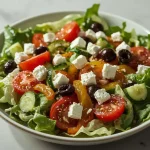
This classic Greek salad combines crisp romaine lettuce, juicy tomatoes, cucumbers, and tangy feta cheese with a zesty lemon-oregano vinaigrette. The briny Kalamata olives and crunchy bell peppers add depth, while the dressing ties everything together for a refreshing and satisfying dish.
- Prep Time: 15
- Total Time: 15
- Yield: 4 1x
- Category: Salad
- Method: No-Cook
- Cuisine: Greek
Ingredients
- 1 head romaine lettuce, chopped into 1-inch pieces (about 6 cups)
- 2 medium Roma tomatoes, cut into 1/2-inch chunks (about 1 1/2 cups)
- 1 medium English cucumber, quartered lengthwise and sliced 1/2-inch thick (about 2 cups)
- 1 medium green bell pepper, cored, seeded, and cut into 1/2-inch pieces (about 1 cup)
- 1/2 medium red onion, thinly sliced into rings (about 1/2 cup)
- 1/2 cup Kalamata olives, pitted and halved
- 4 ounces feta cheese, crumbled (about 1 cup)
- 1/4 cup extra virgin olive oil
- 2 tablespoons fresh lemon juice (from 1 medium lemon)
- 1 tablespoon red wine vinegar
- 1 teaspoon dried oregano
- 1/2 teaspoon kosher salt
- 1/4 teaspoon freshly ground black pepper
Instructions
- Wash and dry the romaine lettuce thoroughly using a salad spinner or by patting dry with paper towels. Chop into 1-inch pieces and place in a large salad bowl. The lettuce provides a crisp, sturdy base that holds up well to the dressing without wilting too quickly.
- Cut the Roma tomatoes into 1/2-inch chunks, discarding the core and any tough seeds. Add them to the bowl. Avoid over-ripening; choose firm tomatoes for the best texture and to prevent the salad from becoming watery.
- Quarter the English cucumber lengthwise (if desired, peel off half the skin in stripes for visual contrast), then slice crosswise into 1/2-inch-thick pieces. Add to the bowl. English cucumbers have fewer seeds and a milder flavor, making them ideal for salads.
- Core and seed the green bell pepper, then cut into 1/2-inch pieces. Add to the bowl along with the thinly sliced red onion rings and halved Kalamata olives. The red onion rings add sharpness, and the olives bring a briny, savory punch.
- Crumble the feta cheese into small, even pieces and scatter over the top of the salad. Do not mix yet to keep the feta from breaking down too much. For best flavor, use a block of feta in brine and crumble it yourself.
- In a small bowl or jar with a tight-fitting lid, combine the extra virgin olive oil, fresh lemon juice, red wine vinegar, dried oregano, kosher salt, and black pepper. Whisk or shake vigorously until the dressing is emulsified and the oregano is evenly distributed.
- Pour the dressing over the salad, starting at the edges and working inward. Toss gently with salad tongs or two large spoons, lifting from the bottom to coat all ingredients evenly. Taste and adjust seasoning with salt or lemon juice if needed.
- Serve immediately as a side salad or light main course. This salad is best enjoyed at room temperature within 30 minutes of dressing to maintain crispness. If making ahead, keep dressing separate and toss just before serving.
Notes
Storage: Store undressed salad in an airtight container in the refrigerator for up to 2 days; the lettuce will soften over time. Dressing can be stored separately in a sealed jar in the fridge for up to 1 week. Freezing: Not recommended due to high water content in vegetables. Reheating: Not applicable; serve cold or at room temperature. To refresh leftover salad, add a splash of lemon juice or olive oil and toss gently.
Nutrition
- Calories: 249
- Sugar: 6g
- Sodium: 645mg
- Saturated Fat: 5g
- Carbohydrates: 12g
- Fiber: 3g
- Protein: 7g
- Cholesterol: 22mg
Keywords: Natasha’s Greek salad, Greek salad recipe, traditional Greek salad, horiatiki, Mediterranean salad, cucumber tomato feta salad, Kalamata olive salad, lemon oregano vinaigrette, no-cook salad, summer salad