 Kendric adan
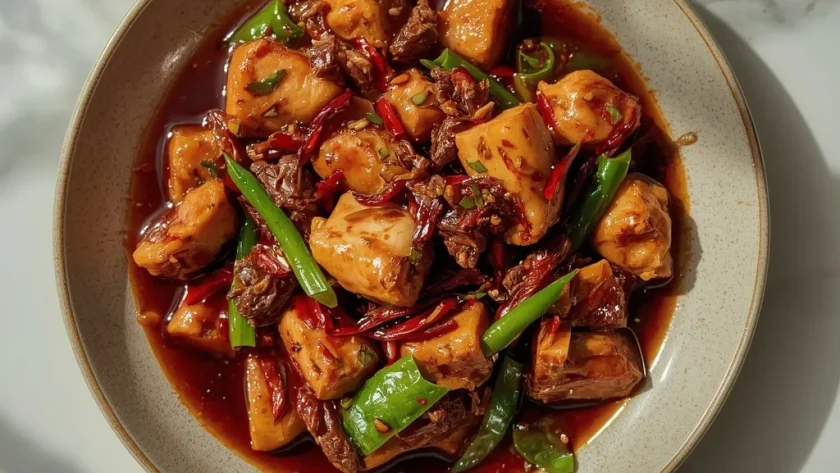
 This Hunan Chicken Recipe brings restaurant-quality heat and aroma right to your stovetop. Tender chicken thighs are wok-tossed with dried chilies and Sichuan peppercorns in a glossy, savory-sweet sauce that clings to every piece.
From start to finish, this dish takes about 32 minutes. I would call it an intermediate stovetop recipe — not because the steps are hard, but because the timing between searing, aromatics, and sauce needs your full attention. The payoff is a deeply flavorful stir-fry with layers of heat, citrus, and umami.
Why You’ll Love This Recipe
- Bold, authentic heat — Dried red chilies and Sichuan peppercorns create that signature numbing-and-spicy combo Hunan cooking is known for.
- Restaurant texture at home — The quick velveting step keeps chicken thighs tender while the cornstarch slurry gives the sauce a glossy, clingy finish.
- Complete meal in one wok — Protein, vegetables, and sauce all cook in the same pan. Less cleanup, more flavor.
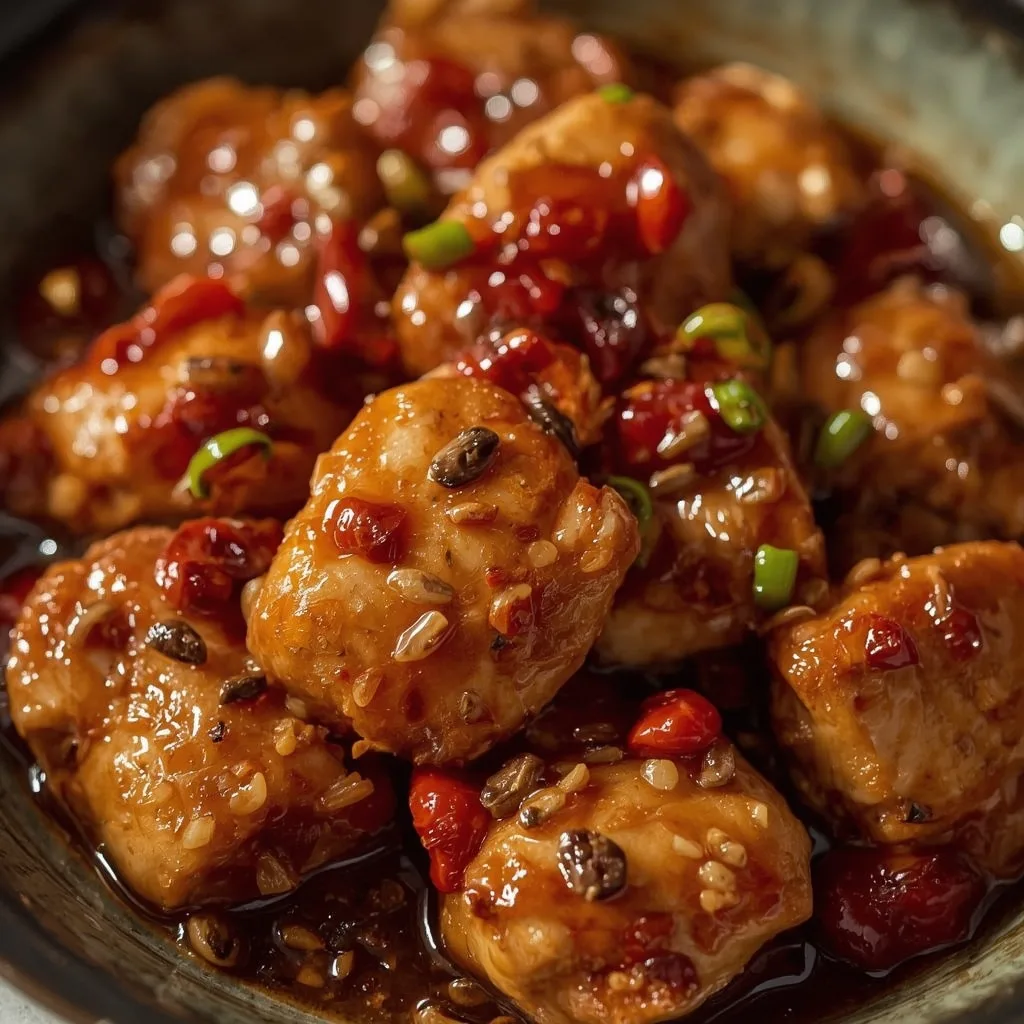
What Makes This Recipe Special
Hunan cuisine uses bold, direct heat from dried chilies and the floral tingle of Sichuan peppercorns without the fermented bean pastes common in Sichuan cooking. The sauce here stays light and clear — dark soy adds color, black vinegar adds tang, and a quick slurry thickens it into a glossy coating. Every bite gives you tender chicken, crunchy bell pepper, and that warm numbing sensation on your tongue. This is weeknight cooking that tastes like it came from a Chinatown kitchen.
Ingredients You’ll Need
Everything here is available at a well-stocked grocery store or Asian market. I have noted easy swaps where they work.
Chicken & Marinade
- 1 1/2 lb boneless skinless chicken thighs — Thighs stay juicier than breasts under high heat. Cut them into 1-inch cubes so they cook evenly.
- 1 tbsp Shaoxing wine or dry sherry — This adds depth and helps tenderize. Dry sherry works perfectly if you don’t have Shaoxing.
- 2 tsp light soy sauce — A salty base for the marinade that also seasons the meat from the inside.
- 1 tsp cornstarch — This is the velveting agent. It protects the chicken from high heat and helps the sauce cling later.
- 1/4 tsp ground white pepper — Milder than black pepper with a subtle floral note. Skip it if you must, but it adds authenticity.
Aromatics & Vegetables
- 1/4 cup small dried red chilies (Tien Tsin or árbol) — Stemmed and halved lengthwise so the heat releases into the oil. Adjust the amount to your spice tolerance.
- 1 tbsp Sichuan peppercorns — These are not spicy-hot but give that unique numbing tingle. Do not skip them — they define the dish.
- 6 cloves garlic, thinly sliced — Thin slices brown faster than minced, giving you more flavor in less time.
- 2 inch piece fresh ginger, peeled and julienned — Matchstick-size pieces fry up crisp-tender. Grate it if you prefer a milder ginger presence.
- 4 whole scallions, white and light green parts, cut into 1-inch pieces — The whites add bite, the greens add color. Reserve the dark green tops for garnish if you like.
- 1 red bell pepper, seeded and thinly sliced into 2-inch strips — Provides sweetness and crunch against the heat. You can swap in green bell pepper for a sharper flavor.
The Sauce
- 2 tbsp light soy sauce — The main salty-savory backbone.
- 1 tbsp dark soy sauce — Adds color and a touch of molasses sweetness. If you don’t have it, use light soy plus a tiny pinch of sugar.
- 1 tbsp Chinese black vinegar (Chinkiang) — This has a malty, slightly smoky tang. Substitute balsamic vinegar in a pinch but reduce the amount to 2 teaspoons.
- 1 tbsp sugar — Balances the heat and acidity. You can use brown sugar for a deeper flavor.
- 1/2 cup low-sodium chicken broth — Low-sodium matters here because the soy sauces already bring plenty of salt.
- 1 tsp toasted sesame oil — Drizzled at the end for aroma. Do not cook it for long or the flavor fades.
- 1 tbsp cornstarch mixed with 2 tbsp water (slurry) — This is what makes the sauce glossy and clingy. Stir it right before adding because cornstarch settles fast.
Equipment Needed
- Wok or large heavy skillet — A wok handles high heat best, but a 12-inch stainless steel or cast iron skillet works too. Nonstick will not get hot enough for proper searing.
- Cutting board and sharp knife — You will be slicing chicken, chilies, ginger, garlic, and bell pepper. A dull knife makes this tedious.
- Small bowls for prep — Have one for the marinade, one for the sauce mixture, one for the slurry, and a plate for cooked chicken. Stir-fry moves fast — mis en place is non-negotiable.
- Wooden spatula or metal wok spatula — You need something sturdy to toss ingredients without scratching the pan. A wooden spoon works in a pinch.
- Measuring spoons — Soy sauce and vinegar amounts are small. Eyeballing them can throw off the balance.
Instructions to Prepare Hunan Chicken
Stir-fry goes fast, so read through all the steps once before touching the stove. Have everything chopped, measured, and within arm’s reach.
- Marinate the chicken — In a medium bowl, combine the chicken cubes with Shaoxing wine, 2 teaspoons light soy sauce, 1 teaspoon cornstarch, and white pepper. Toss to coat evenly and let marinate at room temperature for 15 minutes. This velveting step tenderizes the meat and helps the sauce cling to each piece.
- Prepare the sauce — In a small bowl, whisk together the 2 tablespoons light soy sauce, dark soy sauce, black vinegar, sugar, and chicken broth until the sugar dissolves. Set the sauce mixture nearby along with the cornstarch slurry.
- Heat the wok — Heat a wok or large heavy skillet over high heat until a drop of water evaporates instantly, about 2 minutes. Add 1 tablespoon of the vegetable oil and swirl to coat the surface. The oil should shimmer and begin to smoke lightly.
- Sear the chicken — Carefully add the chicken pieces in a single layer without crowding (cook in batches if necessary). Sear undisturbed for 1 minute until the underside is golden brown. Stir-fry for another 1 to 2 minutes until the chicken is just cooked through and no longer pink inside. Transfer to a clean plate.
- Toast the aromatics — Reduce heat to medium-high and add the remaining 1 tablespoon oil. Add the dried chilies and Sichuan peppercorns; stir-fry for 30 seconds until fragrant and the chilies darken slightly. The Sichuan peppercorns will release a citrusy aroma — be careful not to burn them.
- Add garlic, ginger, and scallions — Add the sliced garlic, julienned ginger, and scallion pieces. Stir-fry for 30 seconds until the garlic is golden and fragrant. The mixture should sizzle energetically.
- Cook the bell pepper — Add the sliced red bell pepper and stir-fry for 1 minute until it begins to soften but retains some crunch. You should see light char marks on the edges.
- Return the chicken — Return the cooked chicken to the wok. Pour the prepared sauce mixture over the top and toss everything together to coat evenly. Let the sauce bubble for 30 seconds.
- Thicken the sauce — Give the cornstarch slurry a quick stir, then drizzle it into the center of the wok while stirring constantly. The sauce will thicken almost immediately — continue tossing for about 20 seconds until glossy and clinging to the chicken and vegetables.
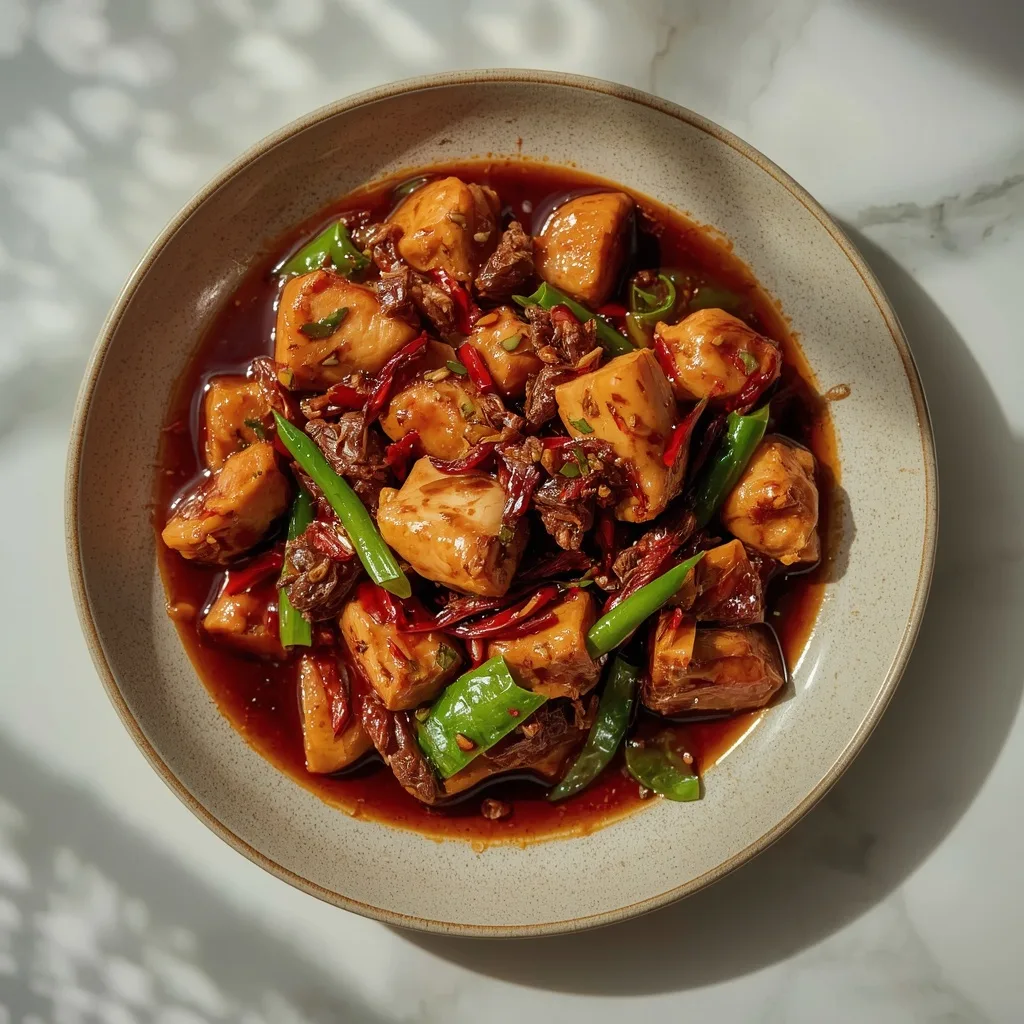
- Finish and serve — Remove from heat. Drizzle with toasted sesame oil and toss once more. Serve immediately over steamed white rice. The dish should be highly fragrant with layers of heat, numbing spice, and savory depth.
Expert Tips for a Standout Hunan Chicken
- Velvet the chicken properly — Let it marinate the full 15 minutes, no shortcuts. The cornstarch and wine create a protective coating that keeps the meat tender under blistering heat.
- High heat is your friend — If your wok is not hot enough, the chicken steams instead of sears. Wait until the oil shimmers and just starts to smoke before adding the meat.
- Have your sauce mixed before cooking — Once the aromatics hit the oil, you will not have time to measure anything. That sauce bowl and slurry bowl need to be right next to the stove.
- Stir the slurry immediately before using — Cornstarch settles to the bottom of the water in seconds. Give it a quick whisk with a fork right before you drizzle it in.
- Adjust chilies to your heat tolerance — Dishes using the full 1/4 cup are quite spicy for most palates. Start with 2 tablespoons if you are heat-sensitive, or remove the seeds for a milder kick.
- Do not let the Sichuan peppercorns burn — They go from fragrant to bitter in about 10 seconds. If you see any browning beyond a slight darkening, pull them out and add fresh ones later.
- Serving over rice is essential — Plain white rice soaks up the glossy sauce and balances the heat. Brown rice works but the texture is less neutral.
Common Mistakes to Avoid
- Crowding the wok — Adding too much chicken at once drops the pan temperature. The meat releases liquid and steams instead of browning. Cook in two batches if your wok is small.
- Skipping the 15-minute marinating — The velveting step is not optional. Without it, the chicken will be dry and tough. Set a timer and walk away if you have to.
- Using too much oil — The recipe calls for 2 tablespoons total. More oil will make the dish greasy and dull the spice flavors. If the wok looks dry, add a splash of water instead.
- Overcooking the bell pepper — It should still have some crunch when you bite into it. A full minute of stir-fry is enough — any longer and it turns limp.
- Adding the slurry too early or too late — Wait until the sauce has bubbled for 30 seconds with the chicken back in the wok. Adding it earlier dilutes the flavor, adding it later means the sauce thins out.
- Forgetting the toasted sesame oil splash at the end — This last drizzle adds the final nutty aroma. If you cook it, the fragrance disappears. Off heat, toss, serve.
Variations & Ways to Customize Hunan Chicken
- Milder version — Reduce the dried chilies to 2 tablespoons and remove all seeds. Add a tablespoon of hoisin sauce to the sauce mixture for sweetness that cools the heat.
- Vegetable swap — Replace the red bell pepper with broccoli florets, snap peas, or bamboo shoots. Cut them small so they cook through in the same time.
- Extra heat — Add 1 to 2 fresh bird’s eye chilies, thinly sliced, along with the garlic. The fresh heat hits differently than dried and amplifies the burn.
- Protein change — Substitute 1 1/2 pounds of pork loin or flank steak, sliced thin against the grain. Adjust cooking time since pork and beef cook slightly faster than chicken thighs.
- Gluten-free adaptation — Use tamari in place of both light and dark soy sauce. Check that your black vinegar is labeled gluten-free — some brands contain wheat.
- Add mushrooms — Toss in 1 cup of shiitake or wood ear mushrooms after the bell pepper. They soak up the sauce and add an earthy note that complements the heat.
What to Serve With Hunan Chicken
The bold spice and rich sauce pair best with simple, cooling sides that let the chicken shine.
- Steamed jasmine rice — The fluffy grains absorb the glossy sauce and calm the heat. Make extra because everyone goes back for seconds.
- Quick cucumber salad — Thinly sliced cucumbers tossed with rice vinegar and a pinch of sugar. The cold crunch cuts through the spice beautifully.
- Stir-fried bok choy or gai lan — A mild green vegetable with a light garlic sauce keeps the meal vegetable-forward without competing with the main dish.
- Egg drop soup — A warm, silky soup with thin egg ribbons provides a gentle start before the heat hits. It also stretches the meal if you are feeding a crowd.
- Chilled soba noodles — Cold buckwheat noodles with a splash of soy and sesame make a refreshing side that contrasts the hot stir-fry.
- Fresh orange or mango slices — A few pieces of fruit after the meal clean the palate. The sweetness is a welcome break from the heat.
Make-Ahead Instructions
- Marinate the chicken up to 8 hours ahead — Combine the chicken, wine, soy, cornstarch, and white pepper in a bowl, cover, and refrigerate. Pull it out 15 minutes before cooking to take the chill off.
- Prep all vegetables and aromatics the night before — Slice the bell pepper, thinly slice garlic, julienne ginger, and cut scallions. Store each in separate airtight containers in the fridge.
- Mix the sauce in advance — Whisk light soy, dark soy, black vinegar, sugar, and broth together in a jar. Refrigerate for up to 3 days. Give it a stir before using to reincorporate any settled sugar.
- Do not pre-mix the cornstarch slurry — Cornstarch and water separate within minutes. Make the slurry right before you need it, no earlier than 5 minutes before cooking.
Storage and Reheating
Storage
- Airtight container in the fridge — Leftover Hunan Chicken keeps for up to 3 days. Let it cool completely before sealing to prevent condensation that thins the sauce.
- Separate sauce and rice — Store the chicken and its sauce in one container and any leftover rice in another. Rice dries out faster when stored with liquid.
- Do not freeze this dish — Freezing causes the sauce to separate and the chicken to turn rubbery upon thawing. Make it fresh or eat the leftovers within three days.
- Label the container with the date — Easy to forget when you made it. A sticky note or piece of tape with the date saves guesswork later.
Reheating
- Skillet over medium-high heat — Add the leftover chicken to a hot skillet with a splash of water or chicken broth. Stir-fry for 2 to 3 minutes until steaming. The splash of liquid revives the sauce.
- Microwave on high — Place in a microwave-safe bowl, cover loosely, and heat for 1 to 2 minutes, stirring halfway through. Microwaves vary — stop when the chicken is hot throughout.
- Air fryer at 375°F — Spread the chicken in a single layer in the air fryer basket and heat for 3 to 4 minutes, shaking halfway. This restores some of the seared edges but watch that the sauce does not burn.
- Add a tiny splash of rice vinegar — If the sauce seems dull after reheating, a few drops of rice vinegar or black vinegar brighten the flavors back up.
Nutritional Breakdown (Per Serving)
Based on 1 serving out of 4 total servings.
- Calories — 396
- Protein — 40g
- Fat — about 18g
- Carbohydrates — 18g
- Fiber — 2g
- Sugar — about 9g
- Sodium — around 982mg
Frequently Asked Questions
Can I use chicken breast instead of thighs for this Hunan Chicken Recipe?
Yes, but breast dries out faster under high heat. Cut the cubes slightly larger — 1 1/2 inches — and watch the cooking time. The chicken is done the moment it turns opaque.
How do I make Hunan Chicken Recipe less spicy?
Reduce the dried chilies to 2 tablespoons and remove the seeds before adding them to the wok. The Sichuan peppercorns are not spicy — they provide numbing sensation, not heat — so keep those as written.
Can I make this dish ahead of time for a party?
This recipe is best served immediately while the texture is fresh. If you must prep ahead, complete the marinating and sauce mixing but cook the dish no more than 1 hour before serving. Reheat gently to avoid toughening the chicken.
Where can I find Sichuan peppercorns and dried red chilies?
Most large grocery stores carry them in the international aisle. Asian markets have better variety and fresher chilies. You can also order both online — they keep well in a sealed jar for months.
What can I substitute for Chinese black vinegar?
Balsamic vinegar is the closest common substitute. Use 2 teaspoons instead of 1 tablespoon because balsamic is sweeter and more acetic. Rice vinegar with a tiny pinch of sugar also works in a pinch.
How long do leftovers last in the fridge?
Leftovers stay good for up to 3 days in an airtight container. Do not freeze the dish — the sauce separates and the chicken turns rubbery when thawed.
Final Words
This Hunan Chicken Recipe is one of those dishes that makes you look forward to dinner. The heat is bold but not punishing, the sauce is glossy without being heavy, and the texture stays perfect from first bite to last. Give it a try on your next stir-fry night — I think you will be surprised how fast it comes together and how much flavor a single wok can hold.
Similar Recipes
- Steak And Shake Garlic Double Steakburger
- Applebees Flamin Hot Cheetos Wings
- Porcupine Meatballs
- Natasha’s Greek Salad
- Creamy Meatballs
Hunan Chicken
A fiery, aromatic stir-fry featuring tender chicken breast pieces coated in a glossy, savory sauce with the distinctive numbing heat of Sichuan peppercorns and dried chilies. The dish balances intense chile heat with the floral, citrusy notes of Sichuan pepper for a complex, addictive flavor profile that defines Hunan cuisine.
- Prep Time: 20
- Cook Time: 12
- Total Time: 32
- Yield: 4 1x
- Category: Main Course
- Method: Stovetop
- Cuisine: Chinese
Ingredients
- 1 1/2 lb boneless skinless chicken thighs, cut into 1-inch cubes
- 1 tbsp Shaoxing wine or dry sherry
- 2 tsp light soy sauce
- 1 tsp cornstarch
- 1/4 tsp ground white pepper
- 2 tbsp vegetable oil, divided
- 1/4 cup small dried red chilies (Tien Tsin or árbol), stemmed and halved lengthwise
- 1 tbsp Sichuan peppercorns
- 6 cloves garlic, thinly sliced
- 2 inch piece fresh ginger, peeled and julienned
- 4 whole scallions, white and light green parts, cut into 1-inch pieces
- 1 red bell pepper, seeded and thinly sliced into 2-inch strips
- For the sauce:
- 2 tbsp light soy sauce
- 1 tbsp dark soy sauce
- 1 tbsp Chinese black vinegar (Chinkiang)
- 1 tbsp sugar
- 1/2 cup low-sodium chicken broth
- 1 tsp toasted sesame oil
- 1 tbsp cornstarch mixed with 2 tbsp water (slurry)
Instructions
- In a medium bowl, combine the chicken cubes with Shaoxing wine, 2 teaspoons light soy sauce, 1 teaspoon cornstarch, and white pepper. Toss to coat evenly and let marinate at room temperature for 15 minutes. This velveting step tenderizes the meat and helps the sauce cling to each piece.
- In a small bowl, whisk together the 2 tablespoons light soy sauce, dark soy sauce, black vinegar, sugar, and chicken broth until the sugar dissolves. Set the sauce mixture nearby along with the cornstarch slurry.
- Heat a wok or large heavy skillet over high heat until a drop of water evaporates instantly, about 2 minutes. Add 1 tablespoon of the vegetable oil and swirl to coat the surface. The oil should shimmer and begin to smoke lightly.
- Carefully add the chicken pieces in a single layer without crowding (cook in batches if necessary). Sear undisturbed for 1 minute until the underside is golden brown. Stir-fry for another 1 to 2 minutes until the chicken is just cooked through and no longer pink inside. Transfer to a clean plate.
- Reduce heat to medium-high and add the remaining 1 tablespoon oil. Add the dried chilies and Sichuan peppercorns; stir-fry for 30 seconds until fragrant and the chilies darken slightly. The Sichuan peppercorns will release a citrusy aroma—be careful not to burn them.
- Add the sliced garlic, julienned ginger, and scallion pieces. Stir-fry for 30 seconds until the garlic is golden and fragrant. The mixture should sizzle energetically.
- Add the sliced red bell pepper and stir-fry for 1 minute until it begins to soften but retains some crunch. You should see light char marks on the edges.
- Return the cooked chicken to the wok. Pour the prepared sauce mixture over the top and toss everything together to coat evenly. Let the sauce bubble for 30 seconds.
- Give the cornstarch slurry a quick stir, then drizzle it into the center of the wok while stirring constantly. The sauce will thicken almost immediately—continue tossing for about 20 seconds until glossy and clinging to the chicken and vegetables.
- Remove from heat. Drizzle with toasted sesame oil and toss once more. Serve immediately over steamed white rice. The dish should be highly fragrant with layers of heat, numbing spice, and savory depth.
Notes
Storage: Refrigerate leftovers in an airtight container for up to 3 days. Freezing: Not recommended, as the sauce may separate and chicken can become rubbery upon thawing. Reheating: Reheat in a wok or skillet over medium-high heat with a splash of water or broth for 2-3 minutes until steaming. Alternatively, microwave on high for 1-2 minutes, stirring halfway through. For best texture, avoid overcooking when reheating.
Nutrition
- Calories: 396
- Sugar: 9g
- Sodium: 982mg
- Saturated Fat: 3.5g
- Carbohydrates: 18g
- Fiber: 2g
- Protein: 40g
- Cholesterol: 184mg
Keywords: Hunan chicken, spicy Chinese chicken stir-fry, Sichuan peppercorn chicken, dried chili chicken, Chinese restaurant recipe, quick weeknight dinner, authentic Hunan dish, chicken thigh stir-fry, garlic ginger chicken, fiery chicken recipe, wok recipe