 Kendric adan
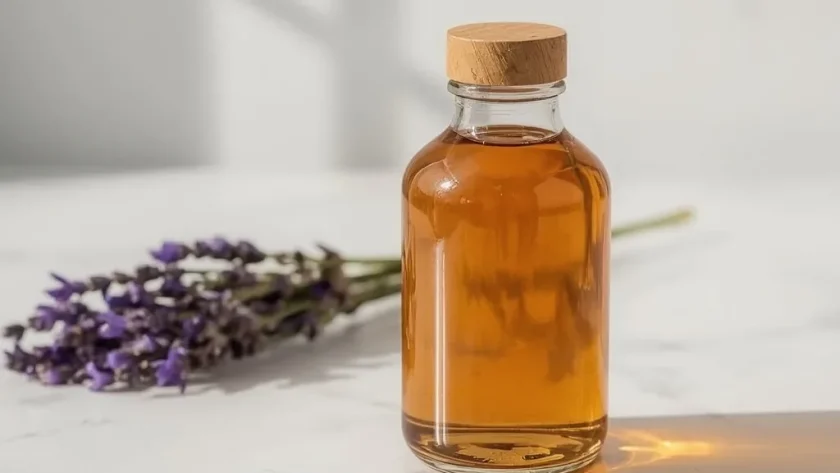
 Honey lavender syrup is one of those simple kitchen projects that feels unexpectedly luxurious. It balances honey’s natural richness with lavender’s gentle floral notes, creating something versatile enough for both morning pancakes and evening cocktails.
This recipe takes about 25 minutes total, including steeping time, and is beginner-friendly. The only tricky part is watching the honey mixture closely so it simmers without boiling — honey burns fast if you walk away.
Why You’ll Love This Recipe
- Quick enough for a weeknight project — Active time is only 5 minutes, then you just let it steep.
- Mild honey keeps the lavender front and center — Clover or orange blossom honey lets the floral notes shine without overpowering them.
- No special equipment required — A small saucepan, a fine-mesh sieve, and a jar are all you need.
What Makes Honey Lavender Syrup Special
The technique matters here more than the ingredient list. Steeping the lavender off the heat for exactly 10 minutes extracts clean flavor without bitterness. A tiny pinch of salt brightens everything without making the syrup taste savory. The result is a delicate syrup that tastes like spring in a bottle — floral but not perfumey, sweet but not cloying.
Ingredients You’ll Need
Four ingredients, and three of them are probably already in your pantry.
Core Ingredients
- ½ cup mild honey (clover or orange blossom) — The backbone of this syrup. A mild honey lets lavender’s subtle flavor come through. Strong honeys like buckwheat will compete.
- ½ cup water — Plain tap water works fine. Filtered water is fine too, but not necessary.
- ½ tablespoon dried culinary lavender buds — Use culinary-grade lavender only. Garden lavender may be treated with chemicals and often tastes soapy.
Flavor Enhancer (Optional)
- ⅛ teaspoon kosher salt — This does not make the syrup salty. It rounds out the flavors and makes the floral notes taste brighter.
Equipment Needed
- Small heavy-bottomed saucepan — A heavy pan distributes heat evenly and prevents hot spots that can scorch the honey.
- Silicone spatula or wooden spoon — For stirring the honey into the water without scratching your pan.
- Fine-mesh sieve — Essential for catching every lavender bud. A strainer with larger holes lets buds through.
- Heatproof bowl or glass measuring cup — To catch the strained syrup. Glass lets you see if any sediment remains.
- Clean glass jar or bottle with tight lid — For storing the finished syrup. A 8-ounce jar fits this batch perfectly.
Instructions to Prepare Honey lavender syrup
The process is straightforward, but each step has a reason. Follow them in order for the best result.
- Dissolve the honey — Measure honey and water into the saucepan. Set over medium-low heat and stir gently until the honey fully dissolves, about 1 minute. Do not let it come to a boil yet.
- Bring to a gentle simmer — Increase heat to medium. Watch for small bubbles breaking the surface — that is your cue. If it reaches a rolling boil, the honey can caramelize and change the flavor.
- Remove and steep — Take the pan off the heat immediately. Stir in lavender buds and salt if using. Cover with a lid and steep for exactly 10 minutes. Longer steeping (up to 15 minutes) gives stronger lavender flavor, but anything beyond 20 minutes risks a soapy taste.
- Strain carefully — Pour through a fine-mesh sieve into a heatproof bowl. Press gently on the buds with the back of a spoon to release trapped syrup, but do not crush them. Crushing releases grassy off-flavors.
- Cool to room temperature — Let the syrup sit for about 10 minutes. It will thicken slightly as it cools. Do not refrigerate while warm — condensation can dilute the syrup.
- Transfer and store — Pour into a clean glass jar. Label with the date. Use immediately or refrigerate for up to 3 weeks.
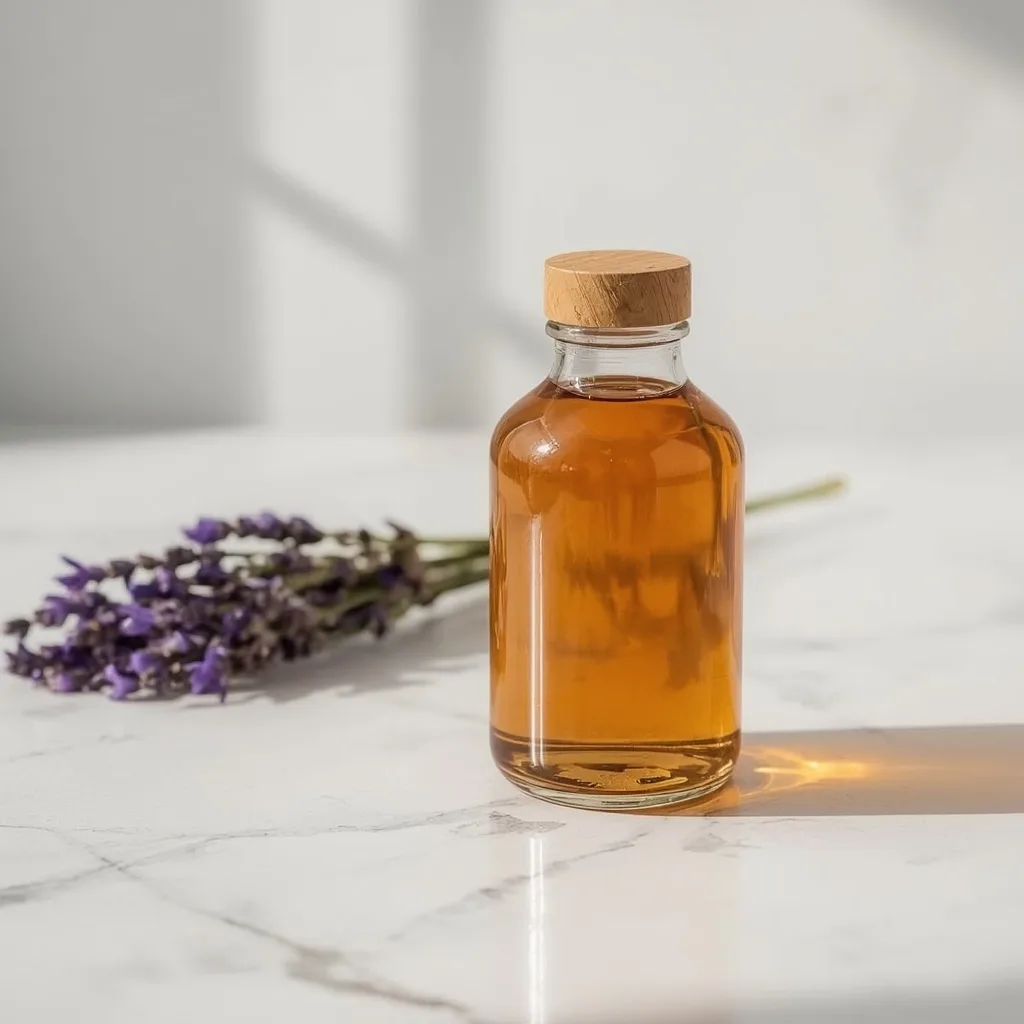
Expert Tips for a Standout Honey lavender syrup
- Use a mild honey — The lavender flavor is delicate. A strong honey like manuka or buckwheat will mask it completely.
- Measuring honey is easier with a lightly oiled measuring cup — A quick spray of nonstick spray or a smear of neutral oil lets the honey slide right out.
- Letting the mixture cool before straining is fine — But strain while it is still warm enough to pour easily. Cold syrup gets thick and sticky, making straining messy.
- Straining through cheesecloth in addition to a sieve catches finer particles — Not essential, but gives a crystal-clear syrup if presentation matters.
- The salt is not optional if you plan to use this in cocktails — Salt amplifies floral notes in drinks the same way it does in desserts. Skip it only for very sweet applications like drizzling over ice cream.
- Adding a vanilla bean half while steeping creates a honey lavender vanilla syrup — Split a bean, scrape the seeds in with the pods, and steep everything together.
Common Mistakes to Avoid
- Boiling the honey mixture — Honey scorches easily. A rolling boil darkens the syrup and introduces a caramelized flavor that competes with the lavender. Keep it at a gentle simmer only.
- Steeping lavender too long — 20 minutes is the absolute maximum. Beyond that, the lavender releases bitter compounds that make the syrup taste like soap.
- Skipping the salt — Even a tiny pinch makes the floral notes taste more defined. Without it, the syrup can taste flat.
- Using non-culinary lavender — Garden lavender is often sprayed with pesticides and has a stronger, less pleasant flavor. Stick to dried culinary lavender from the spice aisle.
- Crushing the lavender buds while straining — Pressing gently is fine. Squeezing or mashing releases grassy, vegetal notes that ruin the delicate floral taste.
Variations & Ways to Customize Honey lavender syrup
- Lemon Honey Lavender Syrup — Add 2 strips of lemon zest (no white pith) to the saucepan with the lavender. The citrus brightens the floral notes beautifully.
- Vanilla Lavender Syrup — Split a vanilla bean and scrape the seeds into the honey mixture before heating. Add the pod too. The vanilla rounds out lavender’s sharp edges.
- Spiced Lavender Syrup — Drop in a cinnamon stick and 2 whole cloves with the lavender. This version pairs wonderfully with warm drinks like chai or hot toddies.
- Berry Lavender Syrup — After straining, stir in ¼ cup of pureed raspberries or blackberries. Do not reheat; just blend with the warm syrup for a fruity twist.
- Earl Grey Lavender Syrup — Add 1 earl grey tea bag to the saucepan during the last 5 minutes of steeping. The bergamot in the tea complements lavender’s floral character.
What to Serve With Honey lavender syrup
This syrup works in both sweet and savory contexts. Here are the pairings I reach for most often.
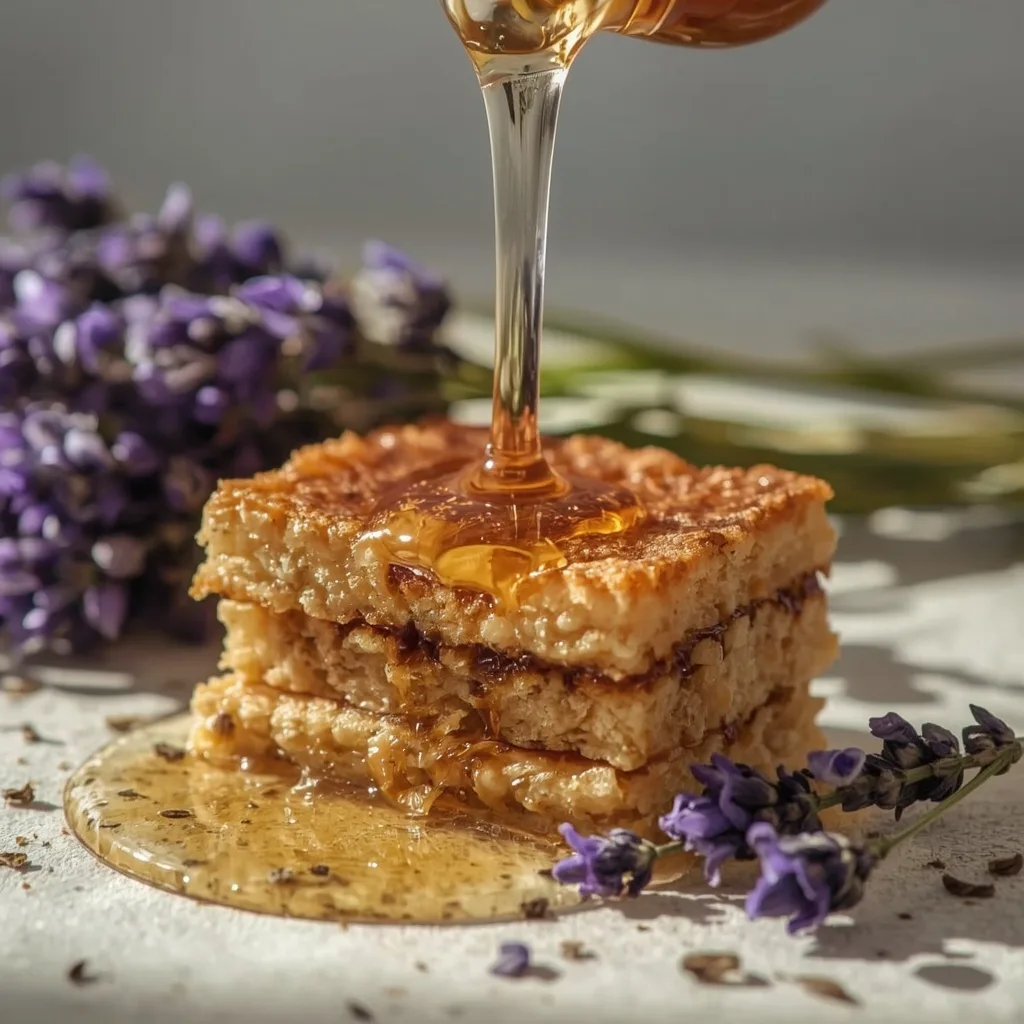
- Pancakes or waffles — Drizzle over a stack with a pat of butter. The floral sweetness replaces traditional maple syrup with a lighter, more elegant profile.
- Greek yogurt and fresh berries — A spoonful over plain yogurt and a handful of raspberries makes a quick breakfast that feels like dessert.
- Vanilla ice cream — The simplest dessert upgrade. The syrup’s floral notes cut through the richness of the ice cream.
- Gin and tonic or vodka soda — Stir 1-2 tablespoons into a cocktail glass for a floral twist on classic drinks.
- Lemonade or iced tea — Replace simple syrup with this in a pitcher of lemonade. It transforms a basic drink into something special.
- Cheese board accompaniment — Drizzle over soft goat cheese or brie. The sweetness and floral notes contrast beautifully with tangy, creamy cheese.
Make-Ahead Instructions
- The syrup keeps in the fridge for up to 3 weeks — Store in an airtight glass jar. Write the date on the lid so you know when it was made.
- Freeze individual portions in ice cube trays — Each cube holds about 2 tablespoons. Once frozen, pop the cubes out and transfer to a freezer bag.
- To thaw a frozen cube, place it in the refrigerator overnight — For faster thawing, microwave in 10-second bursts at 50% power until liquid. Do not use full power or the honey can seize.
- If the syrup crystallizes during storage, reheat gently — Set the jar in a bowl of hot water for a few minutes, or microwave in short 10-second intervals at 50% power. Avoid boiling after storage.
Storage and Reheating
Storage
- Store in an airtight glass container in the refrigerator — Plastic containers can absorb the lavender smell and may not seal tightly enough. Glass is best.
- Freeze for longer storage — Pour into ice cube trays (2-tablespoon portions). Once solid, transfer cubes to a freezer-safe bag. Keeps for up to 3 months.
- Label everything with the date — Syrup looks the same after 1 week and 3 weeks. A label prevents guessing later.
- Do not refrigerate while warm — Condensation forms inside the container, diluting the syrup. Let it cool to room temperature first.
Reheating
- Place the jar in a bowl of hot tap water for 5-10 minutes — This gentle method melts crystallized honey without overheating. Works best for full jars.
- Microwave in 10-second bursts at 50% power — Stir between bursts. Full power can create hot spots that scorch the honey.
- Warm on the stovetop in a small saucepan over low heat — Stir constantly. Remove from heat as soon as the syrup is liquid again. Do not let it simmer.
- For frozen cubes, thaw in the refrigerator overnight or microwave briefly — Each cube thaws in about 20 seconds at 50% power. Use immediately after thawing.
Nutritional Breakdown (Per Serving)
Based on 1 serving = about 2 tablespoons of syrup (the full recipe makes 4 servings).
- Calories: 128
- Protein: 0g
- Fat: 0g
- Carbohydrates: 34g
- Fiber: 0g
- Sugar: 34g
- Sodium: 30mg
Frequently Asked Questions
How long does Honey lavender syrup last in the fridge?
Stored in an airtight glass jar, it keeps for up to 3 weeks. After that, the flavor starts to fade and the honey can crystallize.
Can I freeze Honey lavender syrup?
Yes. Freeze in ice cube trays (each cube is about 2 tablespoons), then transfer to a freezer bag. Frozen syrup stays good for up to 3 months.
Why did my Honey lavender syrup turn cloudy?
Cloudiness usually happens if the syrup was refrigerated while still warm. Condensation forms inside the jar and mixes into the syrup. Let it cool completely before refrigerating.
Can I use fresh lavender instead of dried?
Fresh lavender has a much milder flavor and higher water content. You would need about 3 times the amount, and the syrup may not keep as long. Dried culinary lavender is more reliable for this.
What is the best honey for Honey lavender syrup?
Mild honeys like clover or orange blossom let the lavender shine. Stronger honeys, such as manuka or buckwheat, overpower the floral notes.
Why does my syrup taste soapy?
This happens when lavender steeps too long or when non-culinary lavender is used. Stick to a 10-minute steep and always use dried culinary lavender from the spice aisle.
Final Words
Honey lavender syrup is the kind of recipe you will make again and change depending on the season. It takes almost no effort and rewards you with something that feels far more special than store-bought flavored syrups. Give it a try with pancakes this weekend or stirred into a glass of cold lemonade — it might just become a staple in your fridge.
Similar Recipes
- Rabbit In Mustard Sauce
- Hwachae Korean Fruit Bowl
- Copycat Texas Roadhouse Corn
- Lavash Bread Pizza
- Mexican Street Corn Casserole
Honey Lavender Syrup
A fragrant, floral syrup sweetened with honey and infused with dried culinary lavender. This delicate syrup balances honey’s richness with lavender’s subtle herbaceous notes, perfect for drizzling over pancakes, yogurt, ice cream, or stirring into cocktails and lemonade. Use mild honey like clover or orange blossom to let the lavender shine.
- Prep Time: 5
- Cook Time: 5
- Total Time: 25
- Yield: 4 1x
- Category: Dessert
- Method: Stovetop
- Cuisine: American
Ingredients
- 1/2 cup mild honey (such as clover or orange blossom)
- 1/2 cup water
- 1/2 tablespoon dried culinary lavender buds
- 1/8 teaspoon kosher salt (optional, enhances flavor)
Instructions
- Measure the honey and water into a small, heavy-bottomed saucepan. A heavy saucepan distributes heat evenly and prevents scorching, which is crucial for honey as it burns easily.
- Set the saucepan over medium-low heat. Stir gently with a silicone spatula or wooden spoon until the honey fully dissolves into the water, about 1 minute. Do not let it come to a boil yet; you want a clear, uniform liquid without bubbles.
- Once the honey is dissolved, increase the heat to medium and bring the mixture to a gentle simmer. You will see small bubbles breaking the surface, not a rolling boil. Watch carefully—if it boils vigorously, the honey can caramelize and alter the flavor.
- Remove the saucepan from the heat immediately when it reaches a simmer. Stir in the dried lavender buds and the kosher salt if using. The salt is optional but brightens the floral notes without making the syrup salty.
- Cover the saucepan with a lid and let the lavender steep for 10 minutes. Steeping off the heat extracts flavor without bitterness; longer steeping (up to 15 minutes) gives a stronger lavender taste, but avoid exceeding 20 minutes or it may become soapy.
- Place a fine-mesh sieve over a heatproof bowl or glass measuring cup. Strain the syrup through the sieve to remove all lavender buds. Press gently on the buds with the back of a spoon to extract any trapped syrup, but do not crush them—crushing releases grassy off-flavors.
- Let the syrup cool to room temperature, about 10 minutes. Do not refrigerate while warm; condensation can dilute the syrup. As it cools, it will thicken slightly from the honey’s natural viscosity.
- Transfer the cooled syrup to a clean glass jar or bottle with a tight-fitting lid. Label with the date. Use immediately or store in the refrigerator for up to 3 weeks. For longer storage, freeze in an ice cube tray (each cube is about 2 tablespoons), then transfer frozen cubes to a freezer bag for up to 3 months.
Notes
Store in an airtight glass container in the refrigerator for up to 3 weeks. For longer storage, freeze in ice cube trays (2-tablespoon cubes), then transfer to a freezer-safe bag for up to 3 months. To thaw, place a cube in the refrigerator overnight or microwave in 10-second bursts at 50% power until liquid. Reheat gently in a saucepan over low heat if needed. If the syrup crystallizes over time, warm it in a hot water bath or microwave briefly (10-second intervals) to restore liquid consistency. Avoid boiling after storage as it can darken the color and intensify honey flavor.
Nutrition
- Calories: 128
- Sugar: 34g
- Sodium: 30mg
- Saturated Fat: 0g
- Trans Fat: 0g
- Carbohydrates: 34g
- Fiber: 0g
- Protein: 0g
- Cholesterol: 0mg
Keywords: honey lavender syrup, lavender syrup recipe, floral syrup, honey simple syrup, lavender honey syrup, easy syrup recipe, homemade syrup, pancake syrup, cocktail syrup, dessert topping, stovetop syrup