 Kendric adan
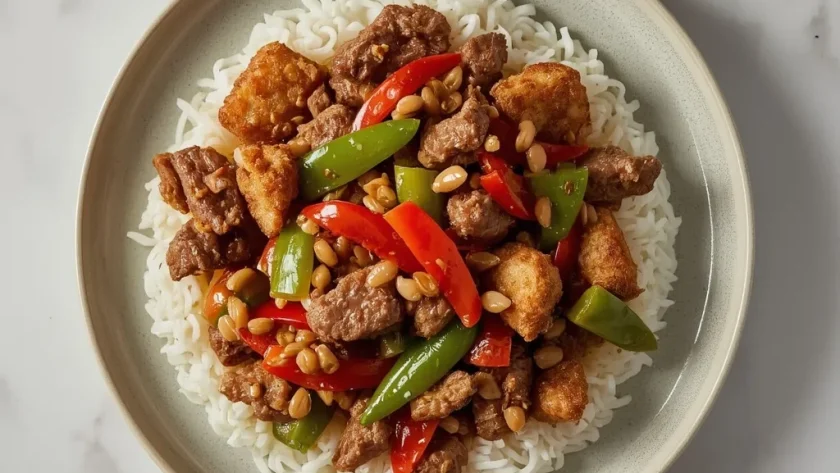
 Crispy, saucy, and packed with bold flavor, this Panda Express Beijing Beef copycat brings the takeout favorite straight to your kitchen. The contrast between the crunchy battered beef and the glossy, sweet-tangy sauce is what makes every bite so satisfying.
This recipe takes about 35 minutes from start to finish and is considered intermediate difficulty. The trickiest part is getting the batter-to-beef ratio right and frying in batches so each strip stays crisp, but the steps are straightforward once you see them broken down.
Why You’ll Love This Recipe
- Better than takeout — You control the oil quality, sodium level, and fresh vegetables, making it a healthier choice without sacrificing flavor.
- Crispy texture that lasts — The cornstarch-and-flour batter creates a light, shatteringly crunchy coating that holds up to the sauce for a few minutes after tossing.
- One wok, one meal — Everything from frying to stir-frying to sauce thickening happens in a single pan, which means less cleanup and faster cooking.
What Makes This Recipe Special
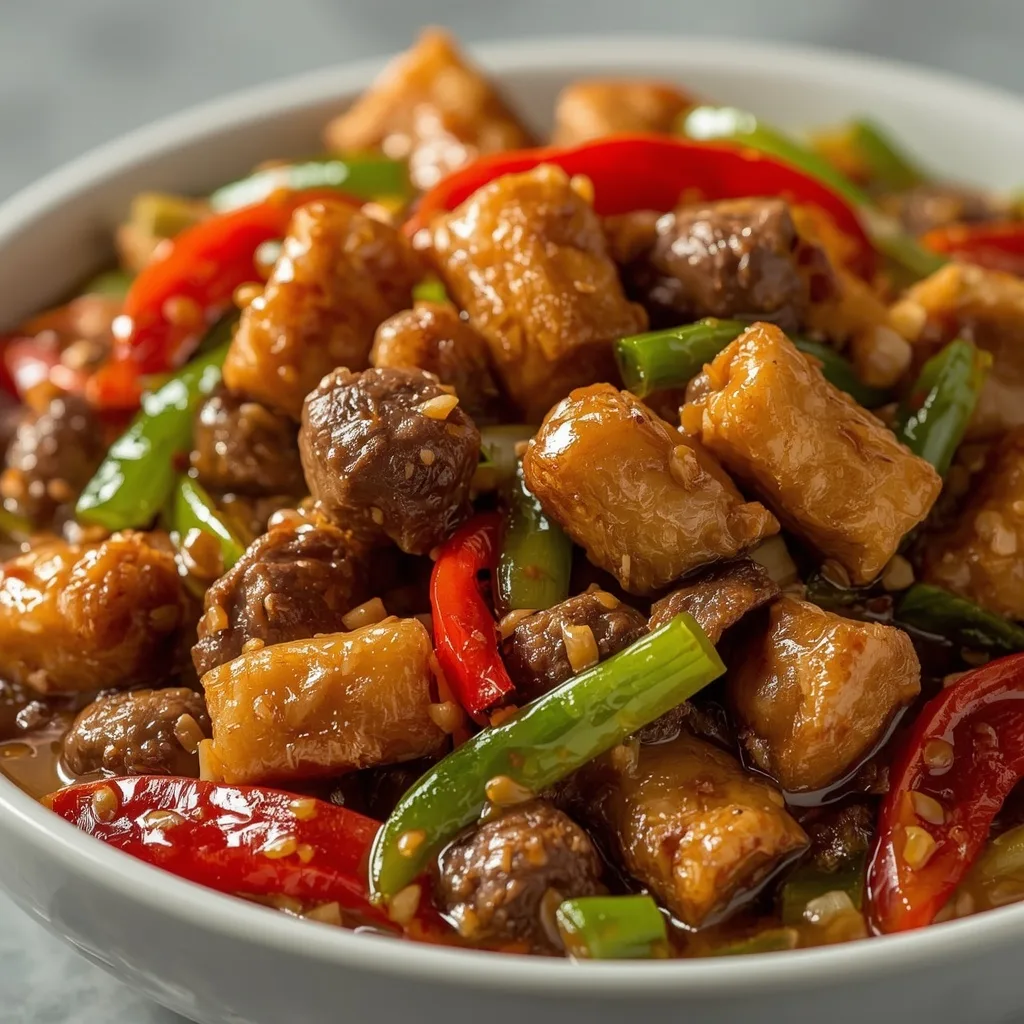
This dish relies on a thin, almost tempura-like batter made from cornstarch and flour, which gives the beef a delicate crunch rather than a heavy, doughy coating. The sauce balances sweetness from sugar with tang from two vinegars and a mild kick from chili garlic sauce. The result is beef that stays juicy inside, bell peppers that are still crisp-tender, and a glossy sauce that clings to every piece without being cloying.
Ingredients You’ll Need
Here is everything required to make this recipe, grouped by what it does in the dish. Stick to the exact measurements for best results.
For the Beef and Batter
- 1 lb beef flank steak — Thinly slice against the grain into ¼-inch strips. Flank steak stays tender if sliced correctly; skirt or sirloin can substitute.
- ½ cup cornstarch — Creates the crispy coating. Do not swap with all-purpose flour alone.
- ¼ cup all-purpose flour — Adds structure to the batter so it does not fall off during frying.
- ½ teaspoon kosher salt — Seasons the batter from within.
- ¼ teaspoon ground white pepper — Lends a mild, floral heat without visible specks. Black pepper works in a pinch.
- 1 large egg, lightly beaten — Helps the batter cling to the beef strips.
- ¼ cup water — Thins the batter to a consistency similar to heavy cream.
For Frying
- 3 cups vegetable oil — Use a neutral oil with a high smoke point, like canola or peanut. Do not reuse oil that has been overheated.
For the Vegetables and Aromatics
- 1 large red bell pepper — Adds sweetness and color. Cut into 1-inch pieces so they cook at the same rate as the onion.
- 1 large green bell pepper — Offers a slightly bitter contrast to the sweet sauce.
- 1 small yellow onion — Cut into 1-inch wedges and separate layers so they caramelize quickly without turning mushy.
- 3 cloves garlic, minced — Cooks for only 30 seconds to stay fragrant, not burnt.
- 1 tablespoon fresh ginger, grated — Provides a warm, peppery note that cuts through the sauce richness.
For the Beijing Sauce
- 2 tablespoons tomato paste — Gives the sauce its reddish hue and deep umami base.
- ¼ cup granulated sugar — The primary sweetener that helps the sauce glaze when simmered.
- 3 tablespoons rice vinegar — Adds mild acidity that balances sweetness.
- 2 tablespoons soy sauce — Provides salty, savory depth. Use low-sodium if you prefer less salt.
- 1 tablespoon Chinese black vinegar or balsamic vinegar — Imports a subtle smoky, malty tang. Balsamic is a fine stand-in.
- 1 tablespoon chili garlic sauce — Huy Fong brand is standard; adjust less for less heat or more for a bigger kick.
- 1 teaspoon sesame oil — Adds a nutty aroma right at the end of cooking.
- 2 teaspoons cornstarch mixed with 2 tablespoons water — The slurry that thickens the sauce to a syrupy consistency.
Equipment Needed
- Wok or deep skillet — A wok offers better heat distribution for stir-frying, but a large, deep skillet works just as well.
- Instant-read thermometer — Ensures oil reaches 350°F / 177°C, which prevents the beef from absorbing too much grease.
- Paper towel-lined plate — Drains excess oil from fried beef strips immediately after frying.
- Small bowl — For whisking together the Beijing sauce before it goes into the wok.
- Slotted spoon or spider strainer — Lifts the beef out of hot oil safely and lets excess oil drip off.
Instructions to Prepare Panda Express Beijing Beef
These steps follow a logical flow: batter the beef, fry it, make the sauce, stir-fry the vegetables, combine everything. Work in batches and keep the oil hot.
- Make the batter and coat the beef — In a large bowl, whisk together ½ cup cornstarch, ¼ cup flour, ½ teaspoon salt, and ¼ teaspoon white pepper. Add the beaten egg and ¼ cup water, whisking until smooth (like heavy cream). Toss the sliced beef strips in the batter until each piece is evenly coated. Let rest for 5 minutes so the batter adheres.
- Fry the beef in batches — Heat the vegetable oil in a wok over medium-high until it reaches 350°F / 177°C, or until a drop of batter sizzles immediately. Line a plate with paper towels. Working in batches (about one-third at a time), carefully add battered beef strips. Fry for 2–3 minutes, stirring occasionally, until golden brown and crisp. Transfer to the paper towel-lined plate. Repeat with the remaining beef.
- Whisk the Beijing sauce — In a small bowl, combine the tomato paste, sugar, rice vinegar, soy sauce, Chinese black vinegar, chili garlic sauce, and sesame oil. Stir until the sugar dissolves completely. Set aside.
- Stir-fry the vegetables — Carefully pour off all but 1 tablespoon of the frying oil from the wok. Return the wok to high heat. Add the red and green bell peppers and onion wedges. Stir-fry for 1–2 minutes until crisp-tender and slightly charred at the edges, but still bright in color.
- Cook the aromatics — Push the vegetables to one side of the wok. Add the minced garlic and grated ginger to the empty space. Cook, stirring constantly, for 30 seconds until fragrant. Do not let the garlic burn.
- Add the sauce and thicken — Pour the prepared Beijing sauce into the wok with the vegetables. Stir to combine and bring to a rapid simmer. Cook for 1 minute to let the sugar caramelize slightly. Give the cornstarch slurry a quick stir, then drizzle it into the simmering sauce while stirring vigorously. Cook for 20–30 seconds until the sauce thickens to a glossy, syrupy consistency that coats the back of a spoon.
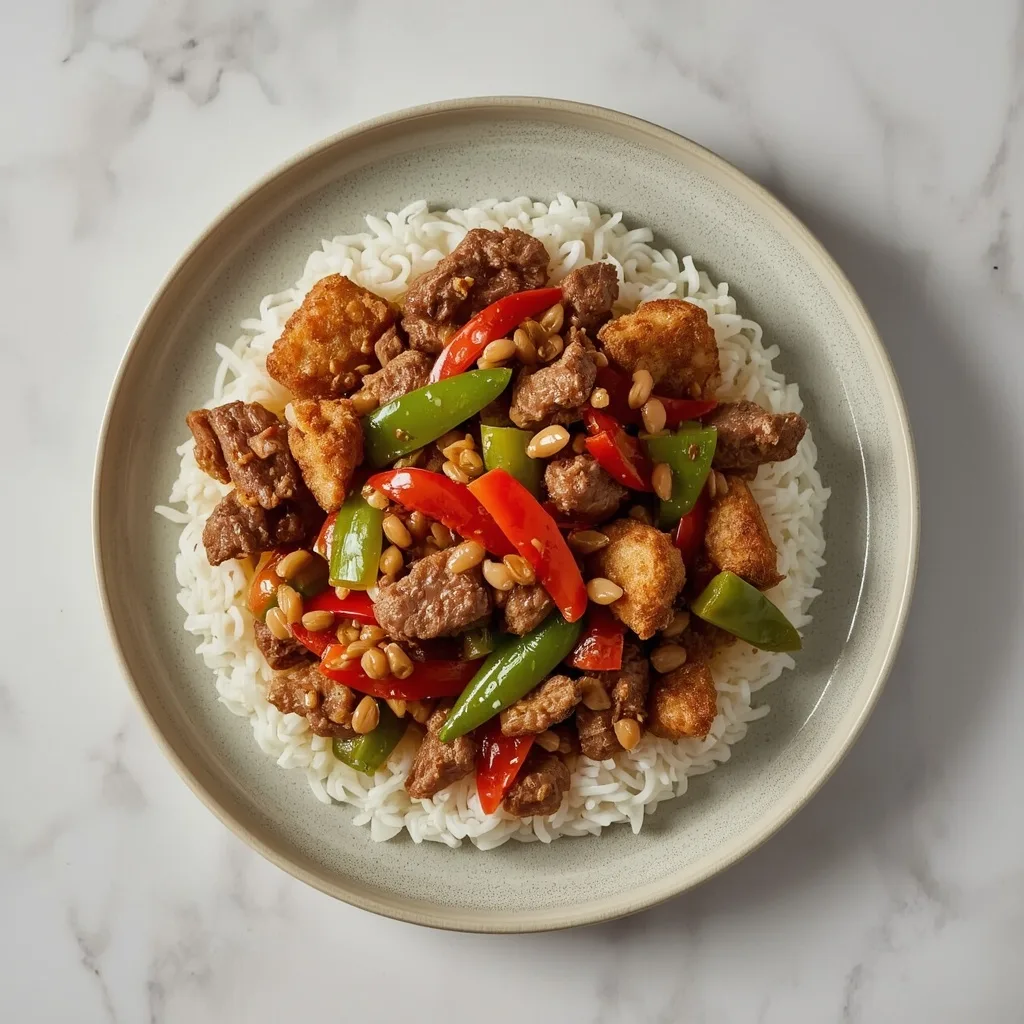
- Toss everything together — Add the fried beef strips back to the wok. Toss gently but thoroughly for 30–45 seconds, ensuring each piece of beef is coated in the sauce. Serve immediately over steamed white rice.
Expert Tips for a Standout Panda Express Beijing Beef
- Slice the beef against the grain — This breaks up the muscle fibers, making the meat tender rather than chewy after frying. Aim for ¼-inch strips.
- Let the batter rest after mixing — A 5-minute rest allows the cornstarch to hydrate fully, which prevents the coating from sliding off during frying.
- Keep the oil at 350°F / 177°C — If the oil is too cool, the batter absorbs grease and turns soggy. Too hot, and the outside burns before the inside cooks. Use a thermometer.
- Fry in small batches — Adding too many beef strips at once drops the oil temperature drastically. Fry about one-third of the beef at a time.
- Cook the sauce until syrupy before adding the beef — The slurry thickens the sauce rapidly, so watch closely. A runny sauce will not cling to the crispy coating.
- Serve immediately after tossing — Every minute the beef sits in the sauce, it softens. For the crispiest texture, plate as soon as everything is combined.
- Use a ventilated area — Frying can produce smoke and splatter. A range hood or open window helps keep the kitchen comfortable.
Common Mistakes to Avoid
- Overcrowding the wok during frying — This lowers the oil temperature, causing the beef to steam instead of crisp. Fry in batches, no matter how tempting it is to dump everything in at once.
- Skipping the batter rest — Without the 5-minute rest, the batter can slough off the beef during frying, leaving you with bare, dry meat.
- Adding the slurry too slowly — The cornstarch sinks to the bottom of the water quickly. Stir it right before pouring and add it in a steady stream while stirring the sauce.
- Overcooking the vegetables — Bell peppers and onion should be crisp-tender and still bright. Cooking them beyond 2 minutes makes them limp and dull.
- Forgetting to drain the fried beef — Leaving fried strips on a paper towel-lined plate for a minute or two helps remove excess oil, keeping the final dish from being greasy.
- Adding the beef to a cold sauce — The sauce must be hot and simmering when you add the beef. A cold or lukewarm sauce will not coat properly and will soak into the batter faster.
Variations & Ways to Customize Panda Express Beijing Beef
- Swap the protein — Use chicken breast or pork tenderloin instead of flank steak. Slice against the grain and adjust the batter quantity accordingly.
- Make it spicier — Add an extra tablespoon of chili garlic sauce or a teaspoon of sriracha to the sauce. Finish with sliced red chili peppers on top.
- Add more vegetables — Toss in thinly sliced carrots, snap peas, or broccoli florets during the vegetable stir-fry step. Increase the sauce slightly if adding a lot of extras.
- Go gluten-free — Replace the all-purpose flour with a gluten-free all-purpose blend (use one that contains xanthan gum). Confirm the soy sauce is tamari or certified gluten-free.
- Make it less sweet — Reduce the granulated sugar to 3 tablespoons and add an extra tablespoon of rice vinegar for more acidity.
- Double the sauce — If you prefer extra saucy beef, multiply all sauce ingredients by 1.5, including the cornstarch and water for the slurry. Keep the cooking time the same.
What to Serve With Panda Express Beijing Beef
This dish pairs best with simple, neutral sides that let the bold sauce shine. Here are a few ideas:
- Steamed white rice — The fluffy grains absorb the sweet-tangy sauce without competing for flavor. Jasmine or short-grain rice works well.
- Steamed broccoli — A bright green vegetable side adds freshness and a mild bitterness that contrasts the rich sauce.
- Egg rolls or spring rolls — Crispy, savory rolls complement the crunchy beef and make the meal feel like a full takeout spread.
- Simple cucumber salad — Thinly sliced cucumbers with rice vinegar and a pinch of salt offer a cool, acidic palate cleanser between bites of fried beef.
- Chilled sake or lager — A crisp, dry beer or a clean sake cuts through the oiliness of the fried beef and balances the sweet sauce.
- Fortune cookies — A light, sweet ending that keeps the Chinese-American takeout theme going.
Make-Ahead Instructions
- Slice the beef up to 1 day ahead — Place the sliced flank steak in an airtight container and refrigerate. Bring to room temperature for 15 minutes before battering.
- Whisk the sauce up to 3 days ahead — Combine all sauce ingredients except the cornstarch slurry in a jar. Refrigerate. Shake or stir well before using.
- Cut the vegetables up to 1 day ahead — Chop the bell peppers and onion, store them in separate airtight bags in the fridge, and stir-fry straight from cold.
- Mix the dry batter ingredients in advance — Combine the cornstarch, flour, salt, and white pepper in a resealable bag. Add the egg and water only when you are ready to cook.
Storage and Reheating
Storage
- Airtight container — Place leftover Beijing beef in an airtight container lined with a paper towel to absorb excess moisture. Refrigerate for up to 2 days.
- Do not freeze — The crispy coating becomes soggy and separates from the beef upon thawing. Freezing is not recommended for this dish.
- Separate the beef from the sauce — If you have extra fried beef and extra sauce, store them separately to keep the beef as crisp as possible. Combine only when reheating.
Reheating
- Oven (best method) — Spread the beef on a baking sheet and warm in a 350°F / 177°C oven for 5–7 minutes, until hot and the edges crisp up again.
- Skillet on the stovetop — Reheat in a nonstick skillet over medium heat, stirring frequently, for 3–4 minutes. Add a splash of water if the sauce seems too dry.
- Air fryer — Place leftover beef in the air fryer basket at 350°F / 177°C for 3–4 minutes, shaking halfway through. This restores the crunch well.
- Microwave (not recommended) — If you must use the microwave, heat in 30-second bursts on medium power. The coating will soften significantly, so expect a chewier texture.
Nutritional Breakdown (Per Serving)
Based on 1 serving out of 4 total.
- Calories — 475
- Protein — 28g
- Fat — 22g
- Saturated Fat — about 4g
- Carbohydrates — 45g
- Fiber — 2g
- Sugar — around 16g
- Sodium — roughly 1020mg
- Cholesterol — about 75mg
Frequently Asked Questions
Can I use a different cut of beef for Panda Express Beijing Beef?
Yes, skirt steak or sirloin works well as a substitute for flank steak. Slice them against the grain into thin strips, and adjust the frying time slightly if the strips are thicker or thinner.
Why did my batter fall off the beef during frying?
This usually happens when the oil is not hot enough or the batter did not rest for the full 5 minutes. Make sure the oil reaches 350°F / 177°C and let the battered beef sit before adding it to the oil.
Can I make Panda Express Beijing Beef less spicy?
Absolutely. Reduce or omit the chili garlic sauce entirely. The dish will still have sweetness and tang from the other sauce ingredients, just without the heat.
How do I keep the beef crispy after tossing it in the sauce?
Serve the dish immediately after tossing. The sauce softens the coating over time, so do not let it sit in the wok or on the counter before plating.
Can I air fry the beef instead of deep frying?
Yes, but the texture will be less crunchy. Spray the battered beef strips lightly with oil and air fry at 380°F / 193°C for 8–10 minutes, flipping halfway. Toss with sauce immediately before serving.
How long does Panda Express Beijing Beef last in the fridge?
Store leftovers in an airtight container for up to 2 days. Reheat in the oven or air fryer for best texture, as the microwave will make the coating soggy.
Final Words
This Panda Express Beijing Beef recipe delivers that addictive combination of sweet, tangy, and spicy flavors with a satisfying crunch. The steps are straightforward once you have everything prepped, and the payoff is a plated dish that rivals any takeout order. Give it a try the next time you crave crispy, saucy beef — you will be glad you did.
More Recipes
- Panda Express Fried Rice
- Buffalo Wild Wings Parmesan Garlic Sauce
- Cheesecake Factory Louisiana Chicken Pasta
Panda Express Beijing Beef
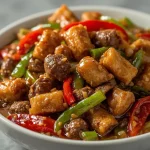
This copycat Beijing Beef is a symphony of sweet, tangy, and spicy flavors, featuring tender strips of beef coated in a light, crispy batter and tossed with vibrant bell peppers and onions in a glossy, savory-sweet sauce. The beef is perfectly crunchy outside and juicy within, while the sauce clings to every bite, delivering a restaurant-quality experience at home.
- Prep Time: 20
- Cook Time: 15
- Total Time: 35
- Yield: 4 1x
- Category: Main Course
- Method: Stovetop
- Cuisine: Chinese-American
Ingredients
- 1 lb beef flank steak, thinly sliced against the grain into 1/4-inch strips
- 1/2 cup cornstarch
- 1/4 cup all-purpose flour
- 1/2 teaspoon kosher salt
- 1/4 teaspoon ground white pepper
- 1 large egg, lightly beaten
- 1/4 cup water
- 3 cups vegetable oil, for frying
- 1 large red bell pepper, seeded and cut into 1-inch pieces
- 1 large green bell pepper, seeded and cut into 1-inch pieces
- 1 small yellow onion, cut into 1-inch wedges and separated into layers
- 3 cloves garlic, minced
- 1 tablespoon fresh ginger, grated
- 2 tablespoons tomato paste
- 1/4 cup granulated sugar
- 3 tablespoons rice vinegar
- 2 tablespoons soy sauce
- 1 tablespoon Chinese black vinegar or balsamic vinegar
- 1 tablespoon chili garlic sauce (such as Huy Fong)
- 1 teaspoon sesame oil
- 2 teaspoons cornstarch mixed with 2 tablespoons water (slurry)
Instructions
- In a large bowl, combine the 1/2 cup cornstarch, all-purpose flour, salt, and white pepper. Add the beaten egg and water, whisking until a smooth, thin batter forms (similar to heavy cream). Add the sliced beef strips and toss well to coat each piece evenly. Let the beef rest for 5 minutes to allow the batter to adhere.
- Heat the vegetable oil in a large wok or deep skillet over medium-high heat until the oil reaches 350°F / 177°C or a small drop of batter sizzles immediately upon contact. Meanwhile, line a plate with paper towels. Working in batches to avoid crowding, carefully add about one-third of the battered beef strips to the hot oil. Fry for 2 to 3 minutes, stirring occasionally, until the beef is golden brown and crisp. Transfer to the prepared plate. Repeat with remaining beef.
- In a small bowl, whisk together the tomato paste, granulated sugar, rice vinegar, soy sauce, Chinese black vinegar, chili garlic sauce, and sesame oil until the sugar is fully dissolved. Set this Beijing sauce aside.
- Carefully pour off all but 1 tablespoon of the frying oil from the wok. Return the wok to high heat. Add the red and green bell peppers and onion wedges. Stir-fry for 1 to 2 minutes, until the vegetables are crisp-tender and slightly charred at the edges, but still bright in color.
- Push the vegetables to one side of the wok. Add the minced garlic and grated ginger to the empty space and cook, stirring constantly, for 30 seconds until fragrant. Be careful not to burn the garlic.
- Pour the prepared Beijing sauce into the wok with the vegetables. Stir to combine and bring the sauce to a rapid simmer. Let it cook for 1 minute, allowing the sugar to caramelize slightly and the sauce to thicken naturally.
- Give the cornstarch slurry a quick stir to recombine, then drizzle it into the simmering sauce while stirring vigorously. Continue to cook for 20 to 30 seconds, until the sauce thickens to a glossy, syrupy consistency that clings to the back of a spoon.
- Add the fried beef strips back to the wok. Toss everything together gently but thoroughly for about 30 to 45 seconds, ensuring each piece of beef is coated in the sauce. The beef will soften slightly but should retain its crisp edges. Serve immediately over steamed white rice.
Notes
For best texture, serve the Beijing Beef immediately after tossing with the sauce, as leftovers will cause the crispy coating to soften. Store leftovers in an airtight container in the refrigerator for up to 2 days. To reheat, spread the beef on a baking sheet and warm in a 350°F / 177°C oven for 5 to 7 minutes, or until hot and crisp. Alternatively, reheat in a nonstick skillet over medium heat, stirring frequently, for 3 to 4 minutes. Freezing is not recommended as the coating will become soggy upon thawing.
Nutrition
- Calories: 475
- Sugar: 16g
- Sodium: 1020mg
- Unsaturated Fat: 3.5g
- Carbohydrates: 45g
- Fiber: 2g
- Protein: 28g
- Cholesterol: 105mg
Keywords: Beijing beef, Panda Express copycat, Chinese-American beef stir-fry, crispy beef, sweet and spicy beef, bell pepper beef, weeknight dinner, easy stir-fry recipe, takeout at home