 Kendric adan
 Raspberry Chipotle Sauce is a quick stovetop sauce that balances sweet raspberries with smoky, earthy heat from chipotle peppers. It works as a glaze for grilled chicken or pork, a dip for crispy appetizers, or a drizzle over tacos and quesadillas.
This recipe takes 25 minutes total and is beginner-friendly. The only slightly tricky step is blending the hot mixture, but a careful pause to let it cool for five minutes makes it safe and easy.
Why You’ll Love This Recipe
- Balanced flavors — The natural acidity of raspberries cuts through the smoky richness of chipotle, creating a sauce that is sweet, tangy, and spicy all at once.
- Quick cooking time — From start to finish you need about 25 minutes, most of which is hands-off simmering.
- Versatile use — Brush it on grilled meats, stir it into cream cheese for a dip, or spoon it over roasted vegetables for an instant flavor upgrade.
- Simple ingredients — Six pantry staples come together with no obscure additions or hard-to-find items.
What Makes This Raspberry Chipotle Sauce Special
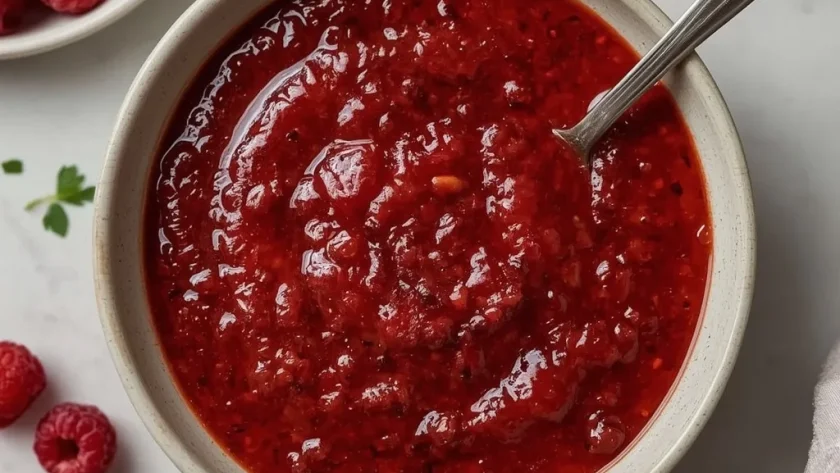
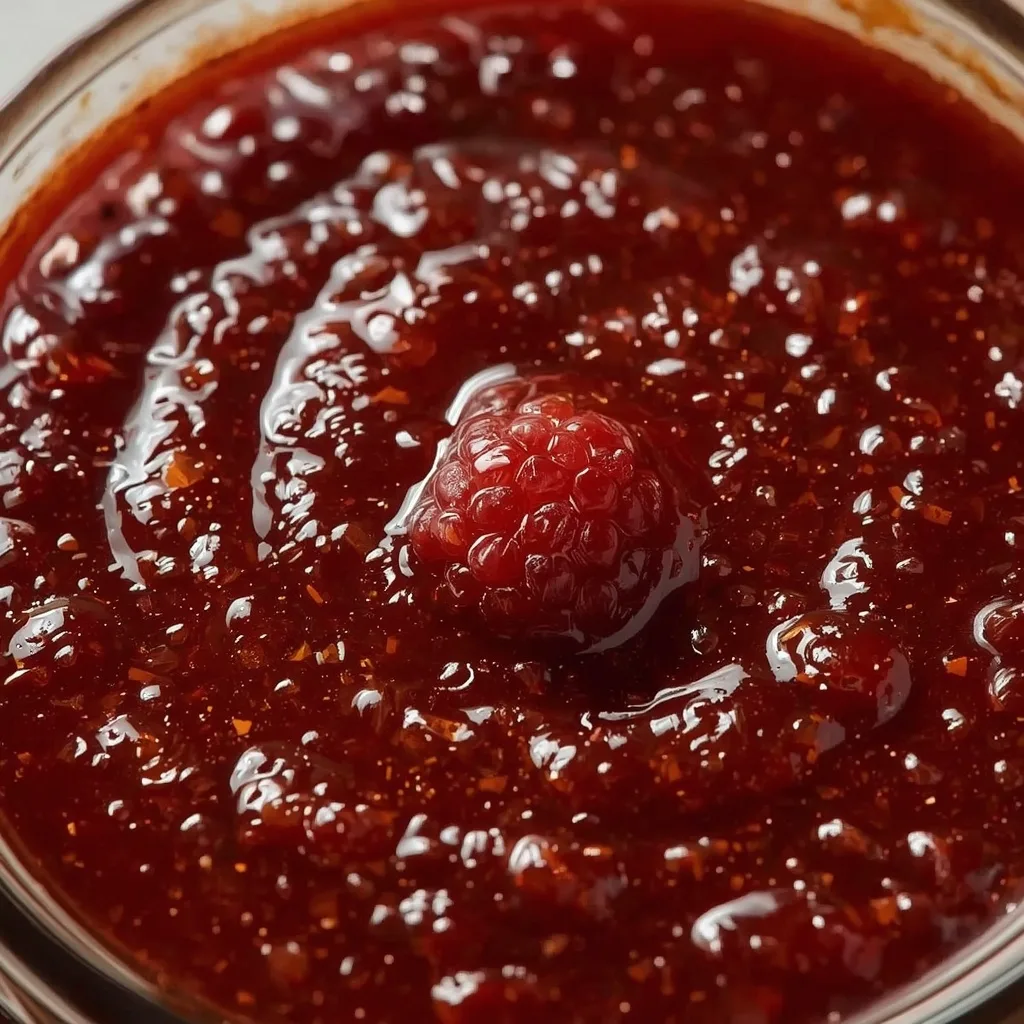
The combination of fresh raspberries and chipotle peppers in adobo sauce creates a deep, complex flavor that most store-bought sauces cannot match. The fruit provides bright acidity while the chipotle adds a slow-building warmth that never overpowers. The texture is smooth and glossy, with tiny flecks of chipotle seeds that confirm it is homemade. This sauce bridges Mexican and American cooking, making it welcome at backyard barbecues, taco nights, or holiday appetizer spreads.
Ingredients You’ll Need
You likely have most of these on hand already. Each ingredient plays a specific role that makes the final sauce balanced and useable.
Fresh or Frozen Raspberries
- 1 cup fresh raspberries (or frozen, thawed) — The base of the sauce. Fresh berries give a brighter flavor, but thawed frozen raspberries work perfectly and are often more affordable. Do not use raspberry jam or jelly, as the added sugar and pectin will change the texture.
Chipotle Peppers and Adobo Sauce
- 2 chipotle peppers in adobo sauce, plus 1 tablespoon adobo sauce from the can — The smoky-spicy backbone. Whole chipotle peppers provide the heat, while the adobo sauce adds tangy depth and color. One can usually contains several peppers; store the extras in a sealed container in the fridge for up to two weeks.
Sweetener and Acid
- ¼ cup granulated sugar — Balances the tartness of the raspberries and the heat of the chipotles. Granulated sugar dissolves cleanly and does not alter the color.
- 2 tablespoons apple cider vinegar — Adds a bright, fruity tang that complements the raspberries and preserves the sauce. White wine vinegar or distilled white vinegar can be used in a pinch, but the flavor will be less complex.
Liquid and Seasoning
- ¼ cup water — Thins the sauce to the right consistency for simmering and blending. You can substitute raspberry juice if you have it, but water keeps the flavor clean.
- ¼ teaspoon kosher salt — Enhances every other flavor without making the sauce salty. Table salt is fine, but use half the amount since it is more concentrated.
Equipment Needed
- Non-reactive saucepan (stainless steel or enameled) — Prevents the acid from the raspberries and vinegar from reacting with the metal, which can create a metallic taste. Avoid bare aluminum or uncoated cast iron.
- Wooden spoon or silicone spatula — Gently stirs and breaks down the raspberries without scratching the saucepan surface.
- Blender or immersion blender — Turns the chunky mixture into a smooth, emulsified sauce. A standard countertop blender produces the smoothest results; an immersion blender is quicker to clean.
- Fine-mesh sieve (optional but recommended) — Strains out the seeds and pepper skins for a silky, refined texture. If you do not mind tiny seeds, skip this step.
- Glass jar or airtight container — For storing the finished sauce in the refrigerator or freezer. Glass is best because it does not absorb odors and lets you see the contents.
Instructions to Prepare Raspberry Chipotle Sauce
The whole process takes less than half an hour and moves from stovetop to blender and back again. Follow the order exactly to avoid scorching or a grainy texture.
- Combine ingredients — In a medium non-reactive saucepan, combine 1 cup fresh raspberries, 2 chipotle peppers plus 1 tablespoon adobo sauce, ¼ cup granulated sugar, 2 tablespoons apple cider vinegar, ¼ cup water, and ¼ teaspoon kosher salt. Stir gently with a wooden spoon to break up the raspberries slightly and dissolve the sugar. The mixture will look dark red and slightly chunky.
- Simmer gently — Place the saucepan over medium heat and bring to a gentle simmer, stirring frequently. Small bubbles should appear after about 3 minutes. Do not let it boil vigorously, as that can scorch the sugars and make the sauce bitter.
- Cook on low heat — Once simmering, reduce the heat to low and cook for 5 minutes, stirring occasionally. The raspberries will break down completely and the liquid will thicken slightly. The sauce should coat the back of a spoon but still be pourable. If it seems too thick, add an extra tablespoon of water.
- Cool briefly — Remove the saucepan from the heat and let the mixture cool for 5 minutes. This prevents steam burns when blending and allows the flavors to meld. Wear an oven mitt and use caution when handling the hot pan.
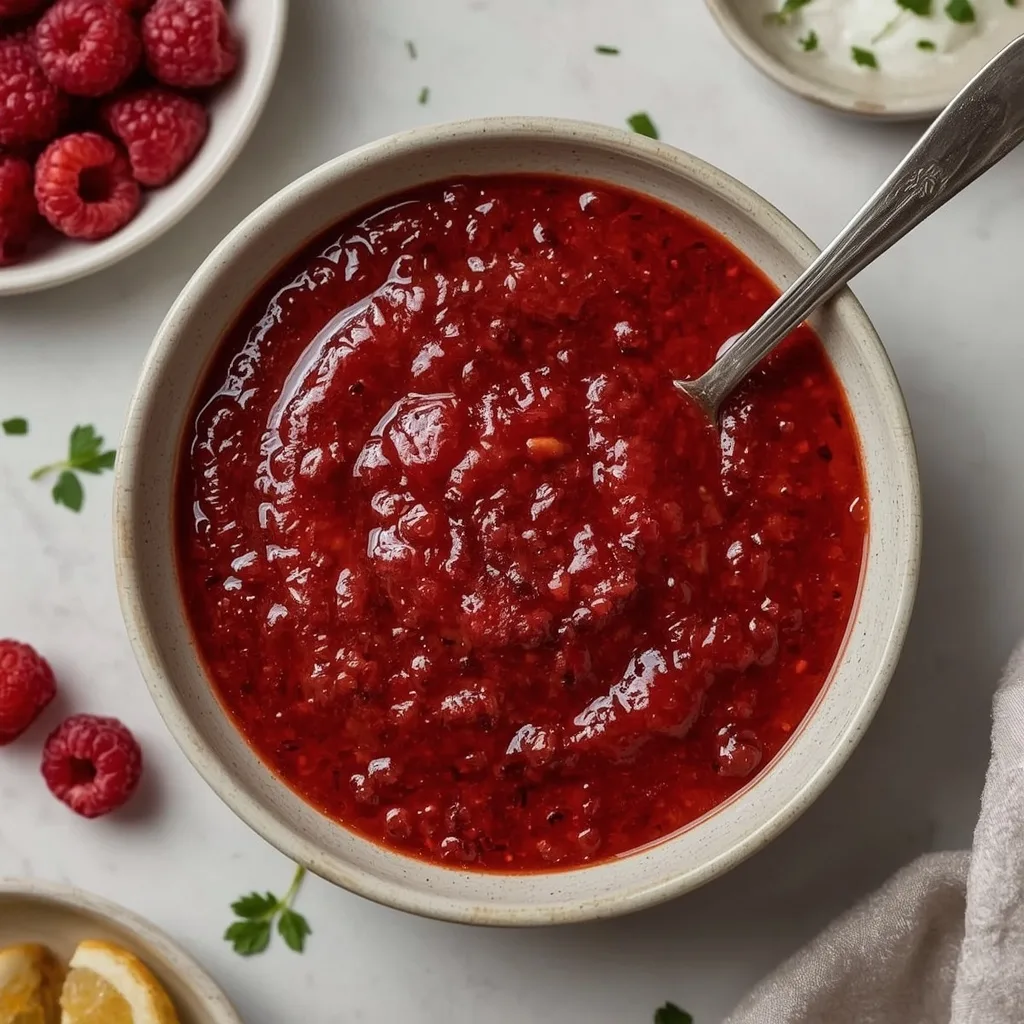
- Blend until smooth — Transfer the mixture to a blender or use an immersion blender directly in the saucepan. Blend on low speed, gradually increasing to high, until completely smooth. The sauce will turn a uniform deep mahogany color with tiny flecks of chipotle seeds.
- Strain for refined texture (optional) — For an extra-smooth sauce, strain it through a fine-mesh sieve set over a clean bowl. Press the solids with the back of a spoon to extract as much liquid as possible, then discard the seeds and pepper skins. This step is optional but recommended for a refined texture.
- Adjust seasoning — Return the strained sauce to the saucepan and bring to a bare simmer over low heat. Taste and add a pinch more salt if needed, or a teaspoon more vinegar for extra tang. Simmer for 1 minute to integrate the adjustments.
- Cool and store — Remove from heat and let the sauce cool completely to room temperature. As it cools, it will thicken further. Transfer to an airtight glass jar or container and refrigerate for at least 30 minutes before serving to allow the flavors to meld. Serve at room temperature or chilled.
Expert Tips for a Standout Raspberry Chipotle Sauce
- Use gentle heat throughout — High heat can scorch the sugar and create a bitter, burnt flavor. Keep the heat at medium for the initial simmer and low for the final cooking. The sauce should bubble lazily, not aggressively.
- Break up raspberries early — Stirring with the wooden spoon right at the start helps the berries release their juice quickly. This prevents large fruit chunks from remaining intact after blending.
- Cool before blending — A five-minute rest after cooking does two things: it drops the temperature enough to avoid steam burns when you open the blender lid, and it gives the flavors time to marry. Do not skip this step.
- Strain for company-ready texture — The optional strain step removes every seed and pepper skin. If you are serving the sauce at a gathering or drizzling it over a fancy dish, take the extra three minutes to strain it. For everyday use, leaving the seeds in is fine.
- Taste before adjusting — The sweetness and heat level can vary depending on your specific raspberries and chipotle peppers. Always taste the sauce after simmering and before adding more sugar or vinegar. You might find it needs nothing.
- Let it rest overnight — The sauce is good after 30 minutes in the fridge, but it is even better the next day. The flavors meld and deepen as it chills, producing a more cohesive taste.
Common Mistakes to Avoid
- Boiling the mixture too vigorously — Aggressive boiling can scorch the sugars, turning the sauce bitter and ruining the flavor. Keep the heat moderate and watch for small, gentle bubbles instead of a rolling boil.
- Skipping the cool-down before blending — Blending hot liquid in a closed blender can create pressure that blows the lid off and splatters hot sauce everywhere. Always let the mixture rest for 5 minutes, and crack the blender lid slightly open while blending to release steam.
- Using too many chipotle peppers — The recipe calls for 2 peppers plus 1 tablespoon of adobo sauce. Doubling the peppers without adjusting the other ingredients will overpower the raspberry flavor and make the sauce too spicy for most uses.
- Adding extra sugar before tasting — Frozen raspberries can be sweeter than fresh ones, and the adobo sauce already contains sugar. Add the full ¼ cup as directed, then taste after cooking before adding more sweetener.
- Storing in a plastic container while hot — Hot sauce poured into plastic can leach chemicals and may warp the container. Always cool the sauce to room temperature before transferring to any storage vessel.
- Skipping the strain step for a refined finish — If you plan to serve this sauce in a visible way, such as drizzled over cheesecake or brushed on grilled salmon, the seeds can be distracting. Take the extra step for a polished result.
Variations & Ways to Customize Raspberry Chipotle Sauce
- Milder version — Reduce the chipotle peppers to 1 and use only 1 teaspoon of adobo sauce. The raspberry flavor will shine through more clearly while still carrying a gentle smoky note.
- Spicier kick — Add 1 to 2 extra chipotle peppers and an additional teaspoon of adobo sauce. Blend thoroughly and taste before serving, adjusting the sweetness with a pinch of sugar if the heat is too aggressive.
- Fruit swap — Substitute half the raspberries with blackberries, strawberries, or diced mango. The cooking time remains the same, but the flavor profile shifts dramatically. Mango-chipotle is especially good on fish tacos.
- Herb infusion — Add 2 sprigs of fresh thyme or 1 sprig of fresh rosemary to the saucepan during the initial simmer. Remove the sprigs before blending. The herbs add an earthy backbone that pairs well with pork.
- Smokier flavor — Toast 1 dried chipotle pepper in a dry skillet over medium heat for 30 seconds per side before rehydrating in hot water for 10 minutes. Add this along with the canned chipotles for an extra layer of natural smoke.
- Thicker glaze texture — Simmer the strained sauce for an additional 3 to 5 minutes on low heat after blending. The reduction will create a syrupy glaze that clings beautifully to grilled chicken wings or ribs.
What to Serve With Raspberry Chipotle Sauce
This sauce is versatile enough to pair with almost any savory dish. Here are some tried-and-true ways to use it.
- Grilled chicken breasts or thighs — Brush the sauce on during the last 2 minutes of grilling and serve extra on the side. The smoky heat complements charred poultry perfectly.
- Pork tenderloin or chops — The sweetness of the raspberries balances the richness of pork. Spoon the sauce over the meat just before serving, or use it as a marinade for 30 minutes before cooking.
- Fish tacos — Drizzle the sauce over crispy fish pieces in warm corn tortillas with shredded cabbage and lime crema. The acidity cuts through the oil and brightens the whole dish.
- Cream cheese dip — Stir 2 tablespoons of the sauce into 4 ounces of softened cream cheese. Serve with crackers or pretzel chips for an easy, crowd-pleasing appetizer.
- Roasted vegetables — Toss broccoli, Brussels sprouts, or sweet potatoes with a few tablespoons of the sauce before roasting. The glaze caramelizes in the oven and adds a sweet-spicy crust.
- Quesadillas or enchiladas — Use the sauce as a dipping side for cheesy quesadillas or drizzle it over enchiladas before baking for a tangy, smoky finish.
Make-Ahead Instructions
- Prep the ingredients in advance — Measure the raspberries (thawed if frozen), chop the chipotle peppers, and combine the dry ingredients in a small bowl. Store them in separate containers in the fridge for up to 24 hours before cooking.
- Cook the sauce up to 5 days ahead — Follow the entire recipe and store the finished sauce in an airtight glass jar in the refrigerator. The flavors actually improve after a day of resting, so making it ahead is a smart move.
- Freeze for long-term storage — Pour the cooled sauce into ice cube trays and freeze until solid. Transfer the cubes to a freezer bag and store for up to 3 months. Thaw individual cubes as needed for small batches.
- Blend and strain ahead of assembly — If you plan to use the sauce as a glaze for a specific dish, you can prepare the blended and strained sauce up to 3 days in advance and keep it refrigerated until you are ready to use it.
Storage and Reheating
Storage
- Refrigeration — Store the sauce in an airtight glass jar or container in the refrigerator for up to 2 weeks. Glass is best because it does not absorb odors or stain. Make sure the sauce is completely cool before sealing the lid.
- Freezing — Transfer the cooled sauce to a freezer-safe container, leaving about ½ inch of headspace to allow for expansion. It will keep for up to 3 months. Thaw overnight in the refrigerator before using.
- Portioning — For easy single-use portions, freeze the sauce in ice cube trays. Once frozen, pop the cubes out and store them in a labeled freezer bag. Each cube is roughly 2 tablespoons.
- Texture after thawing — The sauce may appear separated after freezing. A quick stir or brief simmer will bring it back to its original smooth consistency. Do not overheat it or the raspberry flavor can become dull.
Reheating
- Stovetop (best method) — Place the desired amount of sauce in a small saucepan over low heat. Stir occasionally until warm, about 2 to 3 minutes. Add a splash of water if the sauce has thickened too much during storage.
- Microwave — Transfer the sauce to a microwave-safe bowl and heat in 10-second bursts, stirring between each, until it reaches the desired temperature. This takes roughly 30 to 40 seconds. Watch closely to avoid scorching the sugar.
- Direct from frozen — Add frozen sauce cubes directly to a hot pan or skillet while cooking. They will melt and incorporate into the dish without needing separate reheating. This works especially well for glazes.
- Room temperature serving — The sauce is excellent served cold or at room temperature, making reheating completely optional for dips and cold applications. Let it sit on the counter for 15 minutes before serving to take the chill off.
Nutritional Breakdown (Per Serving)
Based on 1 serving = ¼ of the total recipe (roughly ¼ cup of sauce).
- Calories: 66
- Protein: 0.4g
- Fat: 0.2g
- Saturated Fat: 0g
- Carbohydrates: 15.7g
- Fiber: about 2g
- Sugar: around 13.4g
- Sodium: roughly 150mg
- Cholesterol: 0mg
Frequently Asked Questions
Can I freeze Raspberry Chipotle Sauce?
Yes. Cool the sauce completely, then transfer it to a freezer-safe container or ice cube trays. It will keep well for up to 3 months. Thaw overnight in the refrigerator and stir well before using.
How long does Raspberry Chipotle Sauce last in the fridge?
Stored in an airtight glass jar or container, the sauce stays fresh for up to 2 weeks. Always let it cool to room temperature before refrigerating. If you notice any off smell or mold, discard it immediately.
Can I use frozen raspberries instead of fresh?
Yes. Thaw them first and drain off any excess liquid. Frozen raspberries are often slightly sweeter than fresh, so you may need to reduce the sugar by a teaspoon or two. The final texture will be identical.
Is this sauce very spicy?
No. The 2 chipotle peppers provide a mild, smoky warmth that builds slowly but does not overwhelm. If you are sensitive to spice, reduce the peppers to 1 and use only 1 teaspoon of adobo sauce. For more heat, add extra peppers.
Can I make this sauce without a blender?
Yes. Mash the raspberries thoroughly with a potato masher or the back of a fork during cooking, and press the mixture through a fine-mesh sieve to remove the seeds and pepper skins. The texture will be slightly chunkier but still delicious.
What can I use instead of apple cider vinegar?
White wine vinegar or distilled white vinegar both work well. The flavor will be slightly sharper than apple cider vinegar, so add it gradually and taste as you go. Lemon juice can also be used for a brighter, citrusy note.
Final Words
This homemade Raspberry Chipotle Sauce comes together in under half an hour and adds a sweet-smoky kick to so many dishes. The balance of tart berries, gentle heat, and deep smoke is exactly what homemade condiments should be: simple, honest, and absolutely worth the small effort. Give it a try on your next taco night or grilled chicken dinner, and see how quickly it becomes a kitchen staple.
More Recipes
PrintRaspberry Chipotle Sauce
A sweet and smoky sauce with deep berry flavor and a subtle kick from chipotle peppers. Perfect as a glaze for grilled meats or a dip for crispy appetizers, this versatile sauce balances bright raspberry acidity with earthy heat.
- Prep Time: 10
- Cook Time: 15
- Total Time: 25
- Yield: 4 1x
- Category: Snack
- Method: Stovetop
- Cuisine: Mexican-American
Ingredients
- 1 cup fresh raspberries (or frozen, thawed)
- 2 chipotle peppers in adobo sauce, plus 1 tablespoon adobo sauce from the can
- 1/4 cup granulated sugar
- 2 tablespoons apple cider vinegar
- 1/4 cup water
- 1/4 teaspoon kosher salt
Instructions
- In a medium non-reactive saucepan (stainless steel or enameled), combine 1 cup fresh raspberries, 2 chipotle peppers plus 1 tablespoon adobo sauce, 1/4 cup granulated sugar, 2 tablespoons apple cider vinegar, 1/4 cup water, and 1/4 teaspoon kosher salt. Using a wooden spoon, gently stir to break up the raspberries slightly and dissolve the sugar. The mixture will look dark red and slightly chunky.
- Place the saucepan over medium heat and bring to a gentle simmer, stirring frequently. You should see small bubbles breaking the surface after about 3 minutes. Do not let it boil vigorously, as that can scorch the sugars and make the sauce bitter.
- Once simmering, reduce the heat to low and cook for 5 minutes, stirring occasionally. The raspberries will break down completely and the liquid will thicken slightly; the sauce should coat the back of a spoon but still be pourable. If it seems too thick, add an extra tablespoon of water.
- Remove the saucepan from the heat and let the mixture cool for 5 minutes. This step prevents steam burns when blending and allows the flavors to meld. Wear an oven mitt and use caution when handling the hot pan.
- Transfer the mixture to a blender or use an immersion blender directly in the saucepan. Blend on low speed, gradually increasing to high, until completely smooth. The sauce will turn a uniform deep mahogany color with tiny flecks of chipotle seeds.
- For an extra-smooth sauce, strain it through a fine-mesh sieve set over a clean bowl. Press the solids with the back of a spoon to extract as much liquid as possible, then discard the seeds and pepper skins. This step is optional but recommended for a refined texture.
- Return the strained sauce to the saucepan and bring to a bare simmer over low heat. Taste and adjust seasoning: add a pinch more salt if needed, or a teaspoon more vinegar for extra tang. Simmer for 1 minute to integrate the adjustments.
- Remove from heat and let the sauce cool completely to room temperature. As it cools, it will thicken further. Transfer to an airtight glass jar or container and refrigerate for at least 30 minutes before serving to allow the flavors to meld. Serve at room temperature or chilled.
Notes
Store in an airtight container in the refrigerator for up to 2 weeks. Can be frozen for up to 3 months; thaw overnight in the refrigerator before use. To reheat, place in a small saucepan over low heat, stirring occasionally until warm, or microwave in 10-second bursts, stirring between each, until desired temperature.
Nutrition
- Calories: 66
- Sugar: 13.4g
- Sodium: 150mg
- Unsaturated Fat: 0g
- Carbohydrates: 15.7g
- Fiber: 2g
- Protein: 0.4g
- Cholesterol: 0mg
Keywords: raspberry chipotle sauce, chipotle raspberry glaze, smoky raspberry sauce, sweet and spicy sauce, fruit chipotle sauce, Mexican condiment, dipping sauce, glaze for chicken, easy sauce recipe, homemade sauce, raspberry adobo sauce