
 Kendric adan
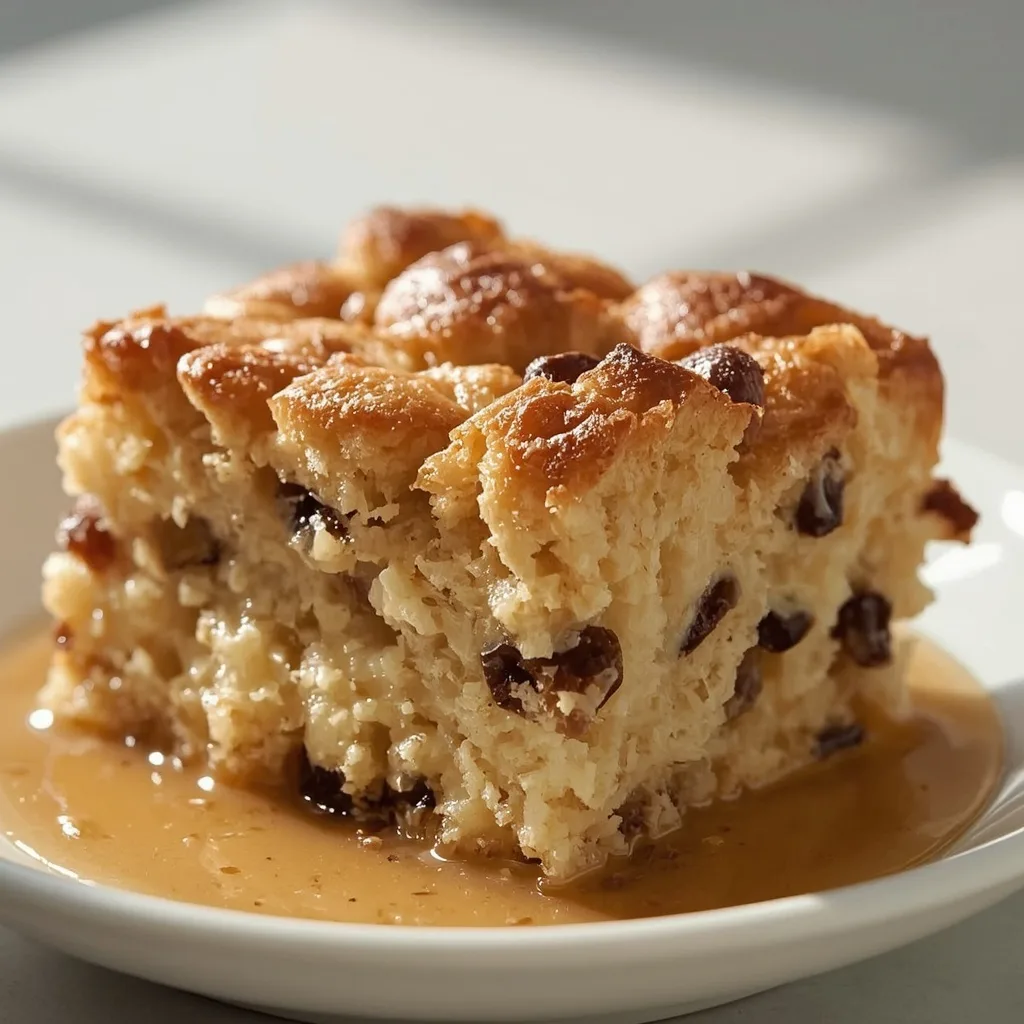
 Duffs Bread Pudding is a classic American dessert that turns simple staple ingredients into a rich, custardy bake. It is loaded with warm cinnamon flavor and has a slightly crunchy golden top that contrasts with the soft center. The raisins add little bursts of sweetness throughout each bite.
This recipe takes about 65 minutes from start to finish and is absolutely beginner-friendly. The only step that needs a little patience is letting the bread fully soak up the custard, but the instructions guide you through it clearly.
Why You’ll Love This Recipe
- Simple ingredients — You probably have most of these in your kitchen right now. Nothing fancy, nothing hard to find.
- Budget-friendly dessert — This is the perfect way to use up leftover bread that would otherwise go to waste. It turns something ordinary into something special.
- Make-ahead friendly — You can prep the custard soak the night before and bake it the next day. It actually gets better as the flavors meld.
- Customizable — Swap the raisins for chocolate chips, dried cranberries, or leave them out entirely. The base recipe works with whatever you have on hand.
Similar Recipes
What Makes This Duff’s Bread Pudding Recipe Special
The custard-to-bread ratio in this recipe is dialed in so you get a set, sliceable pudding without any dry spots. Using stale brioche or challah gives a naturally rich flavor that soaks up the liquid without turning to mush. The cinnamon is warm but not overpowering, and the golden-brown top adds just enough texture to keep every bite interesting. This is the kind of dessert that works for Sunday supper or a holiday table.
Ingredients You’ll Need
For the Bread Base
- 4 cups (about 8 oz) stale bread, cut into 1-inch cubes (preferably brioche or challah) — The sturdier and drier the bread, the better it absorbs the custard. Brioche or challah add richness, but a crusty sourdough or French bread works too. If your bread is fresh, you will need to toast it first.
- 1/2 cup raisins (optional) — These plump up during baking and add little pockets of sweetness. If raisins are not your thing, dried cherries or chopped dried apricots make excellent swaps.
For the Custard
- 2 cups whole milk — Whole milk gives the custard its creamy body. Lower-fat milk will work in a pinch, but the texture will be noticeably thinner and less luxurious.
- 3 large eggs — Eggs are what set the custard. Use large eggs (not extra-large or medium) for the right liquid-to-protein balance.
- 1/2 cup granulated sugar — Standard white sugar dissolves cleanly and sweetens without adding any competing flavor. No need for brown sugar here.
- 1/4 cup unsalted butter, melted — Melted butter enriches the custard and helps the top brown beautifully. Unsalted lets you control the salt level.
- 1 tablespoon vanilla extract — A full tablespoon might seem like a lot, but vanilla is the backbone of the flavor here. Use pure vanilla extract if you have it.
- 1 teaspoon ground cinnamon — Cinnamon is the dominant spice. It is warm and aromatic without being spicy.
- 1/4 teaspoon kosher salt — Salt balances the sweetness and makes the cinnamon flavor pop. Do not skip it.
Equipment Needed
- 8×8-inch baking dish — This size gives the right thickness for a custard that sets properly. A 9×9 will work but the pudding will be thinner and might bake faster, so start checking at 35 minutes.
- Large mixing bowl — You need enough room to whisk the custard and then fold in the bread cubes without spillage. A standard 4-quart bowl is perfect.
- Rubber spatula — Folding the bread into the custard is gentler with a spatula, which also helps you press the bread down during the soak without crushing it.
- Rimmed baking sheet — Only needed if your bread is not stale enough. Spreading the cubes on a sheet pan lets them dry out evenly in the oven.
- Wire rack — Cooling the baked pudding on a rack prevents the bottom from steaming and getting soggy. It also helps the custard set faster.
Instructions to Prepare Duffs Bread Pudding
These steps are straightforward, but the resting times are where the magic happens. Do not rush them.
- Preheat and prep the dish — Preheat the oven to 350°F / 177°C. Grease an 8×8-inch baking dish with butter or nonstick spray to prevent sticking.
- Dry the bread if needed — If the bread is not thoroughly stale, spread the cubes on a rimmed baking sheet and toast for 5 to 7 minutes until dry and lightly crisp. This ensures the bread absorbs the custard without becoming mushy.
- Make the custard — In a large mixing bowl, whisk together the whole milk, eggs, granulated sugar, melted butter, vanilla extract, cinnamon, and kosher salt until the sugar is dissolved and the mixture is smooth. The custard should be homogenous with no streaks of egg white.
- Soak the bread — Add the bread cubes and raisins (if using) to the custard and gently fold with a rubber spatula until all bread pieces are evenly coated. Let the mixture sit for 15 minutes, pressing the bread down occasionally, so it fully soaks up the liquid.
- Rest again in the dish — Pour the soaked bread mixture into the prepared baking dish and spread into an even layer. Let it rest for another 10 minutes on the counter to allow further absorption — this step yields a more consistent custard texture.
- Bake — Place the dish on the middle rack of the preheated oven and bake for 40 to 45 minutes. The pudding is done when the center is set (a knife inserted near the center comes out clean) and the top is golden brown.
- Cool before serving — Remove from the oven and transfer to a wire rack. Cool for at least 15 minutes before serving; this allows the custard to firm up and makes slicing clean.

Expert Tips for a Standout Duffs Bread Pudding
- Use truly stale bread — Fresh bread compresses under the weight of the custard and turns pasty. Cut the cubes a day ahead and leave them uncovered on the counter, or toast them as directed. Dry bread soaks up liquid evenly and keeps its shape.
- Do not skip the resting time — The 15-minute soak plus the 10-minute rest in the dish are non-negotiable. This is what gives you a custard that is set all the way through instead of having a wet, underdone center.
- Press the bread down gently — During the 15-minute soak, press the bread cubes into the custard a few times with your spatula. This helps every piece absorb liquid evenly rather than having dry pockets at the top.
- Watch for visual doneness, not just time — Ovens vary, so rely on the knife test and the golden-brown top rather than the clock. If the center jiggles when you shake the dish, it needs more time.
- Let it cool fully before slicing — The 15-minute rest on the wire rack is not optional. Cutting into it while still hot will give you a messy, collapsing slice. Patience here pays off with clean pieces.
- Use room-temperature eggs — Cold eggs can seize the melted butter and make the custard slightly grainy. Let the eggs sit on the counter for 20 minutes before you start whisking.
- Toast the bread even if it seems stale — A quick 5-minute toast in the oven guarantees the bread is dry enough to absorb the custard properly. It takes almost no time and removes all the guesswork.
Common Mistakes to Avoid
- Using fresh bread straight from the bag — Fresh bread compresses under the liquid weight and turns into a dense, gummy mess. Always dry the bread out first by toasting or leaving it out uncovered overnight.
- Overmixing the custard — Whisking too vigorously or too long incorporates air bubbles that create a foam on top. Whisk just until the eggs are broken up and the sugar dissolves — about 20 seconds of steady stirring.
- Baking at too high a temperature — 350°F is the sweet spot. Higher heat sets the edges before the center is done, leaving you with an overcooked rim and a runny middle. Stick with the recommended temp.
- Forgetting the salt — Salt is easy to skip because it is only a quarter teaspoon, but it makes the cinnamon taste warmer and the sweetness more balanced. Without it, the pudding tastes flat and one-dimensional.
- Cutting into it immediately — The custard is still loose when it comes out of the oven. Cutting too soon causes it to collapse and release steam, leaving you with a wet, messy plate. Give it the full 15 minutes on the rack.
Variations & Ways to Customize Duffs Bread Pudding
- Chocolate chip version — Swap the raisins for 1/2 cup of semisweet or dark chocolate chips. Fold them in with the bread cubes. The chocolate melts into the custard and creates gooey pockets throughout.
- Bourbon caramel drizzle — Omit the raisins and serve the baked pudding with a warm bourbon caramel sauce. Stir 2 tablespoons of bourbon into 1/2 cup of store-bought caramel sauce and drizzle over each serving.
- Apple cinnamon variation — Add 1 cup of peeled, diced apples (Granny Smith or Honeycrisp work well) along with the bread cubes. Toss them in a little extra cinnamon before folding into the custard for extra flavor.
- Savory-sweet twist — Reduce the sugar to 1/4 cup and add 1/4 teaspoon of black pepper and a pinch of nutmeg. Serve with a drizzle of honey and a dollop of crème fraîche for a grown-up take.
- Vegan adaptation — Use full-fat oat milk or coconut milk in place of whole milk, and a flax egg (1 tablespoon ground flaxseed mixed with 3 tablespoons water per egg) for each of the 3 eggs. The texture will be slightly less firm but still delicious.
- Berry-studded version — Replace the raisins with 1 cup of fresh or frozen blueberries, raspberries, or chopped strawberries. Fold them in gently at the end so they do not break apart.
What to Serve With Duffs Bread Pudding
This pudding is plenty satisfying on its own, but the right accompaniment can take it from good to memorable.
- Whipped cream — A dollop of lightly sweetened whipped cream adds a cool, airy contrast to the warm, dense pudding. A tiny pinch of cinnamon on top ties it to the dish.
- Vanilla bean ice cream — The cold, creamy vanilla melts into the warm custard and creates a sauce-like effect. Classic vanilla is the best choice here — it does not compete with the cinnamon.
- Warm caramel sauce — Drizzling salted caramel over the top adds buttery sweetness and a touch of salt that highlights the richness of the custard. Make it from scratch or use a good jarred version.
- Fresh berries — A handful of fresh raspberries or sliced strawberries on the side cuts through the richness with a bright, tart note. It also adds color to the plate.
- Hot coffee or espresso — A strong black coffee or a small espresso balances the sweetness of the pudding perfectly. The bitterness of the coffee is a natural counterpoint to the custard.
- Brandy or bourbon hard sauce — For a holiday-style finish, serve with a boozy hard sauce made from softened butter, powdered sugar, and a splash of brandy or bourbon. It melts into the warm pudding like a rich glaze.
Make-Ahead Instructions
- Assemble the night before — Prepare the soaked bread mixture, pour it into the greased dish, and cover tightly with plastic wrap. Refrigerate overnight (up to 24 hours) and bake directly from the fridge, adding 5 to 10 minutes to the bake time.
- Bake and reheat later — Bake the pudding fully, cool it completely on a wire rack, then cover and refrigerate. Reheat individual portions in the microwave or a 350°F oven. This works well for up to 2 days in advance.
- Freeze the unbaked mixture — Assemble the soaked bread in the dish, wrap tightly in plastic wrap and then foil, and freeze for up to 2 months. Thaw overnight in the refrigerator before baking as directed.
- Prep the dry mix separately — Combine the sugar, cinnamon, and salt in a small bag or jar and store at room temperature. When you are ready to bake, just add the milk, eggs, butter, and vanilla. This saves about 5 minutes of measuring.
Storage and Reheating
Storage
- Refrigerator in an airtight container — Leftover bread pudding keeps for up to 3 days in the fridge. Place a piece of parchment paper between layers if stacking to prevent sticking.
- Freezer wrapped tightly — Wrap the baked and cooled pudding in plastic wrap followed by a layer of foil. It stays good for up to 2 months. Label it with the date so you remember.
- Countertop for the same day — If you plan to eat it within a few hours, you can leave it covered on the counter. Beyond that, refrigerate to keep the custard safe.
Reheating
- Microwave for a single portion — Place one slice on a microwave-safe plate and heat on high for 30 to 45 seconds. The center should be warm but not steaming hot. This is the fastest method.
- Oven for multiple servings — Preheat the oven to 350°F / 177°C, place the pudding pieces in a baking dish, and warm for 10 to 12 minutes. Cover loosely with foil if the top starts browning too much.
- Air fryer for a crisp top — Set the air fryer to 325°F / 163°C and heat individual slices for 3 to 5 minutes. The top gets slightly crisper than the oven method, which is a nice contrast to the soft custard.
- Stovetop steam for gentle reheating — Place slices in a steamer basket over simmering water for 3 to 4 minutes. This method adds moisture back and prevents any drying out. Best for frozen or refrigerated slices.
Nutritional Breakdown (Per Serving)
Based on 1 serving = 1/4 of the recipe (1 slice out of 4 total).
- Calories: 522
- Protein: 13g
- Fat: 21g
- Carbohydrates: around 73g
- Fiber: 1g
- Sugar: roughly 48g
- Sodium: 458mg
Frequently Asked Questions
Can I make Duffs Bread Pudding ahead of time?
Yes. You can assemble the dish the night before and refrigerate it unbaked, or bake it fully and reheat later. Both methods work well and the flavor actually deepens overnight.
How long does Duffs Bread Pudding last in the fridge?
It stays fresh for up to 3 days in an airtight container in the refrigerator. Reheat individual slices in the microwave for 30 to 45 seconds when you are ready to eat.
Can I freeze this bread pudding?
Absolutely. Wrap the baked and cooled pudding tightly in plastic wrap and foil, then freeze for up to 2 months. Thaw overnight in the fridge before reheating in a 350°F oven for 10 to 12 minutes.
What kind of bread works best?
Brioche or challah are ideal because they are rich and absorb custard evenly. Stale French bread or a crusty sourdough also work well as long as it is dried out first. Avoid soft sandwich bread — it turns mushy.
Can I skip the raisins?
Yes. The raisins are optional, so leave them out entirely or replace them with chocolate chips, dried cranberries, or chopped nuts. The base custard and bread stay the same.
Why did my pudding turn out soggy?
That usually happens when the bread was not stale enough or the custard-to-bread ratio was off. Make sure your bread is thoroughly dried — either by leaving it out overnight or toasting it for 5 to 7 minutes before soaking.
Final Words
This is the kind of recipe that proves you do not need fancy ingredients to make something worth sharing. Duffs Bread Pudding is simple, forgiving, and delivers a warm, custardy dessert that feels like a hug in a bowl. Try it once and it will probably become your go-to for using up leftover bread.
PrintDuff’s Bread Pudding
This classic bread pudding is custardy and rich with warm cinnamon notes. The raisins add pops of sweetness, while the golden top gives a slight crunch. Perfect for using leftover bread.
- Prep Time: 20
- Cook Time: 45
- Total Time: 65
- Yield: 4 1x
- Category: Dessert
- Method: Baking
- Cuisine: American
Ingredients
- 4 cups (about 8 oz) stale bread, cut into 1-inch cubes (preferably brioche or challah)
- 2 cups whole milk
- 3 large eggs
- 1/2 cup granulated sugar
- 1/4 cup unsalted butter, melted
- 1 tablespoon vanilla extract
- 1 teaspoon ground cinnamon
- 1/4 teaspoon kosher salt
- 1/2 cup raisins (optional)
Instructions
- Preheat the oven to 350°F / 177°C. Grease an 8×8-inch baking dish with butter or nonstick spray to prevent sticking.
- If the bread is not thoroughly stale, spread the cubes on a rimmed baking sheet and toast for 5 to 7 minutes until dry and lightly crisp. This ensures the bread absorbs the custard without becoming mushy.
- In a large mixing bowl, whisk together the whole milk, eggs, granulated sugar, melted butter, vanilla extract, cinnamon, and kosher salt until the sugar is dissolved and the mixture is smooth. The custard should be homogenous with no streaks of egg white.
- Add the bread cubes and raisins (if using) to the custard and gently fold with a rubber spatula until all bread pieces are evenly coated. Let the mixture sit for 15 minutes, pressing the bread down occasionally, so it fully soaks up the liquid.
- Pour the soaked bread mixture into the prepared baking dish and spread into an even layer. Let it rest for another 10 minutes on the counter to allow further absorption — this step yields a more consistent custard texture.
- Place the dish on the middle rack of the preheated oven and bake for 40 to 45 minutes. The pudding is done when the center is set (a knife inserted near the center comes out clean) and the top is golden brown.
- Remove from the oven and transfer to a wire rack. Cool for at least 15 minutes before serving; this allows the custard to firm up and makes slicing clean.
- Serve warm, plain or with a dollop of whipped cream, a drizzle of vanilla sauce, or a scoop of ice cream for extra indulgence.
- Leftover bread pudding keeps in an airtight container in the refrigerator for up to 3 days. To reheat, microwave a single portion on high for 30 to 45 seconds, or reheat in a 350°F oven for 10 to 12 minutes.
- For longer storage, freeze the baked and cooled pudding wrapped tightly in plastic wrap and foil for up to 2 months. Thaw overnight in the refrigerator before reheating as directed.
Notes
Store leftovers in an airtight container in the refrigerator for up to 3 days. To reheat, microwave individual portions for 30 to 45 seconds or warm in a 350°F / 177°C oven for 10 to 12 minutes. The pudding can be frozen for up to 2 months; thaw in the refrigerator overnight before reheating.
Nutrition
- Calories: 522
- Sugar: 48g
- Sodium: 458mg
- Unsaturated Fat: 11g
- Trans Fat: 21g
- Carbohydrates: 73g
- Fiber: 1g
- Protein: 13g
- Cholesterol: 183mg
Keywords: Duff’s bread pudding, bread pudding recipe, classic dessert, custard bread pudding, cinnamon bread pudding, raisin bread pudding, easy baked dessert, leftover bread recipe, American dessert, comfort food