 Kendric adan
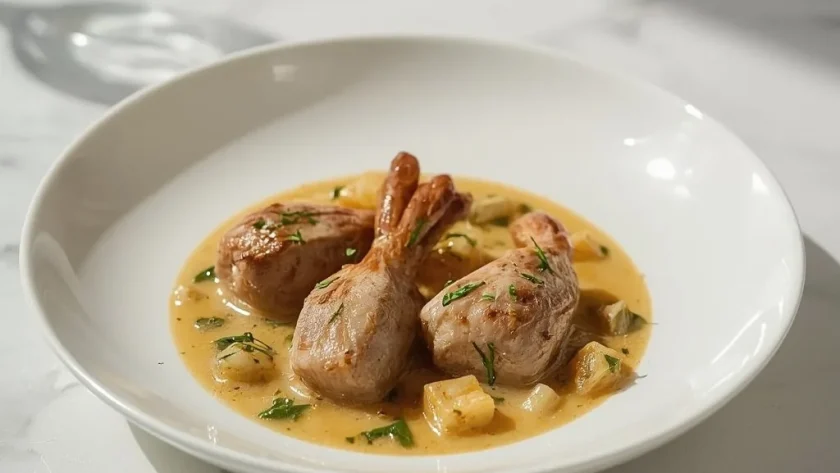
 Rabbit In Mustard Sauce is a classic French bistro dish that delivers tender meat in a creamy, tangy sauce that feels both rustic and refined. If you’ve never cooked rabbit at home, this recipe makes a great starting point — the braising method keeps the meat juicy and the sauce does most of the heavy lifting.
The whole process takes about 80 minutes from start to finish, and I’d call it intermediate difficulty mostly because of the searing step. Just watch the heat and don’t rush the browning, and you’ll have a restaurant-worthy meal that pairs beautifully with crusty bread or egg noodles.
Why You’ll Love This Recipe
- Rich, tangy sauce — The combination of Dijon mustard, white wine, and heavy cream creates a sauce that’s both bold and smooth, coating every piece of meat perfectly.
- Tender meat every time — Braising the rabbit low and slow guarantees it stays moist and pulls easily from the bone, with no dry spots.
- Simple ingredients, big flavor — You don’t need anything fancy here. Pantry staples like mustard, wine, and cream transform into something genuinely impressive.
- One-pot cooking — Everything comes together in a single Dutch oven, which means less cleanup and more time enjoying dinner.
What Makes This Recipe Special
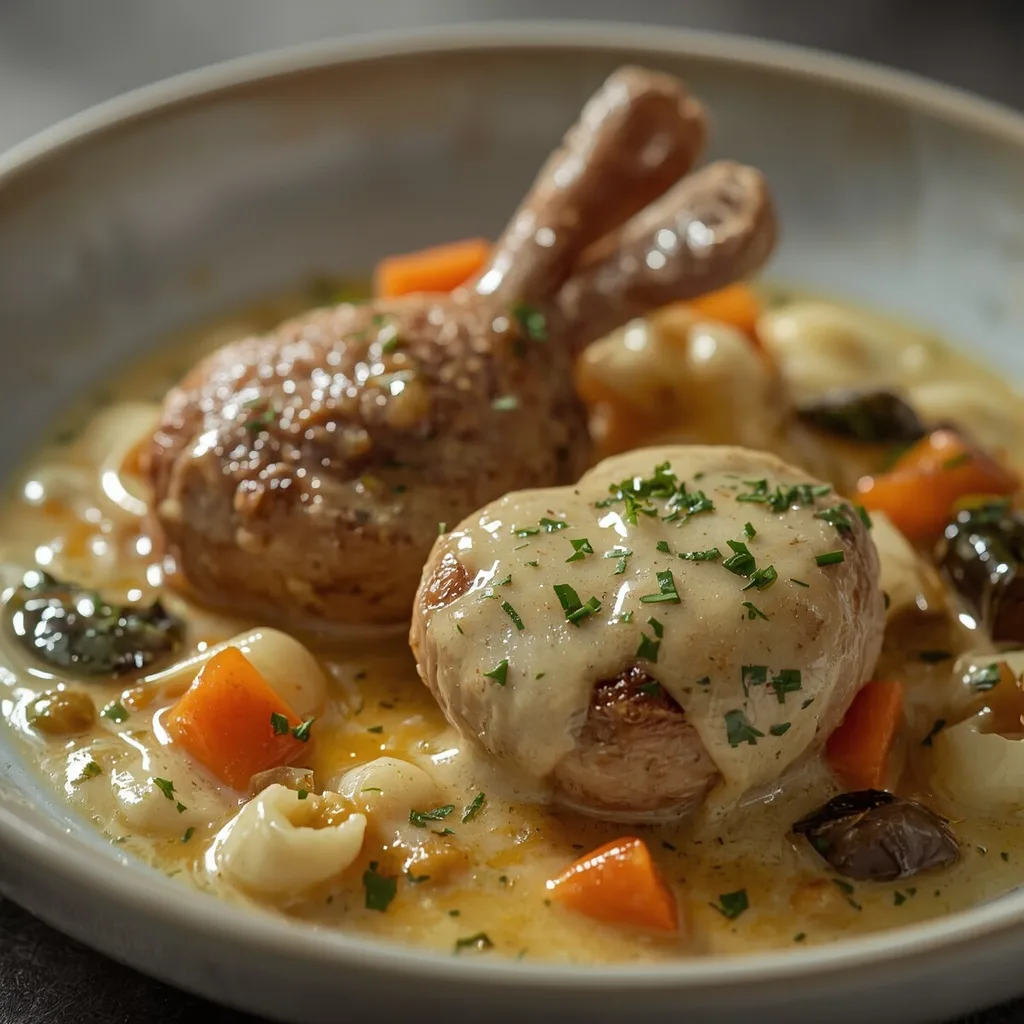
The sauce is what sets this dish apart — it hits that perfect balance between tangy Dijon and rich cream, with white wine adding brightness and depth. The rabbit stays fork-tender because it braises gently in that same sauce, soaking up all those flavors as it cooks. You get a meal that tastes like something from a French countryside kitchen, made with everyday ingredients and straightforward techniques. It’s the kind of dish that feels special enough for company but simple enough for a Sunday supper.
Ingredients You’ll Need
Here is everything you need to make this dish, grouped by category so you can prep efficiently.
For the Rabbit and Dredge
- 2 1/2 to 3 pounds rabbit, cut into 8 serving pieces — Look for legs, loin, and saddle pieces from your butcher or supermarket. If you can’t find pre-cut rabbit, ask your butcher to portion it.
- 2 tablespoons all-purpose flour — This helps the rabbit brown evenly and gives the sauce a light body. Rice flour works as a gluten-free swap.
- 2 teaspoons kosher salt — Season generously here since some salt will stay behind in the pot. Add more to taste at the end.
- 1 teaspoon freshly ground black pepper — Freshly ground makes a noticeable difference in the final dish.
For Searing and Aromatics
- 2 tablespoons unsalted butter — Butter adds richness to the browning step. Use European-style for extra flavor if you have it.
- 1 tablespoon olive oil — Combining oil with butter raises the smoke point so you can sear without burning the butter.
- 1 medium yellow onion, finely diced — Yellow onion gives the mildest, sweetest base. White or sweet onion also works here.
- 3 cloves garlic, minced — Fresh garlic only. Pre-minced won’t give the same brightness.
For the Braising Liquid and Sauce
- 1/2 cup dry white wine — Sauvignon Blanc or Chardonnay both work well. Use something you would drink — the flavor concentrates as it reduces.
- 1 cup low-sodium chicken stock — Low-sodium is important here because the mustard and cream add salt too. Homemade stock works great if you have it.
- 3 tablespoons Dijon mustard, plus 1 teaspoon for finishing — The extra teaspoon stirred in at the end keeps that sharp mustard flavor front and center. Do not skip it.
- 2 sprigs fresh thyme — Fresh thyme adds an earthy, floral note. Dried thyme won’t give the same result, but substitute 1/2 teaspoon if needed.
- 1 bay leaf — Bay leaf adds subtle depth. Remove it before serving — nobody wants to bite into one.
- 1/2 cup heavy cream — Heavy cream gives the sauce its silky texture. Half-and-half will work but the sauce will be thinner.
For Garnish
- 1 tablespoon chopped fresh parsley — Flat-leaf or curly both work. The fresh green adds a pop of color and freshness against the rich sauce.
Equipment Needed
- Dutch oven or heavy-bottomed pot — A 5- to 6-quart Dutch oven holds all the rabbit pieces in a single layer and distributes heat evenly for searing and braising. A heavy stainless steel pot with a tight lid works as a backup.
- Tongs — You need tongs to flip the rabbit pieces during searing and to transfer them out of the pot without breaking the meat. Silicone-tipped ones won’t scratch enameled cast iron.
- Wooden spoon — A wooden spoon is ideal for scraping up the browned bits (fond) from the bottom of the pot after deglazing. It won’t scratch your cookware.
- Shallow bowl — For mixing the seasoned flour and dredging the rabbit pieces. A pie plate works perfectly here.
- Paper towels — Patting the rabbit dry is a non-negotiable first step. Wet meat won’t brown properly.
Instructions to Prepare Rabbit In Mustard Sauce
Follow these steps in order, and you’ll get tender rabbit with a silky, tangy sauce every time.
- Pat and dredge — Pat the rabbit pieces dry with paper towels. Whisk together the flour, 2 teaspoons salt, and 1 teaspoon pepper in a shallow bowl. Dredge each piece in the seasoned flour, shaking off excess, and set aside on a plate.
- Sear the rabbit — Heat the butter and olive oil in a large Dutch oven over medium-high heat until the butter foams and the foam subsides. Add the rabbit pieces in a single layer, working in batches if needed. Sear 3-4 minutes per side until deep golden brown. Transfer to a plate and set aside. This browning builds the flavor base for the entire dish.
- Cook the aromatics — Reduce heat to medium and add the diced onion. Cook 4-5 minutes, stirring occasionally and scraping up any browned bits, until the onion is softened and translucent. Add the garlic and cook 30 seconds until fragrant.
- Deglaze the pot — Pour in the white wine and stir vigorously to lift all the fond from the bottom. Let the wine simmer for 2 minutes until reduced by half.
- Build the braising liquid — Add the chicken stock, 3 tablespoons of Dijon mustard, the thyme sprigs, and the bay leaf. Stir to combine and bring to a gentle simmer over medium heat.
- Braise the rabbit — Return the rabbit pieces to the pot, nestling them into the liquid. The sauce should come about halfway up the sides. Add a splash more stock or water if needed. Cover, reduce heat to low, and cook for 35-40 minutes, turning the pieces once halfway through, until the meat is tender and pulls away from the bone easily.
- Remove the rabbit and reduce — Transfer the cooked rabbit to a serving platter and tent loosely with foil. Discard the thyme sprigs and bay leaf. Increase heat to medium-high and bring the sauce to a rapid simmer. Cook 3-5 minutes, stirring occasionally, until it thickens enough to coat the back of a spoon. Reduce heat to low.
- Finish the sauce — Stir in the heavy cream and the remaining 1 teaspoon of Dijon mustard. Simmer gently for 1-2 minutes, stirring constantly, until the sauce is smooth and slightly thickened. Taste and adjust seasoning with additional salt and pepper if needed.
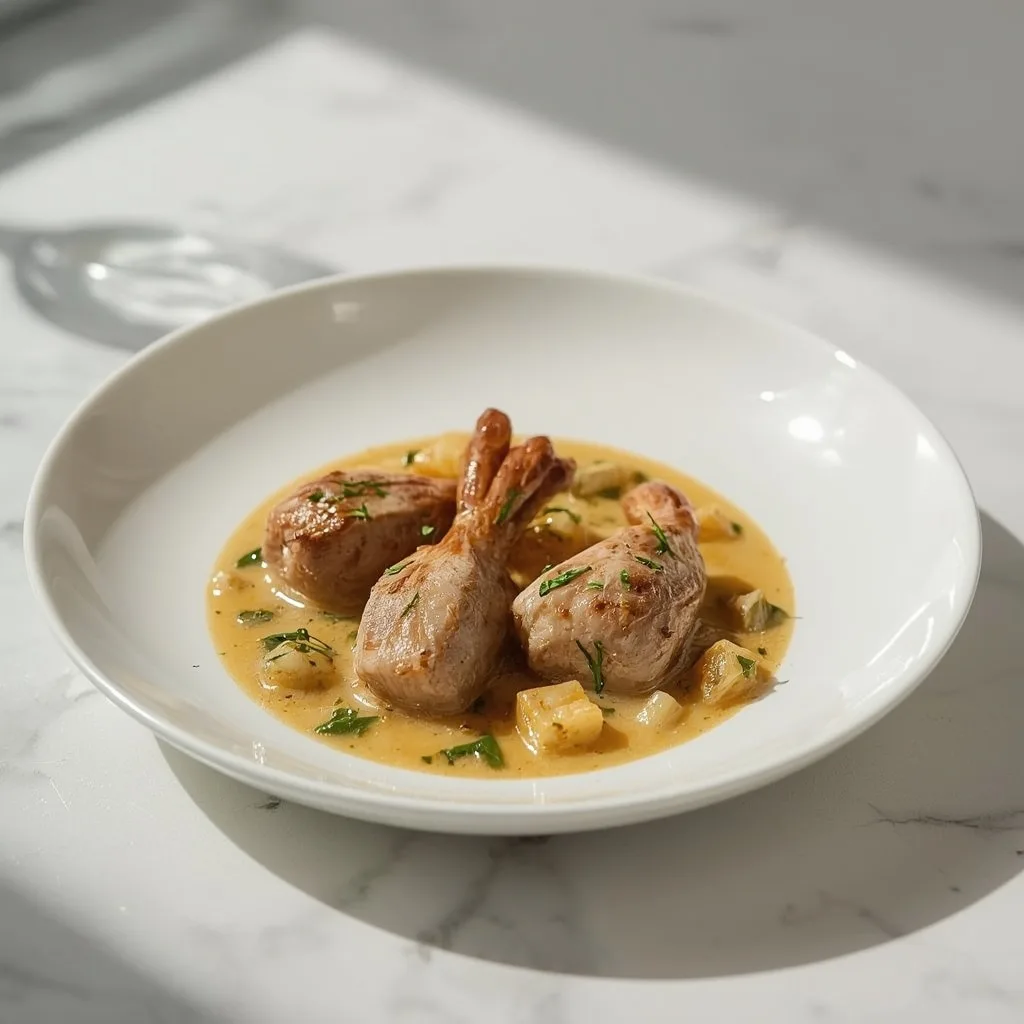
- Serve — Pour the mustard cream sauce over the reserved rabbit pieces. Garnish with chopped fresh parsley and serve immediately with crusty bread, boiled potatoes, or wide egg noodles.
More Recipe
Expert Tips for a Standout Rabbit In Mustard Sauce
- Dry the rabbit thoroughly — Any moisture on the surface will steam instead of sear, and you won’t get that deep golden crust. Use multiple paper towels and pat each piece dry right before dredging.
- Don’t crowd the pot during searing — If you add too many pieces at once, the temperature drops and the meat steams. Sear in two batches if needed, and give each piece space to develop a proper crust.
- Scrape the fond completely — Those browned bits stuck to the bottom after searing are pure flavor. When you add the wine, stir vigorously with a wooden spoon to lift every last bit into the sauce.
- Keep the braise at a gentle simmer — A vigorous boil will toughen the rabbit and break the sauce. You want tiny bubbles, not a rolling boil. Adjust the heat as needed to maintain that gentle simmer throughout the 35-40 minutes.
- Add the final teaspoon of mustard at the end — That last bit stirred in after the cream keeps the mustard flavor bright and sharp. If you added all the mustard at the beginning, some of that punch would cook off during braising.
- Check the rabbit early — Cooking times can vary based on the size of the pieces and how hot your braise runs. Start checking at 30 minutes by tugging gently at a leg bone. If it resists, give it another 5-10 minutes.
- Let the sauce rest before serving — After you pour the sauce over the rabbit, let it sit for 2-3 minutes before carrying it to the table. The sauce settles and thickens slightly, coating the meat more evenly.
Common Mistakes to Avoid
- Skipping the pat-dry step — Wet rabbit won’t brown, and without browning, you lose the deep, savory flavor that makes this dish special. Take the extra 30 seconds to pat each piece dry.
- Adding the cream too early — If you add the cream before the sauce has reduced, it thins out and stays watery. Reduce the sauce first, then stir in the cream at the very end.
- Boiling the sauce after adding cream — High heat can cause the cream to curdle and separate, leaving you with a grainy, broken sauce. Once the cream goes in, keep the heat low and stir gently.
- Overcooking the rabbit — Rabbit is lean and can dry out quickly if braised too long. Set a timer for 35 minutes, then check for tenderness. If it pulls away from the bone easily, it’s done.
- Using a mild or yellow mustard — Dijon has the sharp, tangy kick this sauce needs. Yellow mustard or honey mustard will change the flavor profile significantly and won’t give you that classic bistro taste.
- Forgetting to season the flour — The salt and pepper in the dredge is the main seasoning for the rabbit itself. If you skip it, the meat will taste bland no matter how flavorful the sauce is.
Variations & Ways to Customize Rabbit In Mustard Sauce
- Herb swap — Replace the thyme with 2 sprigs of fresh rosemary or tarragon. Rosemary adds a piney, aromatic note, while tarragon brings a subtle anise flavor that pairs beautifully with mustard.
- Mushroom addition — After removing the rabbit, sauté 8 ounces of sliced cremini mushrooms in the pot for 3-4 minutes before adding the cream. They add an earthy, meaty texture that complements the sauce.
- Wine alternatives — Use dry vermouth instead of white wine for a slightly herbal, more complex flavor. Or substitute an additional 1/2 cup of chicken stock with 1 tablespoon of white wine vinegar for a non-alcoholic version.
- Creamy mustard variation — Swap 1 tablespoon of the Dijon with whole-grain mustard for a chunkier texture and milder heat. The sauce will have visible mustard seeds and a more rustic appearance.
- Lighter version — Replace the heavy cream with half-and-half or whole milk blended with 1 teaspoon of cornstarch. The sauce will be less rich but still creamy. Reduce the simmering time after adding the dairy to avoid thinning it out.
- Spiced twist — Add 1/4 teaspoon of smoked paprika and a pinch of cayenne pepper along with the mustard. The smokiness deepens the flavor and the cayenne adds a subtle warmth without making it spicy.
What to Serve With Rabbit In Mustard Sauce
You want sides that can handle that tangy cream sauce without getting lost. Here are my favorite pairings.
- Crusty bread — A chewy baguette or sourdough loaf is essential for sopping up every last drop of the mustard cream sauce. Warm it in the oven for 5 minutes before serving.
- Wide egg noodles — Buttered egg noodles are a classic pairing. Their flat, wide shape catches the sauce beautifully and adds a soft, comforting base for the rabbit.
- Boiled or roasted potatoes — Small new potatoes boiled until tender and tossed with butter and parsley work perfectly. Roasted fingerlings with a crispy exterior also hold up well to the sauce.
- Steamed green beans — A simple green vegetable balances the richness of the sauce. Toss them with a pinch of salt and a squeeze of lemon juice right before serving.
- Simple green salad — A crisp salad with a sharp vinaigrette cuts through the creaminess. Use a mix of arugula and frisée with a lemon-Dijon dressing for a fresh contrast.
- Buttered peas — Sweet peas add a pop of color and sweetness that complements the tangy mustard sauce. Frozen peas work fine — just thaw and warm them in butter.
Make-Ahead Instructions
- Braise the rabbit one day ahead — Cook the rabbit through step 5, then cool it completely in the sauce. Refrigerate overnight. The flavors meld beautifully, and you can reheat gently before finishing the sauce.
- Prep the ingredients in advance — Dice the onion, mince the garlic, and measure out the flour, salt, and pepper up to 2 days ahead. Store them covered in the refrigerator. This cuts active cooking time significantly on the day you plan to cook.
- Freeze the sauce separately — If you plan to freeze leftovers, remove the rabbit from the sauce first. Freeze the sauce alone, then add fresh cream after thawing and reheating. Cream-based sauces can separate when frozen and thawed.
- Portion for quick meals — Cook the full recipe, then divide the rabbit and sauce into individual portions. Freeze each portion in a sealed container. You’ll have single servings ready to reheat for quick weeknight dinners.
Storage and Reheating
Storage
- Refrigerator — Store leftover rabbit and sauce together in an airtight container. It will keep well for up to 3 days. The flavors actually deepen after a day in the fridge.
- Freezer (sauce only) — Cool the sauce completely, then transfer to a freezer-safe container. Freeze for up to 2 months. For best results, do not freeze the sauce with the cream — add fresh cream when you reheat.
- Freezer (rabbit and sauce) — Cool completely, then place the rabbit pieces and sauce in a freezer-safe container. Freeze for up to 2 months. Thaw overnight in the refrigerator before reheating. The texture may soften slightly but the flavor remains excellent.
- Portion control — Divide leftovers into single-serving containers before storing. This makes reheating faster and prevents you from reheating the entire batch when you only want one portion.
Reheating
- Stovetop (best method) — Transfer the desired portion to a small saucepan and reheat over low heat, stirring occasionally. Add a splash of cream or chicken stock if the sauce has thickened too much. Do not let it boil or the cream may curdle. This takes about 5-7 minutes.
- Microwave (quick option) — Place the rabbit and sauce in a microwave-safe bowl, cover loosely, and microwave in 30-second bursts at 50% power. Stir between each burst. This avoids hot spots and helps the sauce reheat evenly without separating.
- Oven (for larger portions) — Preheat the oven to 300°F. Place the rabbit and sauce in an oven-safe dish, cover with foil, and heat for 12-15 minutes. Check the internal temperature and heat until it reaches 165°F. The gentle heat keeps the meat tender.
- Air fryer (not recommended) — The air fryer’s dry heat will dry out the rabbit and the sauce won’t reheat evenly. Stick to stovetop or microwave for best results with this dish.
Nutritional Breakdown (Per Serving)
Based on 1 serving out of 4 total servings.
- Calories: 650
- Protein: 80g
- Fat: 30g
- Carbohydrates: 11g
- Fiber: 1g
- Sugar: 3g
- Sodium: about 870mg
Frequently Asked Questions
Can I freeze Rabbit In Mustard Sauce?
Yes, you can freeze it for up to 2 months. Cool the dish completely, then transfer to a freezer-safe container.
How long does Rabbit In Mustard Sauce last in the fridge?
It stays fresh for up to 3 days when stored in an airtight container. Reheat gently on the stovetop over low heat.
Can I use chicken instead of rabbit?
Yes, bone-in chicken thighs or drumsticks work well as a substitute. Adjust the braising time to 25-30 minutes since chicken cooks faster than rabbit.
What kind of mustard should I use?
Use smooth Dijon mustard for the classic tangy flavor. Whole-grain mustard works as a substitute but will give you a chunkier texture and milder heat.
Can I make this recipe dairy-free?
Replace the butter with olive oil and the heavy cream with full-fat coconut milk. The sauce will have a slightly different flavor but will still be creamy and rich.
Why did my sauce curdle?
Curdling happens when the cream is added to a sauce that is too hot or boiled after adding. Keep the heat low once the cream goes in and stir constantly to prevent separation.
Final Words
This Rabbit In Mustard Sauce is one of those dishes that feels like a special occasion but comes together with surprisingly simple steps. The sauce alone — tangy, creamy, and full of white wine depth — is worth making the recipe for, and the tender meat soaks up every bit of it. Give it a try with some crusty bread and a glass of the same wine you used in the pot. You will be glad you did.
PrintRabbit In Mustard Sauce
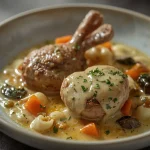
A classic French bistro dish, tender rabbit pieces braised in a creamy Dijon mustard sauce with white wine and aromatic vegetables. The sauce is rich, tangy, and silky, perfect with crusty bread or egg noodles.
- Prep Time: 20
- Cook Time: 60
- Total Time: 80
- Yield: 4 1x
- Category: Main Course
- Method: Stovetop
- Cuisine: French
Ingredients
- 2 1/2 to 3 pounds rabbit, cut into 8 serving pieces (legs, loin, and saddle)
- 2 tablespoons all-purpose flour
- 2 teaspoons kosher salt, plus more to taste
- 1 teaspoon freshly ground black pepper
- 2 tablespoons unsalted butter
- 1 tablespoon olive oil
- 1 medium yellow onion (about 8 ounces), finely diced
- 3 cloves garlic, minced
- 1/2 cup dry white wine, such as Sauvignon Blanc or Chardonnay
- 1 cup low-sodium chicken stock
- 3 tablespoons Dijon mustard, plus 1 teaspoon for finishing
- 2 sprigs fresh thyme
- 1 bay leaf
- 1/2 cup heavy cream
- 1 tablespoon chopped fresh parsley, for garnish
Instructions
- Pat the rabbit pieces dry with paper towels to remove excess moisture. In a shallow bowl, whisk together the flour, 2 teaspoons kosher salt, and 1 teaspoon black pepper. Dredge each rabbit piece in the seasoned flour, shaking off any excess, then set aside on a plate.
- In a large Dutch oven or heavy-bottomed pot, heat the butter and olive oil over medium-high heat until the butter foams and the foam subsides. Carefully place the rabbit pieces in a single layer, working in two batches if necessary to avoid crowding. Sear for 3-4 minutes per side until deep golden brown. Transfer the browned rabbit to a plate and set aside. The browning builds a rich flavor base.
- Reduce the heat to medium and add the diced onion. Cook, stirring occasionally with a wooden spoon, for 4-5 minutes until softened and translucent, scraping up any browned bits from the bottom of the pot. Add the minced garlic and cook for 30 seconds until fragrant. Deglaze the pot by pouring in the white wine, stirring vigorously to lift all the fond. Let the wine simmer for 2 minutes until reduced by half.
- Add the chicken stock, 3 tablespoons of Dijon mustard, the thyme sprigs, and the bay leaf. Stir to combine. Bring the mixture to a gentle simmer over medium heat.
- Return the rabbit pieces to the pot, nestling them into the liquid. The sauce should come about halfway up the sides of the rabbit. If needed, add a splash more stock or water. Cover the pot with a lid and reduce the heat to low so the liquid remains at a very gentle simmer. Cook for 35-40 minutes, turning the pieces once halfway through, until the rabbit is tender and the meat pulls away from the bone easily.
- Using tongs, carefully transfer the cooked rabbit pieces to a serving platter and tent loosely with foil to keep warm. Remove and discard the thyme sprigs and bay leaf.
- Increase the heat under the sauce to medium-high and bring to a rapid simmer. Cook for 3-5 minutes, stirring occasionally, until the sauce thickens enough to coat the back of a spoon. Reduce the heat to low.
- Stir in the heavy cream and the remaining 1 teaspoon of Dijon mustard. Simmer gently for 1-2 minutes, stirring constantly, until the sauce is smooth and slightly thickened. Taste and adjust seasoning with additional salt and pepper if needed. The sauce should be tangy and creamy with a hint of wine.
- Pour the mustard cream sauce over the reserved rabbit pieces. Garnish with chopped fresh parsley. Serve immediately with crusty bread, boiled potatoes, or wide egg noodles to soak up the sauce.
Notes
Store leftovers in an airtight container in the refrigerator for up to 3 days. To freeze, cool the rabbit and sauce completely, then transfer to a freezer-safe container for up to 2 months. For best results, add the cream after thawing and reheating. Reheat gently on the stovetop over low heat, adding a splash of cream or stock if the sauce has thickened too much. Avoid boiling to prevent the cream from curdling.
Nutrition
- Calories: 650
- Sugar: 3g
- Sodium: 870mg
- Saturated Fat: 8g
- Carbohydrates: 11g
- Fiber: 1g
- Protein: 80g
- Cholesterol: 268mg
Keywords: rabbit in mustard sauce, lapin à la moutarde, French rabbit recipe, mustard cream sauce, braised rabbit, Dijon rabbit, bistro-style rabbit, rabbit stew, easy rabbit recipe, special occasion, rabbit dinner