 Kendric adan
 Alfredo And Marinara Pasta combines two iconic Italian-American sauces into one satisfying meal. You get the rich, velvety creaminess of Alfredo balanced by the bright, herbaceous tang of marinara, all tangled around tender fettuccine.
This recipe takes about 40 minutes from start to finish and is beginner-friendly — the most important step is preventing the cream from curdling by keeping the heat gentle. It is perfect for a cozy weeknight dinner or a casual dinner party where you want something that feels special without hours of work.
Why You’ll Love This Recipe
- Two sauces, one bowl — You do not have to choose between creamy and tomato-based. This dish gives you both in every bite.
- Simple ingredients, big payoff — Butter, cream, Parmesan, crushed tomatoes, and fresh basil do all the heavy lifting.
- Quick enough for a Tuesday — With only 40 minutes total, you can pull off a restaurant-quality pasta after a busy workday.
- Easy to scale for a crowd — The recipe doubles nicely for larger gatherings.

What Makes This Recipe Special
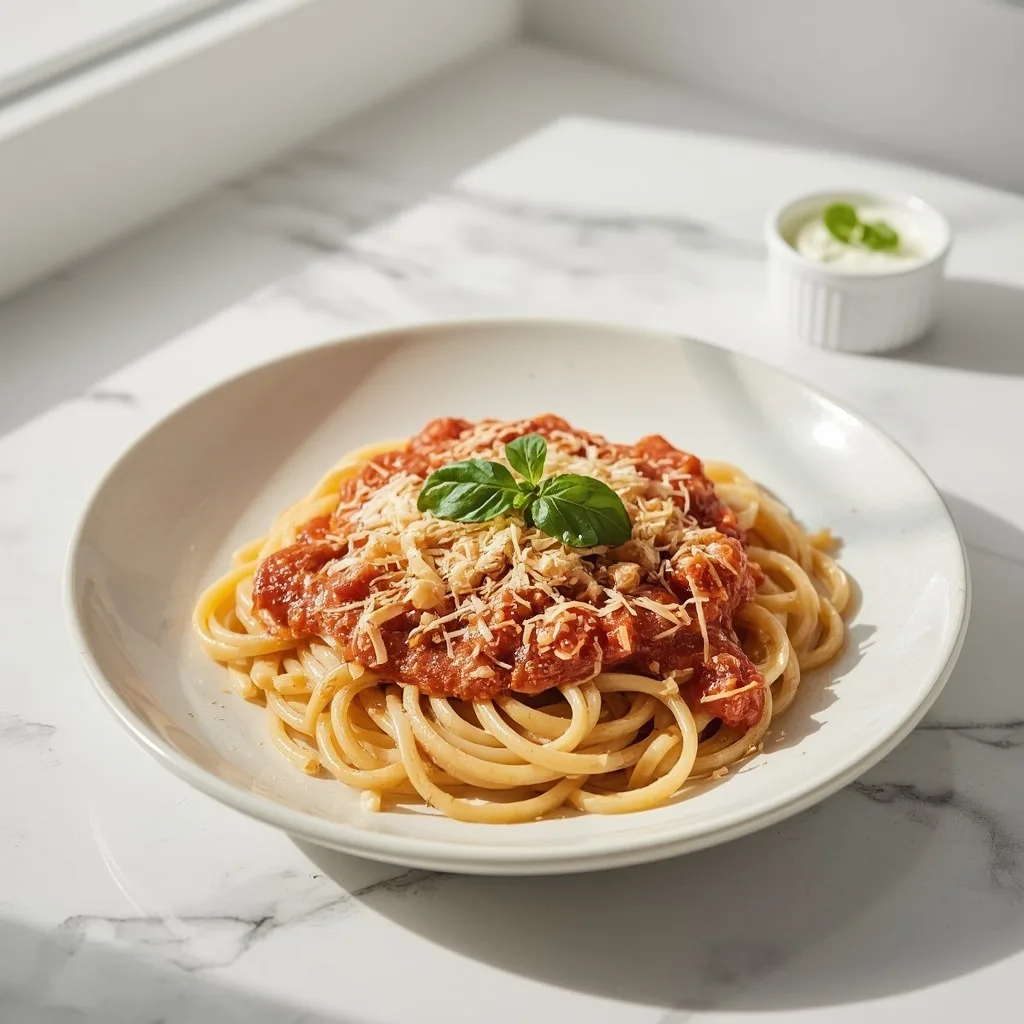
The magic here is in the contrast. A buttery Parmesan cream sauce blankets the pasta, then you spoon a vibrant tomato-basil marinara right over the top. The creamy sauce clings to every strand while the marinara adds pockets of bright acidity. It is a two-sauce pasta that feels indulgent but balanced — no single flavor overpowers the others. Serve it for a date night or a family Sunday dinner where you want to impress.
Ingredients You’ll Need
All ingredients are pantry-friendly and easy to find. Below is what each one does and a few quick notes.
For the Marinara Sauce
- 2 tablespoons extra-virgin olive oil — The base for sweating the onion. Use a good-quality oil for the best flavor.
- 1 medium yellow onion, finely diced (about 1 cup) — Adds sweetness and body. Dice it small so it melts into the sauce.
- 4 cloves garlic, minced — Use fresh cloves, not pre-minced. Garlic burns fast, so add it only for the last 30 seconds.
- 1 can (28 ounces) crushed tomatoes — Go with a brand you like the taste of. San Marzano-style tomatoes give a richer flavor.
- 1/4 cup fresh basil leaves, thinly sliced — Stir in after cooking to keep the basil bright. Do not use dried here.
- 1/2 teaspoon fine sea salt — Adjust to taste at the end.
- 1/4 teaspoon freshly ground black pepper — Freshly cracked gives more punch than pre-ground.
For the Alfredo Sauce
- 4 tablespoons unsalted butter — Salted butter works if you reduce the added salt slightly.
- 1 cup heavy cream — Do not substitute half-and-half or milk; the sauce needs the fat to stay smooth.
- 1/2 cup freshly grated Parmigiano-Reggiano cheese (about 2 ounces) — Grate it yourself. Pre-shredded contains anti-caking agents that make the sauce grainy.
- 1/4 teaspoon fine sea salt — The cheese is salty, so taste before adding more.
- 1/8 teaspoon freshly grated nutmeg (optional) — Just a pinch lifts the creaminess without tasting like holiday baking.
For the Pasta
- 1 pound dry fettuccine — Fettuccine is classic, but any long pasta works. Fresh pasta cooks much faster, so adjust timing.
- 2 tablespoons kosher salt (for pasta water) — Enough to make the water taste like the sea. This seasons the pasta from the inside out.
Equipment Needed
- Large pot (at least 5 quarts) — Fettuccine needs room to move without clumping.
- Large skillet or saucepan — For the marinara. A 12-inch skillet gives plenty of surface area.
- Medium saucepan — For the Alfredo. Stainless steel or nonstick both work.
- Tongs — Best for tossing the coated pasta without breaking the strands.
- Colander — For draining the pasta. Do not rinse it; you want the starch to help the sauces cling.
Instructions to Prepare Alfredo And Marinara Pasta
Follow these steps in order, and you will have a creamy, tangy pasta that rivals any restaurant version.
- Step 1: Boil the pasta water — Bring at least 5 quarts of water to a rolling boil over high heat. Add 2 tablespoons kosher salt — the water should taste like the sea. Drop in the fettuccine and cook according to package directions until al dente, typically 8–10 minutes. Stir occasionally to prevent sticking.
- Step 2: Start the marinara — While the pasta cooks, heat a large skillet or saucepan over medium heat and add the olive oil. When the oil shimmers, add the diced onion and cook, stirring frequently, until softened and translucent, about 5 minutes. You want the onion to sweat but not brown.
- Step 3: Add garlic and tomatoes — Add the minced garlic to the skillet and cook for 30 seconds until fragrant, stirring constantly to avoid burning. Pour in the crushed tomatoes, reduce the heat to medium-low, and let the sauce simmer gently for 10 minutes, stirring occasionally. The sauce will thicken slightly and the flavors will meld.
- Step 4: Finish the marinara — Remove the marinara from heat and stir in the fresh basil, 1/2 teaspoon salt, and 1/4 teaspoon pepper. Taste and adjust seasoning if needed. Cover and keep warm while you prepare the Alfredo sauce.
- Step 5: Make the Alfredo — In a separate medium saucepan, melt the butter over medium heat. Once the butter has fully melted and begins to foam, immediately whisk in the heavy cream. Bring the mixture to a gentle simmer — do not let it boil rapidly, or the cream may curdle — and cook for 1–2 minutes, whisking constantly.
- Step 6: Add the cheese — Remove the cream mixture from heat and whisk in the grated Parmigiano-Reggiano cheese a little at a time until fully melted and the sauce is smooth. Add 1/4 teaspoon salt and a pinch of nutmeg if using. The Alfredo should be thick enough to coat the back of a spoon.
- Step 7: Reserve pasta water and drain — Reserve about 1 cup of the starchy pasta water before draining the fettuccine. Drain the pasta in a colander, but do not rinse — the surface starch helps the sauces cling.
- Step 8: Toss with Alfredo — Return the drained pasta to the large pot (off heat) or a warm mixing bowl. Pour the Alfredo sauce over the pasta and toss gently with tongs until every strand is evenly coated. If the sauce seems too thick, add a splash of reserved pasta water to loosen it.
- Step 9: Serve with marinara — Divide the Alfredo-coated pasta among four warmed serving plates or bowls. Spoon a generous portion of the marinara sauce over the center of each serving, or serve it on the side for each person to add as desired. Garnish with additional grated Parmesan and fresh basil if you like.
More Recipes
Expert Tips for a Standout Alfredo And Marinara Pasta
- Use warm bowls — Cold plates will cause the Alfredo to seize up. Warm your serving bowls in a low oven or with hot water, then dry them.
- Grate Parmesan just before using — Pre-shredded cheese contains cellulose and starches that prevent smooth melting. A fine Microplane gives the silkiest sauce.
- Reserve more pasta water than you think you need — Starchy water is the emergency fix if either sauce becomes too thick. You can also use it to loosen leftovers.
- Keep the Alfredo heat gentle — High heat makes cream separate. If you see bubbles larger than a simmer, pull the pan off the burner for a few seconds.
- Let the marinara rest off heat — Allowing the basil to steep for a minute or two after cooking deepens the herb flavor without making it bitter.
- Toss Alfredo-coated pasta immediately — If you let it sit, the sauce will cool and clump. Toss and serve right away for the best texture.
- Season the pasta water generously — This is your only chance to season the pasta itself. Undersalted water leads to flat-tasting sauce.
Common Mistakes to Avoid
- Boiling the cream — A rapid boil causes the fat and liquid to separate, turning your Alfredo into a grainy mess. Keep it at a gentle simmer.
- Rinsing the pasta — Rinsing washes away the starch that helps the sauce cling. Drain the fettuccine straight into the sauce-coated pot.
- Adding all the cheese at once — Dumping in the full amount of Parmigiano-Reggiano can create clumps. Whisk it in gradually for a smooth emulsion.
- Overcooking the garlic — Browned garlic tastes bitter. Thirty seconds in the hot oil is plenty; the residual heat will finish cooking it.
- Skipping the nutmeg — It is optional, but a tiny grating rounds out the creaminess in a way salt alone cannot. Try it once and decide.
- Using cold cream straight from the fridge — Cold cream takes longer to warm up, increasing the risk of curdling. Let it sit at room temperature for 10 minutes before using.
Variations & Ways to Customize Alfredo And Marinara Pasta
- Add grilled chicken or shrimp — Season and cook the protein separately, then slice and lay it on top of the finished pasta for extra heartiness.
- Swap the pasta shape — Fettuccine is classic, but penne, rigatoni, or even angel hair work. Adjust cooking times as needed.
- Make it spicy — Stir 1/4 teaspoon red pepper flakes into the marinara while it simmers, or add a pinch of cayenne to the Alfredo.
- Vegetable boost — Sauté sliced mushrooms or spinach in the skillet after cooking the onion, then proceed with the marinara.
- Use a different cheese blend — Replace half the Parmesan with Pecorino Romano for a sharper, saltier Alfredo. Note: reduce the added salt.
- Go gluten-free — Substitute gluten-free fettuccine. Be careful not to overcook it; gluten-free pasta turns mushy quickly if boiled past al dente.
What to Serve With Alfredo And Marinara Pasta
The richness of this dish calls for light, fresh sides that cut through the creaminess without competing.
- Garlic bread — Crunchy, buttery toast is perfect for sopping up the extra marinara at the bottom of the bowl.
- Simple green salad — A lemony vinaigrette with arugula and shaved Parmesan balances the heavy pasta.
- Sautéed broccoli rabe — Its slight bitterness stands up to the creamy Alfredo and tangy tomato sauce.
- Crusty sourdough — A chewy slice adds texture and helps stretch the meal without extra expense.
- A glass of Chianti or Pinot Grigio — Medium-acid reds or crisp whites complement both the tomato and cream elements.
- Roasted asparagus — Toss with olive oil, salt, and pepper, then roast at 400°F for 12 minutes for a simple side.
Make-Ahead Instructions
- Prepare the marinara in advance — Make the marinara sauce up to 3 days ahead. Cool completely, then refrigerate in an airtight container. Reheat gently before serving.
- Grate the Parmesan ahead — Freshly grated cheese keeps in the fridge for about 1 week in a sealed bag. Bring it to room temperature before making the Alfredo.
- Cook and freeze the pasta — Cook the fettuccine al dente, toss with a little olive oil to prevent sticking, and freeze in a zip-top bag for up to 1 month. Thaw in the fridge overnight before using.
- Do not make the Alfredo ahead — Cream-based sauces lose their texture when chilled and reheated. Make it fresh just before serving.
Storage and Reheating
Storage
- Airtight container in the refrigerator — Store leftovers within 2 hours of cooking. Separate the marinara from the Alfredo-coated pasta if possible; if already combined, it still holds for up to 3 days.
- Keep the sauces separate — The marinara stays bright longer on its own. The Alfredo will thicken as it cools, but it is still usable.
- Label with the date — Pasta with cream sauce is safest eaten within 3 days. After that, the texture degrades noticeably.
- Do not freeze — This dish does not freeze well. The cream sauce breaks upon thawing, leaving a watery, curdled mess.
Reheating
- Stovetop (best method) — Place the pasta in a skillet over low heat. Add a splash of milk or reserved pasta water and stir gently until warmed through. This restores the creamy texture.
- Microwave (use with caution) — Microwave in 30-second bursts at 50% power, stirring between each interval. Add a tablespoon of milk to loosen the sauce. The microwave can cause the Alfredo to separate, so it is not ideal.
- Oven for batch reheating — Spread the pasta in a baking dish, add a few tablespoons of milk, cover with foil, and heat at 300°F for 10–15 minutes. Stir halfway through.
- Air fryer not recommended — The high heat and circulating air will dry out the pasta and make the cream sauce curdle.
Nutritional Breakdown (Per Serving)
Based on 1 serving = ¼ of the recipe (about 2 cups).
- Calories — 908
- Protein — about 24g
- Fat — 46g
- Saturated Fat — 27g (estimate, not given)
- Carbohydrates — 100g
- Fiber — around 6g
- Sugar — roughly 6g
- Sodium — 748mg
- Cholesterol — not provided; estimated close to 130mg
Frequently Asked Questions
Can I freeze Alfredo And Marinara Pasta?
No, this dish does not freeze well. The cream sauce will separate and become grainy upon thawing. Make only what you plan to eat within 3 days.
How long does Alfredo And Marinara Pasta last in the fridge?
Stored in an airtight container, it stays good for up to 3 days. Keep the marinara separate from the Alfredo-coated pasta if you can; combined, it still holds for the same period.
What pasta shape works best for this recipe?
Fettuccine is the classic choice because its wide, flat surface catches both sauces well. Penne, rigatoni, or pappardelle also work — just adjust cooking time.
Can I use milk instead of heavy cream in the Alfredo?
Milk will produce a thinner, less stable sauce that is more likely to curdle. Stick with heavy cream for the proper velvety texture. Half-and-half is an acceptable second option.
Why did my Alfredo turn out grainy?
Grainy Alfredo usually comes from overheating the cream or adding cheese too quickly. Keep the heat at a gentle simmer and whisk in the Parmigiano-Reggiano a little at a time.
Can I make this dish dairy-free?
Yes, substitute the butter with a plant-based buttery spread, use full-fat coconut cream in place of heavy cream, and choose a dairy-free Parmesan-style shred. The flavor will change, but the concept remains.
Final Words
Alfredo And Marinara Pasta is the kind of recipe that looks like you fussed but takes only 40 minutes and standard ingredients. The contrast between creamy and tangy, rich and bright, keeps every bite interesting. Give it a try — I think you will be surprised how often it ends up in your dinner rotation.
PrintAlfredo and Marinara Pasta
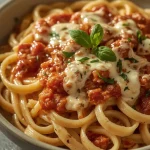
A decadent fusion of two classic Italian-American sauces—rich, creamy Alfredo and vibrant, herbaceous Marinara—tossed with tender fettuccine. The marriage of velvety Parmesan cream and tangy tomato sauce creates a perfectly balanced, restaurant-quality dish that is both comforting and impressive.
- Prep Time: 15
- Cook Time: 25
- Total Time: 40
- Yield: 4 1x
- Category: Main Course
- Method: Stovetop
- Cuisine: Italian-American
Ingredients
- 1 pound dry fettuccine pasta
- 2 tablespoons kosher salt (for pasta water)
- For the Marinara Sauce:
- 2 tablespoons extra-virgin olive oil
- 1 medium yellow onion, finely diced (about 1 cup)
- 4 cloves garlic, minced
- 1 can (28 ounces) crushed tomatoes
- 1/4 cup fresh basil leaves, thinly sliced
- 1/2 teaspoon fine sea salt
- 1/4 teaspoon freshly ground black pepper
- For the Alfredo Sauce:
- 4 tablespoons unsalted butter
- 1 cup heavy cream
- 1/2 cup freshly grated Parmigiano-Reggiano cheese (about 2 ounces)
- 1/4 teaspoon fine sea salt
- 1/8 teaspoon freshly grated nutmeg (optional)
Instructions
- Bring a large pot of water (at least 5 quarts) to a rolling boil over high heat. Add 2 tablespoons of kosher salt—the water should taste like the sea—which seasons the pasta from within. Drop in the fettuccine and cook according to package directions until al dente, typically 8-10 minutes, stirring occasionally to prevent sticking.
- While the pasta cooks, make the marinara sauce. Heat a large skillet or saucepan over medium heat and add the olive oil. When the oil shimmers, add the diced onion and cook, stirring frequently, until softened and translucent, about 5 minutes. You want the onion to sweat but not brown.
- Add the minced garlic to the skillet and cook for 30 seconds until fragrant, stirring constantly to avoid burning. Pour in the crushed tomatoes, reduce the heat to medium-low, and let the sauce simmer gently for 10 minutes, stirring occasionally. The sauce will thicken slightly and the flavors will meld.
- Remove the marinara from heat and stir in the fresh basil, 1/2 teaspoon salt, and 1/4 teaspoon pepper. Taste and adjust seasoning if needed. Cover and keep warm while you prepare the Alfredo sauce.
- In a separate medium saucepan, melt the butter over medium heat. Once the butter has fully melted and begins to foam, immediately whisk in the heavy cream. Bring the mixture to a gentle simmer—do not let it boil rapidly, or the cream may curdle—and cook for 1-2 minutes, whisking constantly.
- Remove the cream mixture from heat and whisk in the grated Parmigiano-Reggiano cheese a little at a time until fully melted and the sauce is smooth. Add 1/4 teaspoon salt and a pinch of nutmeg if using. The Alfredo should be thick enough to coat the back of a spoon.
- Reserve about 1 cup of the starchy pasta water before draining the fettuccine. Drain the pasta in a colander, but do not rinse—the surface starch helps the sauces cling.
- Return the drained pasta to the large pot (off heat) or a warm mixing bowl. Pour the Alfredo sauce over the pasta and toss gently with tongs until every strand is evenly coated. If the sauce seems too thick, add a splash of reserved pasta water to loosen it.
- Divide the Alfredo-coated pasta among four warmed serving plates or bowls. Spoon a generous portion of the marinara sauce over the center of each serving, or serve it on the side for each person to add as desired. Garnish with additional grated Parmesan and fresh basil if you like.
Notes
Store leftovers in an airtight container in the refrigerator for up to 3 days. Reheat gently on the stovetop over low heat, adding a splash of milk or reserved pasta water to restore the creamy texture; microwave reheating is not recommended as it may separate the Alfredo. This dish does not freeze well because the cream sauce can break upon thawing.
Nutrition
- Calories: 908
- Sugar: 6g
- Sodium: 748mg
- Unsaturated Fat: 24g
- Carbohydrates: 100g
- Fiber: 6g
- Protein: 24g
- Cholesterol: 78mg
Keywords: alfredo and marinara pasta, pink sauce pasta, creamy tomato pasta, Italian-American pasta, fettuccine alfredo marinara, two sauce pasta, easy weeknight dinner, comfort food pasta, homemade marinara, homemade alfredo