Alton Brown’s Perfect Pancakes
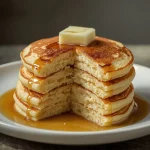
These pancakes strike the perfect balance between fluffy and tender, with a crisp golden exterior and a soft, airy crumb. The tangy buttermilk and rich butter create a classic flavor that’s both comforting and refined, making them the ultimate weekend breakfast.
- Prep Time: 10
- Cook Time: 20
- Total Time: 30
- Yield: 4 1x
- Category: Breakfast
- Method: Stovetop
- Cuisine: American
Ingredients
- 2 cups all-purpose flour, spooned and leveled
- 2 tablespoons granulated sugar
- 1 teaspoon fine sea salt
- 1/2 teaspoon baking powder
- 1/2 teaspoon baking soda
- 1 1/2 cups buttermilk, well-shaken
- 1/3 cup whole milk
- 1 large egg, at room temperature
- 3 tablespoons unsalted butter, melted, plus more for the griddle
- 1 teaspoon vegetable oil, for the griddle
Instructions
- In a large mixing bowl, whisk together the all-purpose flour, granulated sugar, fine sea salt, baking powder, and baking soda. Whisking thoroughly ensures the leaveners are evenly distributed throughout the dry mix, which prevents any bitter pockets of baking soda in the finished pancakes.
- In a separate medium bowl, combine the buttermilk, whole milk, and the room-temperature egg. Whisk until the egg is fully incorporated and the mixture is homogenous. The combination of buttermilk and whole milk gives the pancakes a tangy flavor with just enough liquid richness to keep them tender.
- Pour the wet ingredients into the dry ingredients all at once. Use a spatula or wooden spoon to gently fold the mixture together, mixing until just combined. It’s okay if the batter is slightly lumpy, as overmixing develops gluten and results in tough, rubbery pancakes.
- Pour the melted butter into the batter and fold it in gently with 2-3 strokes, just until the butter is mostly incorporated. The melted butter adds richness and helps create a golden, crispy exterior, but stirring too much at this stage will overwork the gluten.
- Let the batter rest for 5 minutes at room temperature. This rest allows the flour to fully hydrate and the baking soda to begin producing bubbles, which results in lighter, fluffier pancakes. Meanwhile, place a large cast-iron skillet or nonstick griddle over medium heat.
- To test if the griddle is ready, sprinkle a few drops of water onto the surface; if they sizzle and evaporate immediately, the pan is hot. Add a small pat of butter and 1 teaspoon of vegetable oil to the griddle, swirling to coat the bottom. The butter adds flavor, while the oil prevents the butter from burning.
- Using a 1/4-cup measuring cup (or a ladle), pour the batter onto the hot griddle, leaving at least 2 inches of space between each pancake to allow for spreading. Cook 2 to 3 pancakes at a time to avoid overcrowding and making the griddle temperature drop.
- Cook the pancakes untouched for 2 to 3 minutes, until the edges appear set and small bubbles form on the surface and begin to pop. This visual cue signals that the bottom is golden and the pancake is ready to flip. Peeking or flipping too early will tear the pancake and leave it pale.
- Flip the pancakes with a thin, flat spatula in one confident motion. Cook for another 1 to 2 minutes, until the second side is golden brown and the pancake is cooked through. The center should spring back lightly when pressed with a fingertip.
- Transfer the cooked pancakes to a wire rack set in a warm oven (about 200°F / 93°C) while you cook the remaining batches. Keeping them on a wire rack prevents the bottoms from becoming soggy from trapped steam.
- Repeat with the remaining batter, adding a fresh pat of butter and a small drizzle of oil to the griddle before each new batch. Adjust the heat down slightly if the pancakes are browning too quickly, or up if they’re taking too long to color.
- Serve the pancakes immediately while they’re still warm, topped with butter and your favorite syrup, fruit, or jam. Alton Brown’s method ensures a stack that’s fluffy, tender, and full of classic buttermilk flavor.
Notes
Storage: Leftover pancakes can be stored in an airtight container in the refrigerator for up to 3 days. Freezing: Place cooled pancakes in a single layer on a baking sheet, freeze until solid (about 1 hour), then transfer to a zip-top freezer bag with parchment between them; they can be frozen for up to 2 months. Reheating: For refrigerator pancakes, warm in a toaster or in a 350°F / 177°C oven for 5 to 7 minutes, or microwave for 20-30 seconds. For frozen pancakes, pop them directly in the toaster on a medium setting, or reheat in a 350°F / 177°C oven for 10 minutes. Avoid stacking hot pancakes before serving, as steam will soften the crisp edges.
Nutrition
- Calories: 350
- Sugar: 9g
- Sodium: 650mg
- Unsaturated Fat: 5g
- Carbohydrates: 56g
- Fiber: 1g
- Protein: 8g
- Cholesterol: 65mg
Keywords: Alton Brown's Perfect Pancakes, buttermilk pancakes, fluffy pancakes, homemade pancakes, breakfast recipe, pancake recipe, stovetop pancakes, classic pancakes, easy pancakes, weekend breakfast
Find it online: https://copycatkitchenco.com/alton-browns-perfect-pancakes/