 Kendric adan
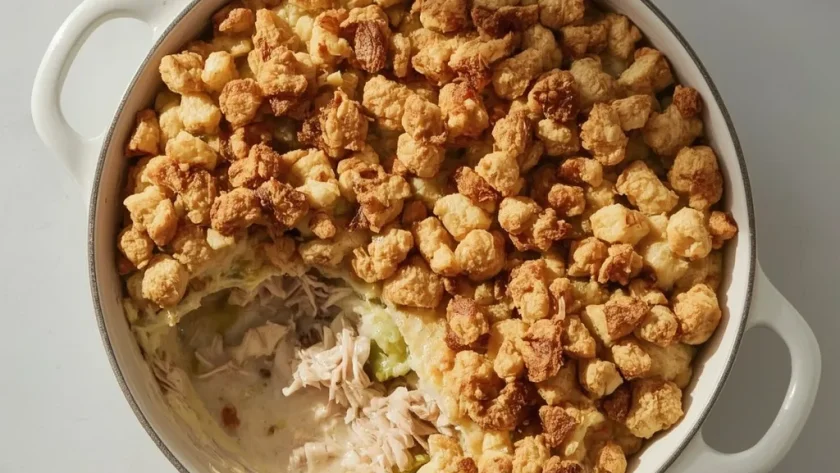
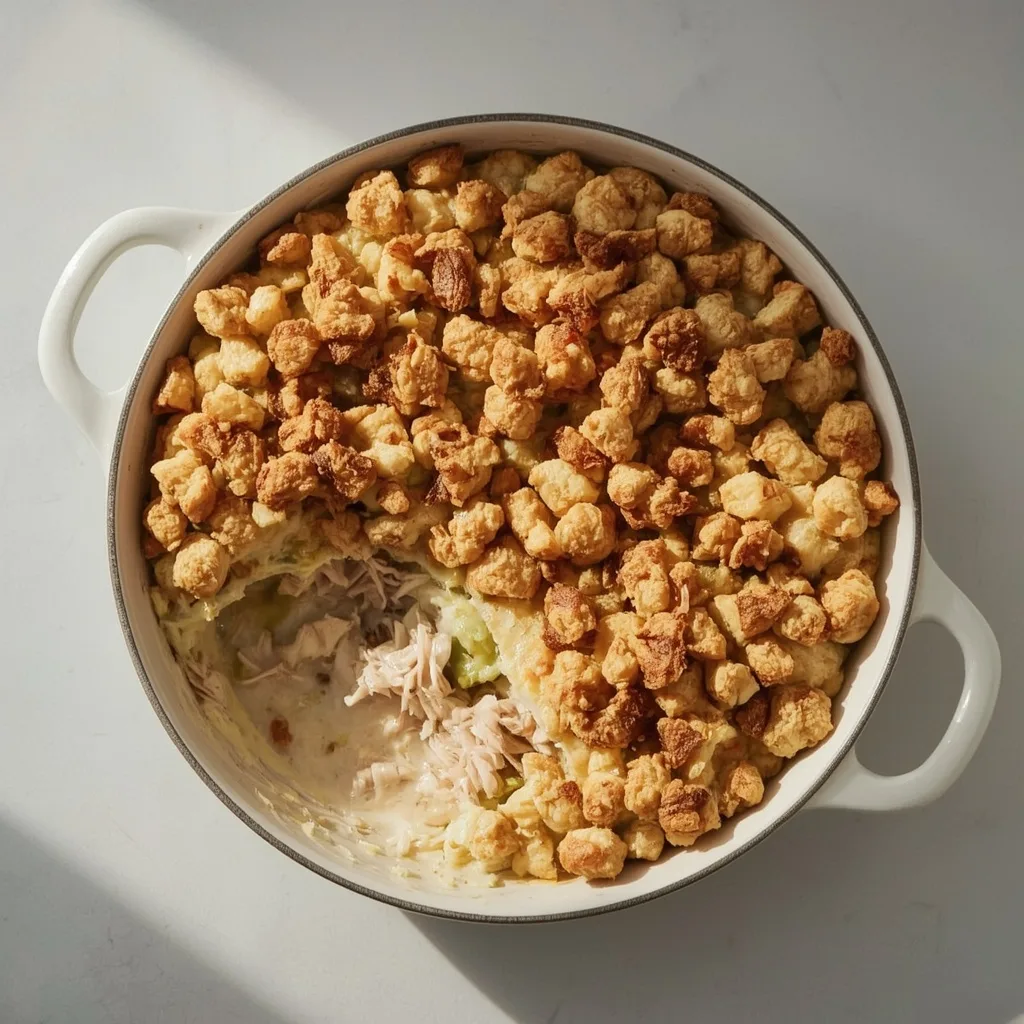
 This stuffing chicken casserole recipe combines tender shredded chicken with a creamy, herb-flecked sauce, all topped with crisp, buttery bread cubes that toast to golden perfection in the oven. It is the kind of meal that feels like a warm hug on a plate — hearty, satisfying, and surprisingly simple to pull together on a busy weeknight.
Total time is 55 minutes, with about 20 minutes of hands-on prep, making this a solid beginner-friendly choice. The only trick to watch for is not letting the topping brown too fast during the last 10 minutes of baking — a loose foil tent solves that in seconds.
Why You’ll Love This Recipe
- One-dish comfort — Everything bakes together in a single 8×8-inch dish, meaning less cleanup and more time at the table.
- Pantry-friendly ingredients — You likely have most of these on hand already: chicken, bread, milk, yogurt, and a few dried herbs.
- Customizable base — Swap in leftover turkey, add a handful of frozen peas, or use gluten-free bread without changing the method.
- Make-ahead friendly — Assemble it the night before, refrigerate, and bake when you walk in the door the next day.
What Makes This Recipe Special
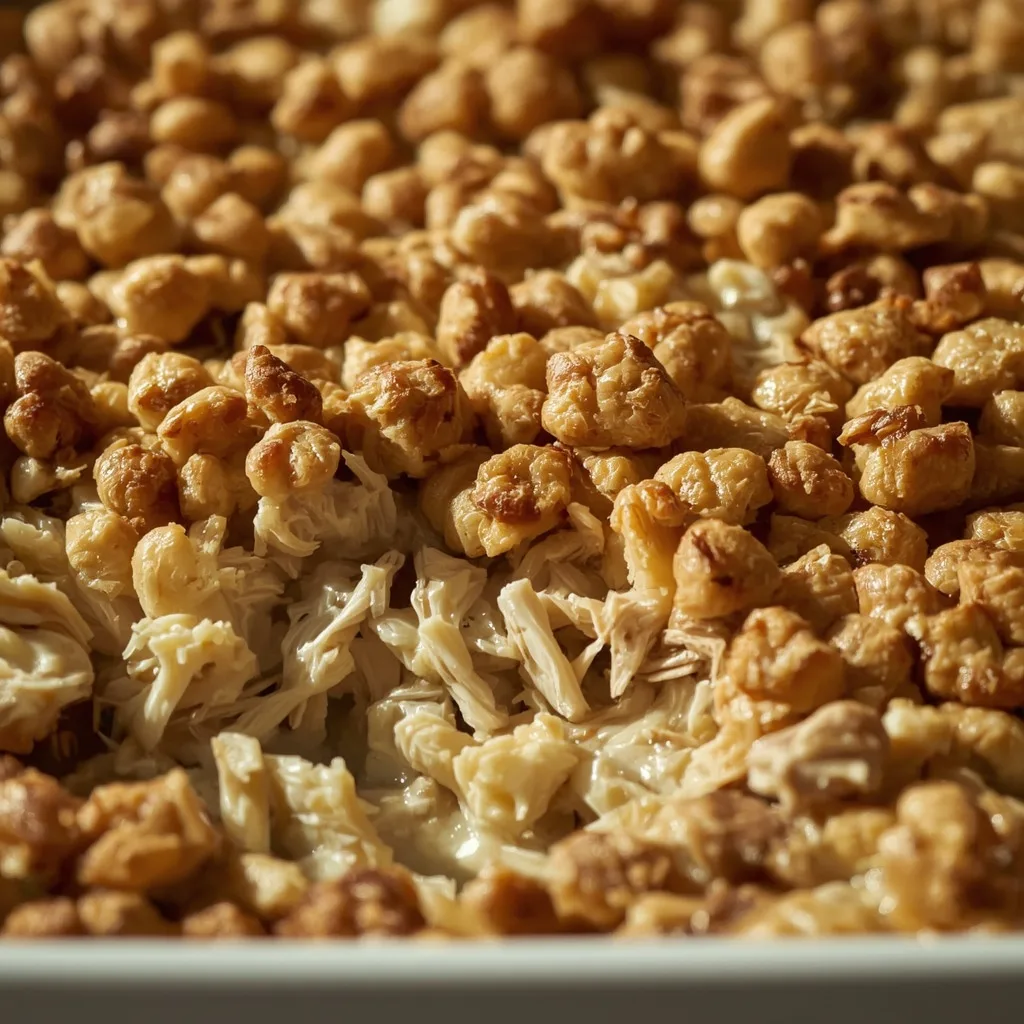
The magic here comes from the two-texture contrast: a rich, creamy filling against a crunchy, buttery bread topping. Greek yogurt replaces heavy cream to keep the interior tangy and light, while day-old bread cubes soak up just enough melted butter to crisp without turning greasy. This is classic American casserole cooking at its best — honest, filling, and built for the oven.
Ingredients You’ll Need
Every ingredient here plays a specific role, from building the roux to creating that signature crunch. Here is what you will need and why each one matters.
For the Filling
- 1 1/2 cups cooked chicken breast, shredded (about 2 medium breasts) — The protein backbone of the dish. Rotisserie chicken works perfectly here; just remove the skin and shred.
- 2 tbsp unsalted butter (for the filling) — The fat base for the roux. Salted butter can be substituted, but reduce the added salt slightly.
- 1/2 cup yellow onion, finely diced — Adds a sweet, savory foundation. White onion works too, but yellow gives a milder flavor.
- 1/2 cup celery, finely diced — The subtle crunch and fresh flavor balance the richness. Dice it smaller than you think you need for even cooking.
- 2 tbsp all-purpose flour — Thickens the sauce. Whole wheat flour can be used, but the sauce will be slightly grainier.
- 1 1/4 cups whole milk — Creates a creamy base. Two percent milk works but yields a thinner sauce; avoid skim.
- 1/2 cup full-fat Greek yogurt — Adds tang and thickness without extra cream. Low-fat Greek yogurt works but may curdle if overheated.
- 1/2 tsp kosher salt — Seasons the filling. Table salt is saltier, so use only 1/4 teaspoon if swapping.
- 1/4 tsp freshly ground black pepper — Adds subtle heat. Pre-ground pepper works but fresh is noticeably brighter.
- 1/4 tsp dried thyme — Earthy, slightly floral note. Fresh thyme can be used at a 1:1 ratio if you have it.
- 1/4 tsp dried sage — The classic poultry herb. Rubbed sage is finer; use the same amount.
For the Topping
- 1 1/2 cups cubed day-old white bread (1/2-inch cubes) — Day-old bread holds its shape better and crisps more evenly. Fresh bread can be dried out in a 300°F oven for 5-7 minutes.
- 2 tbsp unsalted butter, melted (for the topping) — Coats each cube for even browning. Do not use margarine; the water content makes the topping soggy.
Equipment Needed
- 8×8-inch baking dish — The right size for a 4-serving casserole. Too large a dish spreads the filling too thin; too small and it may bubble over.
- Medium skillet — For cooking the aromatics and making the roux. A nonstick skillet works, but stainless steel gives better browning on the butter.
- Whisk — Essential for smoothing out the milk and yogurt into the roux without lumps. A fork works in a pinch but takes longer.
- Wire rack — Lets the casserole rest and set after baking. A folded kitchen towel also works if placed on a flat surface.
- Small bowl — For tossing the bread cubes with melted butter. A medium bowl is fine, but a smaller one lets you toss more gently.
Instructions to Prepare Classic Chicken Stuffing Casserole
This comes together in ten straightforward steps. The key is to let the roux cook for the full minute before adding the milk — that eliminates any raw flour taste.
- Preheat and prep — Set your oven to 375°F (190°C). Lightly grease an 8×8-inch baking dish with butter or nonstick spray. The dish size matters; this casserole needs the depth for a creamy interior and crunchy top.
- Sweat the aromatics — Melt 2 tablespoons of unsalted butter in a medium skillet over medium heat until it foams and subsides. Add the diced onion and celery and cook, stirring occasionally, until softened and translucent, about 5 minutes. Do not let them brown — burnt bits can make the sauce bitter.
- Make the roux — Sprinkle 2 tablespoons of all-purpose flour over the vegetables and stir constantly for 1 minute. The mixture will look pasty and smell slightly nutty. This step removes the raw flour flavor.
- Add the milk — Slowly pour in 1 1/4 cups of whole milk while whisking continuously. Bring to a gentle simmer over medium heat — about 2-3 minutes — until the sauce visibly thickens. You want a few bubbles breaking the surface, not a rolling boil.
- Finish the sauce — Remove the skillet from the heat. Whisk in 1/2 cup of full-fat Greek yogurt, 1/2 teaspoon kosher salt, 1/4 teaspoon black pepper, 1/4 teaspoon dried thyme, and 1/4 teaspoon dried sage until smooth and creamy.
- Combine with chicken — Fold in 1 1/2 cups of shredded cooked chicken until fully coated. Spread the mixture evenly into the prepared dish. The filling should look thick and cohesive, not watery.
- Prepare the topping — In a small bowl, toss 1 1/2 cups of cubed day-old bread with 2 tablespoons of melted butter. Use a fork to coat each cube lightly without saturating them.
- Assemble the casserole — Scatter the buttered bread cubes evenly over the chicken filling. Press down very lightly with the back of a spoon to help them adhere, but keep air gaps for crunch.
- Bake — Place the dish on the middle rack and bake for 25-30 minutes, rotating once halfway. The casserole is done when the filling bubbles around the edges and the topping is deep golden brown. If the top browns too quickly after 20 minutes, tent loosely with aluminum foil.
- Rest and serve — Remove from the oven and let rest on a wire rack for 10 minutes. This lets the filling set so the portions hold together. Serve warm.
Expert Tips for a Standout Classic Chicken Stuffing Casserole
- Use day-old bread only — Fresh bread turns soggy in the oven because it still has too much moisture. Day-old bread holds its shape and crisps evenly.
- Let the roux bubble — Whisk the milk until you see a few bubbles break the surface. Undercooking the sauce leaves it thin; the baking time alone will not fix consistency.
- Shred chicken while warm — Cold chicken is harder to shred and does not combine as smoothly with the sauce. Shred within 15 minutes of cooking or right after pulling from a rotisserie chicken.
- Do not skip the rest — That 10-minute rest on the wire rack is not optional. It lets the starch set so the filling does not run across the plate.
- Watch the timing on the tent — If the bread is browning but the sauce is still bubbling, tent with foil after 20 minutes. This stops the top from burning while the filling continues to cook.
- Use a light hand with the spoon — Pressing the bread cubes too firmly into the filling eliminates the air pockets needed for crunch. A gentle press is all it takes.
- Taste the sauce before adding chicken — Before folding in the meat, dip a spoon into the sauce and check seasoning. Adjust salt or pepper now rather than after baking.
Common Mistakes to Avoid
- Browning the aromatics — Onion and celery should be translucent, not browned. Burnt flavors from high heat can overpower the sage and thyme.
- Skipping the roux cook time — Stirring the flour for the full minute is essential. Rushing this step leaves a raw flour taste that no amount of baking can fix.
- Using cold milk — Pouring cold milk into a hot roux can create lumps. Room-temperature milk incorporates more smoothly; let it sit out for 10 minutes.
- Overcrowding the bread cubes — Piling the buttered bread too high on the casserole means some cubes steam instead of crisp. One even layer is enough.
- Baking from cold without adjusting time — If you refrigerated the assembled casserole overnight, add 5-7 minutes to the baking time or let it sit at room temperature for 15 minutes before baking.
- Cutting into it immediately — The sauce is thin right out of the oven. Ten minutes of rest firms it up considerably. Cutting early gives you soup on a plate.
Variations & Ways to Customize Classic Chicken Stuffing Casserole
- Turkey and cranberry — Substitute cooked turkey for the chicken and fold in 1/4 cup of dried cranberries with the yogurt. The sweetness plays well with the sage.
- Vegetarian version — Replace the chicken with 1 1/2 cups of cooked chickpeas or cubed butternut squash. Add an extra 1/4 teaspoon of thyme for depth.
- Spicy kick — Stir 1/2 teaspoon of red pepper flakes into the sauce along with the black pepper. A dash of hot sauce over the finished casserole works too.
- Add greens — Fold 1 cup of thawed and squeezed-dry frozen spinach into the sauce before baking. No need to thaw first if you squeeze well.
- Cheesy topping — Mix 1/4 cup of grated Parmesan with the melted butter before tossing with the bread cubes. The cheese browns into crispy bits.
- Herb swap — Replace the dried thyme and sage with 1 teaspoon of poultry seasoning. The flavor profile shifts slightly but stays comforting.
What to Serve With Classic Chicken Stuffing Casserole
This casserole is hearty enough on its own, but a few simple sides round it out into a complete meal. Here are five pairings that work well.
- Steamed green beans — The bright, snappy texture cuts through the creamy filling. Toss with a squeeze of lemon for contrast.
- Simple side salad — A mix of arugula and baby spinach with a vinaigrette dressing balances the richness. Avoid creamy dressings here.
- Cranberry sauce — Whether canned or homemade, the tart-sweet fruit cuts the buttery topping. A spoonful on the side is enough.
- Roasted carrots — Their natural sweetness echoes the onion and celery base. Toss with olive oil and roast at 400°F for 20 minutes alongside the casserole.
- Cornbread — A wedge of cornbread on the side adds an extra layer of crunch. Skip if you want a lower-carb meal.
- Mashed potatoes — For an ultra-comforting plate, serve the casserole over a small scoop of mashed potatoes. The sauce soaks in beautifully.
Make-Ahead Instructions
- Assemble entirely, then refrigerate — Prepare the casserole through step 8, cover tightly with plastic wrap, and refrigerate for up to 24 hours. Add 5-7 minutes to the bake time.
- Prep the chicken and sauce separately — Shred the chicken and make the sauce up to a day ahead. Store the sauce in an airtight container in the fridge. Reheat gently before combining.
- Cube and dry the bread — Cut the bread into 1/2-inch cubes and leave them uncovered on a baking sheet overnight. The extra dryness ensures a crunchier topping.
- Freeze the unbaked casserole — Assemble completely in a freezer-safe dish, cover tightly with plastic wrap and foil, and freeze for up to 2 months. Thaw overnight in the fridge before baking, adding 15-20 minutes to the time.
Storage and Reheating
Storage
- Refrigerator — Place the cooled casserole in an airtight container or cover tightly with foil. Stores for up to 3 days.
- Freezer (baked) — Cool completely, wrap in plastic wrap and foil, and freeze for up to 2 months. Thaw in the fridge overnight before reheating.
- Freezer (unbaked) — Assemble but do not bake. Wrap tightly and freeze for up to 2 months. Bake from frozen, adding 15-20 minutes to the time.
- Portion storage — Spoon individual servings into small airtight containers for grab-and-go lunches. Keeps for 2 days in the fridge.
Reheating
- Oven — Reheat at 350°F (177°C) for 10-15 minutes until the internal temperature hits 165°F (74°C) and the topping re-crisps. Best for restoring the crunch.
- Microwave — Use 50% power in 30-second intervals to avoid rubbery chicken and a soggy topping. Expect the bread to lose most of its crunch.
- Air fryer — For individual portions, reheat at 350°F for 5-7 minutes. The bread comes back crispier than the oven, but watch closely to avoid burning.
- Stovetop — Spoon one serving into a small skillet over medium-low heat, cover, and cook for 5-7 minutes, stirring once. The topping will soften, but the sauce stays creamy.
Nutritional Breakdown (Per Serving)
Based on 1 serving = one-quarter of the full casserole, approximately 1 cup of filling with topping.
- Calories: 385
- Protein: about 32g
- Fat: 16g
- Carbohydrates: 24g
- Fiber: 1g
- Sugar: around 6g
- Sodium: roughly 610mg
- Cholesterol: about 85mg
Frequently Asked Questions
Can I freeze stuffing chicken casserole recipe?
Yes, freeze it either baked or unbaked. For unbaked, assemble completely, wrap tightly, and freeze for up to 2 months. Add 15-20 minutes to the bake time when cooking from frozen. For baked, cool fully before freezing.
How long does stuffing chicken casserole recipe last in the fridge?
Covered tightly with foil or in an airtight container, it stays fresh for up to 3 days. Beyond that, the bread topping softens noticeably and the sauce may separate slightly.
Can I use rotisserie chicken for this recipe?
Absolutely, and it saves time. Use about 1 1/2 cups of shredded meat from a store-bought rotisserie chicken. Remove the skin first to keep the dish from getting greasy.
What if my sauce is too thin before baking?
Whisk 1 teaspoon of cornstarch into 1 tablespoon of cold water, then stir into the sauce. Simmer for 30 seconds. Alternatively, cook the sauce for an extra minute on the stovetop to thicken naturally.
Can I make this dairy-free?
Use plant-based butter and full-fat oat milk for the roux. Replace the Greek yogurt with a plain, unsweetened dairy-free yogurt, but note the sauce will be slightly thinner. Bake as directed.
Why did my bread topping burn in the oven?
The bread cubes were either too small or the oven rack was too high. Cut cubes to 1/2 inch and bake on the middle rack. If the top browns before the filling bubbles, tent with foil after 20 minutes.
Final Words
This stuffing chicken casserole recipe proves that a handful of humble ingredients can come together into something genuinely comforting. The creamy filling, the crunchy bread topping, the way it fills the kitchen with the smell of sage and butter — that is what makes it worth making on a cool evening. Give it a try, and I think you will find yourself coming back to it again.
More Recipes
PrintClassic Chicken Stuffing Casserole
A comforting and hearty casserole featuring shredded chicken, a creamy binder, and a crunchy, buttery stuffing topping. The filling is rich and savory with aromatics, while the top bakes to a golden, crispy finish, offering a satisfying contrast of textures.
- Prep Time: 20
- Cook Time: 35
- Total Time: 55
- Yield: 4 1x
- Category: Main Course
- Method: Baking
- Cuisine: American
Ingredients
- 1 1/2 cups cooked chicken breast, shredded (about 2 medium breasts)
- 2 tbsp unsalted butter (for the filling)
- 1/2 cup yellow onion, finely diced
- 1/2 cup celery, finely diced
- 2 tbsp all-purpose flour
- 1 1/4 cups whole milk
- 1/2 cup full-fat Greek yogurt
- 1/2 tsp kosher salt
- 1/4 tsp freshly ground black pepper
- 1/4 tsp dried thyme
- 1/4 tsp dried sage
- 1 1/2 cups cubed day-old white bread (1/2-inch cubes)
- 2 tbsp unsalted butter, melted (for the topping)
Instructions
- Preheat your oven to 375°F (190°C). Lightly grease an 8×8-inch baking dish with butter or nonstick spray. This size ensures the casserole is deep enough for a creamy interior and a generous crunchy topping.
- In a medium skillet over medium heat, melt 2 tablespoons of unsalted butter until it foams and then the foam subsides, about 1 minute. Add the finely diced onion and celery, and cook, stirring occasionally, until softened and translucent, about 5 minutes. Do not let them brown; you want a sweet, savory base without any burnt flavors.
- Sprinkle the 2 tablespoons of all-purpose flour over the softened vegetables and stir constantly for 1 minute. This cooks out the raw flour taste and forms a roux that will thicken the sauce. The mixture should look pasty and smell slightly nutty.
- Slowly pour in the 1 1/4 cups of whole milk while whisking continuously to prevent lumps. Bring the mixture to a gentle simmer over medium heat; it will visibly thicken after about 2-3 minutes. You should see a few bubbles break the surface.
- Remove the skillet from the heat. Whisk in the 1/2 cup of full-fat Greek yogurt, 1/2 teaspoon kosher salt, 1/4 teaspoon black pepper, 1/4 teaspoon dried thyme, and 1/4 teaspoon dried sage until the sauce is smooth and creamy. The yogurt adds a subtle tang and extra creaminess without making the sauce too thin.
- Fold the 1 1/2 cups of shredded cooked chicken breast into the sauce until every piece is coated. Spread this chicken mixture evenly into the prepared baking dish. The filling should look thick and cohesive.
- In a small bowl, combine the 1 1/2 cups of cubed day-old bread with the 2 tablespoons of melted butter. Toss gently with a fork so each cube is lightly coated but not saturated. The butter helps the bread brown and become crispy in the oven.
- Evenly scatter the buttered bread cubes over the chicken filling, covering the surface completely. Press down very lightly with the back of a spoon to help the cube adhere to the sauce, but do not compact them—air gaps ensure crunchiness.
- Place the dish on the middle rack of the preheated oven and bake for 25-30 minutes, rotating once halfway through. The casserole is done when the filling is bubbling around the edges and the topping is deep golden brown and crispy. If the topping is browning too quickly after 20 minutes, tent loosely with aluminum foil for the remaining time.
- Remove the casserole from the oven and let it rest on a wire rack for 10 minutes. This resting period allows the filling to set slightly, making it easier to serve neat portions without the sauce running. Serve warm.
Notes
Storage: Cover the cooled casserole tightly with plastic wrap or aluminum foil and refrigerate for up to 3 days. Freezing: Assemble the casserole completely but do not bake. Cover tightly with plastic wrap and a layer of foil, and freeze for up to 2 months. To bake from frozen, add 15-20 minutes to the bake time. Reheating: Reheat individual portions in a 350°F (177°C) oven for 10-15 minutes, or until the internal temperature reaches 165°F (74°C). For microwave reheating, use 50% power in 30-second intervals, but note the topping will lose its crunch.
Nutrition
- Calories: 385
- Sugar: 6g
- Sodium: 610mg
- Saturated Fat: 8g
- Carbohydrates: 24g
- Fiber: 1g
- Protein: 32g
- Cholesterol: 95mg
Keywords: chicken stuffing casserole, chicken casserole, stuffing casserole, easy weeknight casserole, comfort food casserole, baked chicken casserole, creamy chicken casserole, American casserole, holiday leftover casserole, chicken and stuffing bake