 Kendric adan
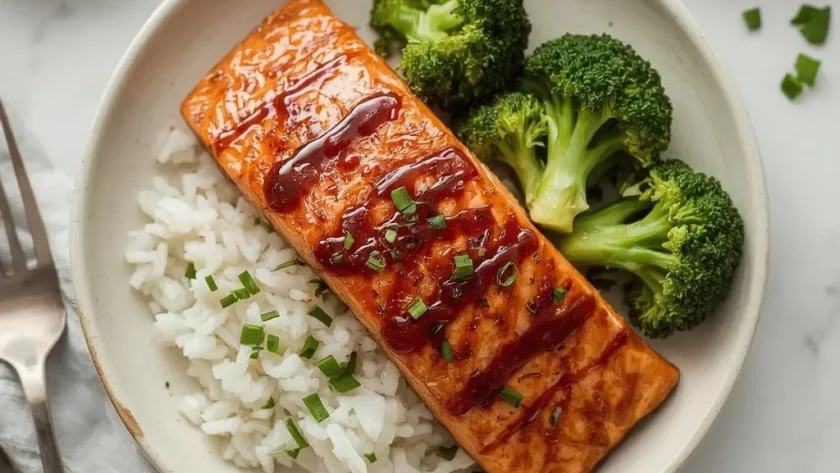
 This teriyaki madness salmon copycat recipe brings the bold, sweet-savory glaze and crispy skin of the restaurant favorite straight to your kitchen. It’s a quick stovetop dish that tastes just like the takeout version, with a glossy sauce that clings to every bite of tender salmon.
Total time is 35 minutes (15 prep, 20 cook) and it’s beginner-friendly — the only tricky part is getting a perfect sear on the skin without it sticking. Serve it over steamed rice with broccoli for a complete meal that’s ready faster than delivery.
Why You’ll Love This Recipe
- Restaurant-quality at home — The homemade sauce mimics Teriyaki Madness’s signature sweet-savory balance, and the crispy skin adds that craveable crunch.
- Quick enough for weeknights — From start to finish, you’re about 35 minutes away from a satisfying dinner that feels special.
- Simple, pantry-friendly ingredients — Soy sauce, mirin, brown sugar, and a few basics are all you need; no obscure Asian pantry staples required.
What Makes This Recipe Special
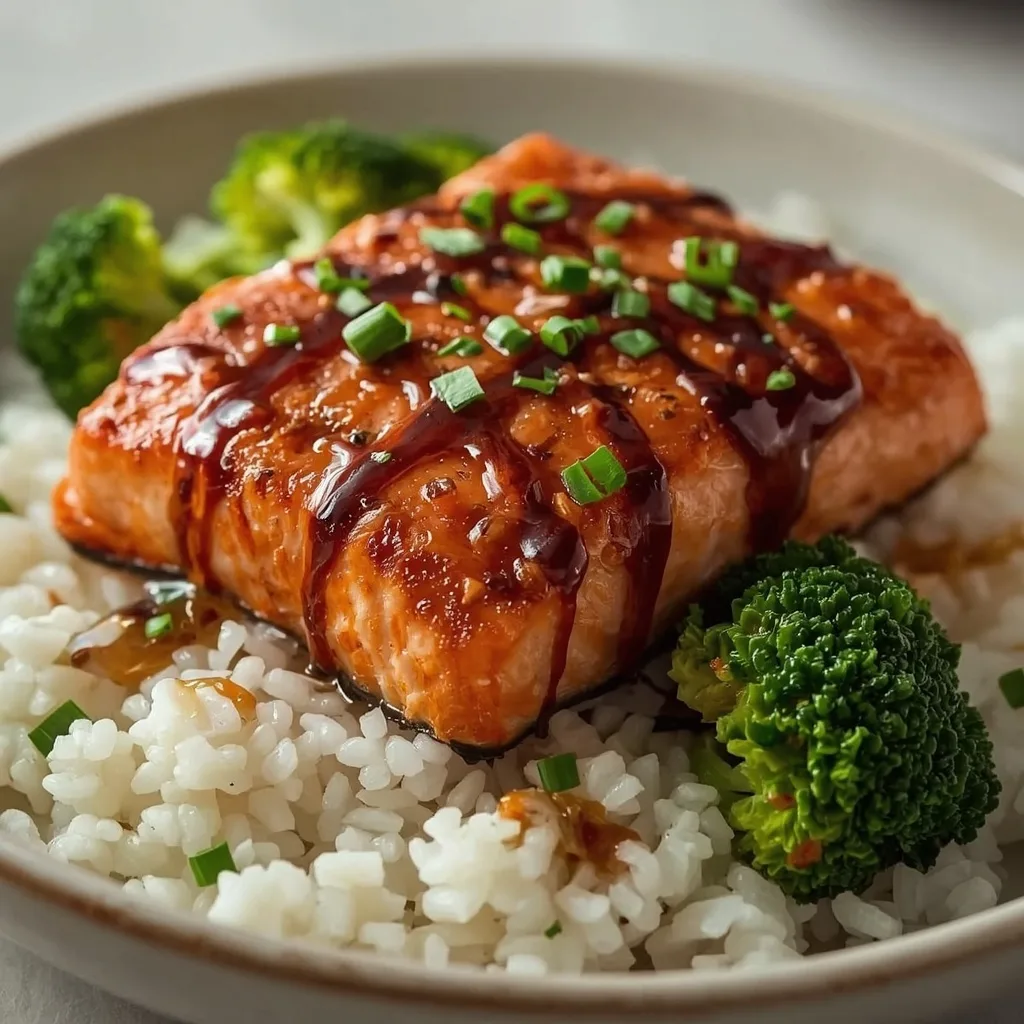
The glossy, homemade teriyaki sauce is the star — it’s thickened with a cornstarch slurry to a syrupy consistency that caramelizes on the salmon without burning. Crispy skin cooked skin-side down first delivers a textbook sear, while the sauce gets brushed on at the end so it stays sticky, not soggy. It’s a reliable weeknight method that turns out consistently moist, flaky fish with a restaurant-calibre finish.
Ingredients You’ll Need
Everything here is easy to find at a standard grocery store. A few key items make the flavor authentic.
For the Salmon and Glaze
- 4 (6-ounce) skin-on salmon fillets, patted dry — Skin-on is essential for that crispy exterior; patting dry ensures a good sear.
- 1/2 cup low-sodium soy sauce — Low-sodium prevents the sauce from becoming too salty; regular soy sauce will work but reduce salt in seasoning.
- 1/4 cup mirin (sweet rice wine) — Mirin adds sweetness and a mild tang; if you can’t find it, substitute with 1/4 cup dry sherry + 1/2 tablespoon sugar.
- 2 tablespoons sake (optional, substitute with dry sherry or water) — Sake deepens the umami; dry sherry works perfectly, or simply use water for a non-alcoholic version.
- 1/4 cup packed light brown sugar — Brown sugar gives the sauce its signature caramelized sweetness; dark brown sugar will work but makes the color darker.
- 2 cloves garlic, minced
- 1 teaspoon grated fresh ginger (from about 1-inch piece) — Fresh ginger adds a warm, zesty kick that powdered ginger can’t match.
- 1 tablespoon cornstarch — Thickens the sauce to a glossy glaze; arrowroot powder is a fine alternative.
- 2 tablespoons water (for slurry)
- 2 tablespoons vegetable oil (such as canola or grapeseed) — A neutral oil with a high smoke point is best for searing; avoid olive oil as it can burn.
For Serving
- 2 cups cooked white rice (from 1 cup dry rice) — Steamed short-grain or jasmine rice soaks up the extra sauce beautifully.
- 2 cups broccoli florets, steamed (about 6 ounces)
- Optional garnish: 1 teaspoon toasted sesame seeds, 2 green onions sliced diagonally
Equipment Needed
- Large nonstick skillet — Essential for cooking the salmon without the skin sticking; a well-seasoned cast-iron or stainless steel pan can work if you’re confident with the nonstick surface, but a nonstick skillet is easiest for beginners.
- Fish spatula — Its thin, slotted design lets you flip the fillets cleanly without breaking the delicate skin. A regular spatula can work but may tear the skin.
- Small saucepan — For making the teriyaki sauce; any small pot works.
- Pastry brush — Makes it easy to apply the glaze evenly; a spoon works in a pinch but won’t cover as evenly.
- Instant-read thermometer (optional) — Helps confirm the salmon reaches 145°F / 63°C without guessing; you can also test doneness by flaking with a fork.
Instructions to Prepare Copycat Teriyaki Madness Salmon Recipe
Follow these steps for the best results. The sauce comes together in minutes while the pan heats up.
- Make the sauce base — In a small saucepan, combine soy sauce, mirin, sake (if using), brown sugar, garlic, and ginger. Whisk over medium heat until sugar dissolves, then simmer gently for 2-3 minutes. Do not let it boil hard or it will reduce too quickly.
- Thicken with a slurry — In a small bowl, stir cornstarch and water until smooth. Whisk the slurry into the simmering sauce and cook, whisking constantly, for about 1 minute until glossy and syrupy. Remove from heat; it will thicken further as it cools.
- Prep the salmon — Pat fillets thoroughly dry with paper towels (moisture is the enemy of crispy skin). Season the flesh side lightly with salt and pepper — remember the sauce is already salty.
- Heat the skillet — Add oil to a large nonstick skillet over medium-high heat. Swirl to coat, then heat until the oil shimmers and flows like water (about 2 minutes). A shimmering surface means it’s hot enough to sear without smoking.
- Sear skin-side down — Place fillets skin-side down in the hot oil, laying them away from you to avoid splatter. Press gently with a fish spatula for 5 seconds to ensure full contact. Reduce heat to medium and cook undisturbed for 4-5 minutes. The skin will release easily from the pan when properly seared; if it sticks, cook another 30 seconds before flipping.
- Flip and cook the flesh side — Carefully flip each fillet (try to keep the skin intact). Cook 2-3 minutes for medium doneness (slightly translucent center, flakes easily) or 4 minutes for well-done. Internal temp should read 145°F / 63°C.
- Glaze with sauce — Reduce heat to low. Brush or spoon the prepared teriyaki sauce generously over the tops and sides of the fillets. Cook 30-60 seconds until the sauce warms and caramelizes slightly — do not let it burn. If the pan gets too dark, remove from heat briefly.
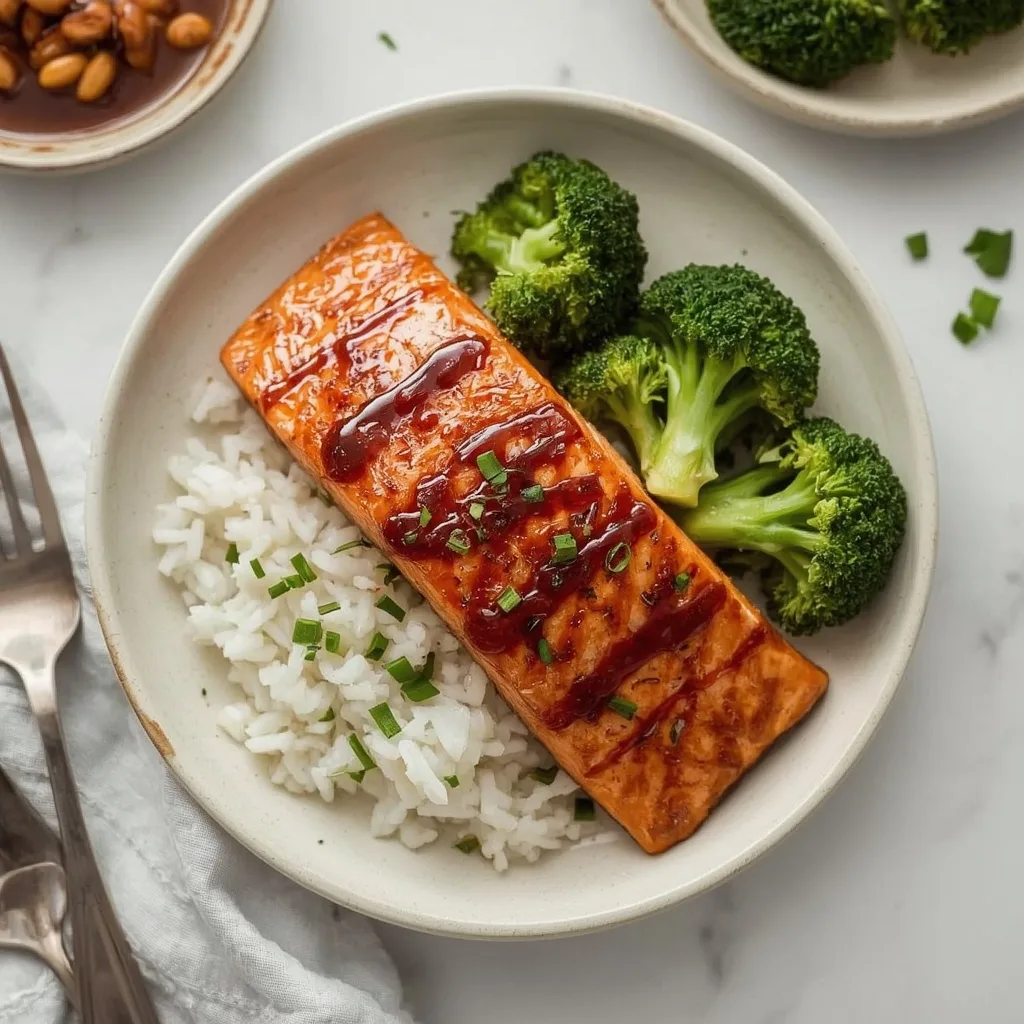
- Rest and serve — Transfer fillets to a plate or wire rack and rest 2 minutes so juices redistribute and glaze sets. Reheat remaining sauce over low heat, thinning with a splash of water if too thick. Serve one fillet over rice, skin-side up, with steamed broccoli. Drizzle extra sauce over everything and garnish with sesame seeds and green onions.
Expert Tips for a Standout Teriyaki Madness Salmon
- Pat the salmon bone-dry — Any moisture on the skin steams instead of sears, creating a pale, soggy surface. Use paper towels and press firmly.
- Don’t skip the cornstarch slurry — The sauce needs that thick, glossy texture to coat the salmon properly; a thin sauce runs off and won’t caramelize. Whisk the slurry into the simmering sauce slowly and keep whisking until it thickens.
- Let the oil shimmer before adding fish — If the oil isn’t hot enough, the skin will stick and you’ll lose the crispy texture. The shimmering “water-like” flow is your visual cue.
- Resist the urge to move the fillets — Once they go in skin-side down, leave them completely alone for 4-5 minutes. Moving them too early tears the skin and prevents a proper sear.
- Flip gently with a fish spatula — A regular spatula is too thick and can break the crisp skin. Slide the thin metal spatula under the fillet from head to tail for a clean flip.
- Apply the glaze only at the end — Adding the sauce too early will burn the sugars and make the pan bitter. Brush it on during the final 30-60 seconds for a caramelized finish without scorching.
- Rest the salmon before serving — Two minutes on a wire rack lets the juices settle and the glaze set. Skipping this step can make the fish release liquid on the plate and dilute the sauce.
Common Mistakes to Avoid
- Using wet salmon — If the fillets aren’t patted dry, the skin steams and turns rubbery instead of crispy. Always pat with paper towels just before cooking.
- Overcrowding the pan — Too many fillets at once lowers the pan’s temperature, causing them to steam rather than sear. Cook in batches if your skillet is small.
- Flipping too early — The skin won’t release if it isn’t fully seared. Wait until the fish lifts easily with a spatula; if it resists, give it 30 more seconds.
- Boiling the sauce too hard — A vigorous boil makes the sauce reduce too quickly and risks burning the sugar. Keep it at a gentle simmer for the 2-3 minutes.
- Skipping the slurry mixing — Pouring cornstarch directly into the hot sauce creates lumps. Always mix it with cold water first to form a smooth slurry.
- Overcooking the salmon — The fish continues to cook after you remove it from the pan. Pull it at 140°F / 60°C if using a thermometer, or when the center is just slightly translucent.
Variations & Ways to Customise the Teriyaki Madness Salmon
- Spicy teriyaki version — Add 1 tablespoon of sriracha or red pepper flakes to the sauce while it simmers. The heat balances the sweetness beautifully.
- Lower-sugar alternative — Replace the brown sugar with 2 tablespoons honey or maple syrup. The glaze will be slightly thinner but still delicious.
- Garlic-lovers twist — Increase the minced garlic to 4 cloves and add 1/2 teaspoon garlic powder to the sauce. The extra punch pairs well with the ginger.
- Broil instead of stovetop — Follow the oven alternative from the recipe: preheat broiler, line a baking sheet with foil, brush salmon with half the sauce, broil 4-5 minutes, flip, brush with remaining sauce, broil 3-4 minutes more.
- Make it with tofu for a vegetarian option — Press and slice extra-firm tofu into 1-inch slabs, pan-sear until golden on both sides, then brush with the teriyaki sauce. Serve the same way with rice and broccoli.
- Add a citrus note — Stir in 1 tablespoon fresh orange juice and 1 teaspoon orange zest into the sauce after removing from heat. The bright citrus cuts through the richness.
What to Serve With Teriyaki Madness Salmon
The classic combo of steamed rice and broccoli is perfect, but a few extras can round out the meal.
- Steamed jasmine or short-grain rice — The mild, slightly sticky texture catches every drop of extra teriyaki sauce.
- Simple cucumber salad — Thinly sliced cucumbers tossed with rice vinegar, a pinch of sugar, and sesame oil provide a cool, crunchy contrast.
- Miso soup — A light bowl of miso with tofu and seaweed makes a comforting starter alongside the salmon.
- Sautéed bok choy or snap peas — Quickly stir-fried with a splash of soy sauce and sesame oil, these add color and a fresh bite.
- Edamame — Steamed and lightly salted edamame is an easy side that fits the Japanese-American theme.
- Pickled ginger and wasabi — Small spoonfuls of pickled ginger and a dab of wasabi on the plate cleanse the palate between bites.
Make-Ahead Instructions
- Prepare the teriyaki sauce up to a week ahead — Cool the sauce completely, then refrigerate in an airtight jar. It will thicken; thin with 1 teaspoon water when reheating.
- Cook the rice and broccoli in advance — Make rice up to 3 days ahead and store in the fridge. Steam broccoli the day before; reheat both in the microwave when ready to serve.
- Season the salmon fillets and refrigerate uncovered — Up to 1 hour before cooking, pat the fillets dry, season lightly, and place them skin-side up on a plate in the fridge. This dries the skin further for an even crispier sear.
- Assemble individual meal prep containers — Portion rice, broccoli, and cold cooked salmon into containers. Pack extra sauce separately. When ready to eat, microwave at 50% power in 30-second bursts to avoid overheating the fish.
Storage and Reheating
Storage
- Refrigerate leftovers separately — Store the salmon, rice, and broccoli in separate airtight containers. The salmon will stay good for up to 3 days, but the skin will soften.
- Keep the sauce in a small jar — Any leftover teriyaki sauce keeps for up to a week in the fridge. It will thicken; thin with a splash of water before using.
- Do not freeze cooked salmon — Freezing changes the texture of cooked fish, making it dry and mealy. If you must freeze, do so with raw fillets and cook after thawing.
Reheating
- Oven method (best for restoring crispy skin) — Preheat to 350°F / 177°C. Place salmon skin-side up on a wire rack set over a baking sheet. Bake 8-10 minutes until heated through and the skin crisps up again.
- Stovetop method (quick and gentle) — Heat a nonstick skillet over medium-low heat with a teaspoon of oil. Place the salmon skin-side down and cook 2-3 minutes, then flip and cook 1 more minute. The skin will regain some crunch.
- Microwave method (fast but loses crispness) — Place salmon on a microwave-safe plate, cover with a damp paper towel, and microwave at 50% power in 30-second bursts. This prevents the fish from drying out but the skin will be soft.
- Air fryer method (10 minutes to crisp up) — Preheat air fryer to 350°F / 177°C. Place salmon skin-side up in the basket and cook 4-5 minutes until hot and skin is crispy.
Nutritional Breakdown (Per Serving)
Based on 1 serving = 1 fillet with 1/2 cup rice and 1/2 cup broccoli, using the sauce as listed.
- Calories — 490
- Protein — 38g
- Fat — about 16g
- Saturated Fat — around 3g
- Carbohydrates — 43g
- Fiber — 3g
- Sugar — roughly 15g
- Sodium — 820mg
- Cholesterol — 85mg
Frequently Asked Questions
Can I use frozen salmon for this teriyaki madness salmon copycat recipe?
Yes, but thaw it completely in the refrigerator overnight. Pat the fillets incredibly dry before cooking — frozen fish releases more moisture, so you’ll need extra paper towels. The cooking time will be about the same once thawed.
Why is my salmon skin sticking to the pan?
The pan likely wasn’t hot enough when you added the fillets, or the skin wasn’t dry enough. Make sure the oil shimmers before adding the fish, and press the fillets gently for 5 seconds after placing them skin-side down. Using a nonstick skillet also helps.
Can I make the teriyaki sauce ahead of time?
Absolutely. Make the sauce up to one week in advance and store it in an airtight container in the fridge. It will thicken as it cools; thin it with a teaspoon of water when reheating before you glaze the salmon.
What can I substitute for mirin?
Mirin is a sweet rice wine. To mimic its flavor, use 1/4 cup dry sherry mixed with 1/2 tablespoon of sugar. Alternatively, use 1/4 cup sake plus 1 tablespoon sugar, or simply use water — though you’ll lose a bit of sweetness and depth.
How do I know when the salmon is done without a thermometer?
The flesh should flake easily with a fork and the center will be just slightly translucent (for medium). If it’s completely opaque and flakes all the way through, it’s well-done. For the safest result, aim for an internal temp of 145°F / 63°C.
Can I double this teriyaki madness salmon copycat recipe for a crowd?
Yes, but cook the salmon in batches to avoid crowding the pan. Double the sauce ingredients and simmer the extra sauce in a larger saucepan. Keep the finished fillets warm in a 200°F / 93°C oven while you cook the rest.
Final Words
This teriyaki madness salmon copycat recipe delivers the same bold, sticky-sweet glaze and crispy-skinned salmon you crave from the restaurant, but with total control over ingredients and less waiting. The sauce alone is worth making — it’s thick, glossy, and full of umami. Give it a try the next time you want a quick dinner that feels like a treat. You might just retire your takeout menu for good.
More Recipes
PrintTeriyaki Madness Salmon Copycat
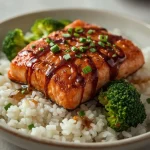
A spot-on copycat of the popular Teriyaki Madness salmon, featuring crispy-skinned fillets glazed with a sweet and savory homemade teriyaki sauce. Served over steamed rice and broccoli, this dish delivers the same bold flavor and satisfying texture as the restaurant original, with a perfectly balanced sauce that coats every bite.
- Prep Time: 15
- Cook Time: 20
- Total Time: 35
- Yield: 4 1x
- Category: Main Course
- Method: Stovetop
- Cuisine: Japanese-American
Ingredients
- 4 (6-ounce) skin-on salmon fillets, patted dry
- 1/2 cup low-sodium soy sauce
- 1/4 cup mirin (sweet rice wine)
- 2 tablespoons sake (optional, substitute with dry sherry or water)
- 1/4 cup packed light brown sugar
- 2 cloves garlic, minced
- 1 teaspoon grated fresh ginger (from about 1-inch piece)
- 1 tablespoon cornstarch
- 2 tablespoons water (for slurry)
- 2 tablespoons vegetable oil (such as canola or grapeseed)
- 2 cups cooked white rice (from 1 cup dry rice, cooked according to package)
- 2 cups broccoli florets, steamed (about 6 ounces)
- Optional garnish: 1 teaspoon toasted sesame seeds, 2 green onions sliced diagonally
Instructions
- In a small saucepan, combine the low-sodium soy sauce, mirin, sake (if using), packed light brown sugar, minced garlic, and grated ginger. Stir the mixture with a whisk until the sugar begins to dissolve, then place the pan over medium heat. Bring to a gentle simmer, stirring occasionally, and cook for 2-3 minutes until the sugar is fully dissolved and the liquid is aromatic; do not let it boil hard or the sauce may reduce too quickly.
- While the sauce simmers, in a small bowl stir together the cornstarch and water until completely smooth, forming a slurry. Whisk the slurry into the simmering sauce in a steady stream; continue whisking constantly for about 1 minute until the sauce thickens to a glossy, syrupy consistency that coats the back of a spoon. Remove the pan from the heat and set aside; the sauce will continue to thicken as it cools.
- Pat the salmon fillets dry with paper towels to remove any excess moisture. (Moisture prevents browning and crisp skin; dryness is essential for a good sear.) Season the flesh side of each fillet lightly with kosher salt and a few grinds of black pepper if desired; note that the sauce is already salty, so go easy.
- Select a large nonstick skillet large enough to hold the fillets without crowding (if needed, work in batches). Add the vegetable oil and swirl to coat the bottom. Place the skillet over medium-high heat and heat until the oil shimmers and flows like water, about 2 minutes. A shimmering surface indicates the oil is hot enough to sear but not smoking.
- Carefully place the salmon fillets skin-side down in the hot oil, laying them away from you to avoid splatter. Press gently on each fillet with a fish spatula for 5 seconds to ensure full contact between the skin and the pan. Reduce the heat to medium and cook undisturbed for 4-5 minutes; you should hear a steady sizzle. The skin will become golden brown and release easily from the pan when properly seared; if it sticks, cook another 30 seconds before attempting to flip.
- Using a thin metal spatula, carefully flip each fillet over (try to keep the skin intact). Cook on the flesh side for 2-3 minutes for a medium doneness (the center will be slightly translucent and flake easily with a fork) or 4 minutes for well-done. For precise doneness, an instant-read thermometer inserted into the thickest part should read 145°F / 63°C. Do not overcook or the salmon will become dry.
- Reduce the heat to low. Using a pastry brush or a spoon, generously coat the tops and sides of the fillets with the prepared teriyaki sauce. Continue cooking for 30-60 seconds, allowing the sauce to warm and slightly caramelize; do not let it burn. If the pan becomes too dark, remove it from the heat briefly.
- Transfer the glazed salmon fillets to a plate or wire rack. Let them rest for 2 minutes; this allows the juices to redistribute and the glaze to set slightly. While the salmon rests, reheat the remaining sauce over low heat if needed, thinning with a splash of water if it has become too thick.
- To serve, divide the warm steamed rice among four plates or bowls. Place one salmon fillet on each bed of rice, skin-side up for maximum crispness. Arrange the steamed broccoli alongside. Drizzle a tablespoon of the reserved teriyaki sauce over the salmon and broccoli. Garnish with toasted sesame seeds and sliced green onions if desired.
- For an oven alternative: Preheat the broiler to high and place an oven rack 6 inches from the heating element. Line a rimmed baking sheet with foil and lightly oil the foil. Place the salmon fillets skin-side down, brush with half the teriyaki sauce, and broil for 4-5 minutes. Carefully flip, brush with the remaining sauce, and broil another 3-4 minutes until the flesh is opaque and the glaze bubbles. Internal temperature should reach 145°F / 63°C. Serve immediately.
Notes
Storage: Leftover salmon and rice can be stored separately in airtight containers in the refrigerator for up to 3 days. The salmon skin will lose its crispness; to reheat, place it in a 350°F / 177°C oven for 8-10 minutes (skin-side up on a wire rack) to restore some crunch, or reheat gently in a hot skillet. The teriyaki sauce can be made up to a week ahead and kept refrigerated; thin with a teaspoon of water when reheating. For meal prep, portion rice and broccoli into containers, top with cold salmon, and pack extra sauce separately; reheat in the microwave at 50% power in 30-second bursts to avoid overheating the fish. Freezing is not recommended for cooked salmon as the texture degrades.
Keywords: teriyaki madness salmon copycat, teriyaki salmon recipe, salmon copycat, Japanese teriyaki salmon, pan seared salmon, teriyaki glaze salmon, quick salmon dinner, weeknight salmon, teriyaki salmon bowl, restaurant copycat salmon