
 Kendric adan
 This Instant Pot Thai Chicken Curry With Vegetables is a fragrant, creamy coconut-based curry that comes together fast without losing any depth of flavor. Tender chicken thighs, crisp-tender green beans and snap peas, and a rich green curry sauce make every spoonful satisfying.
You can have this on the table in 27 minutes total, and it is beginner-friendly despite the bold Thai flavors. The only tricky part is blooming the curry paste properly — do not skip that short step, as it makes all the difference in the final taste.
Why You’ll Love This Recipe
- Fast enough for a weeknight — The Instant Pot does the heavy lifting in just 4 minutes of pressure cooking, so dinner is ready before you finish making rice.
- Genuine Thai flavor without a trip to a specialty store — Lemongrass, ginger, fish sauce, and green curry paste deliver authentic taste using mostly common ingredients.
- Vegetables stay crisp and bright — Adding the bell pepper, green beans, and snap peas after pressure cooking means they keep their crunch and color instead of turning to mush.
What Makes This Recipe Special
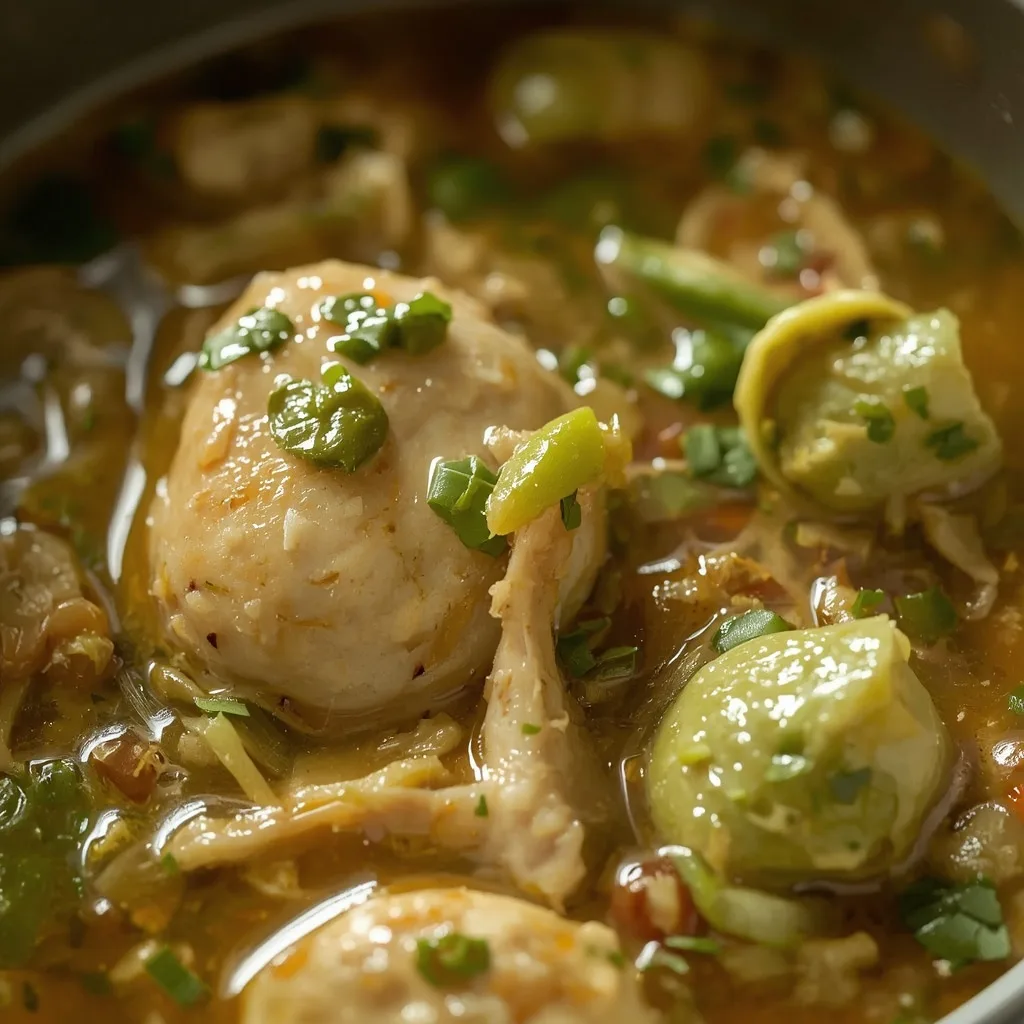
This dish layers flavor by blooming the curry paste in oil right in the pot, which deepens the spice and removes any raw taste from the paste. The result is a sauce that is creamy from full-fat coconut milk, savory from fish sauce, and bright from lime juice and fresh herbs. Every bite balances heat, sweetness, and tang without being complicated to make.
Ingredients You’ll Need
Here is everything you need, organized by category. Stick close to these amounts for the best balance.
Protein & Aromatics
- 1 1/2 pounds boneless skinless chicken thighs, cut into 1-inch cubes — Thighs stay juicy under pressure and absorb the curry flavor better than breast meat. You can swap in breast if you prefer, but reduce cooking time by 1 minute.
- 1/2 cup onion, finely diced — Yellow or white onion both work. Dice them small so they melt into the sauce.
- 3 cloves garlic, minced — Fresh garlic is essential here; pre-minced jars lack the punch this dish needs.
- 1 tablespoon fresh ginger, peeled and grated — Use a microplane for the finest texture. Dried ginger will not work the same.
- 1 stalk lemongrass, trimmed and smashed, cut into 2-inch pieces — Smashing it with the side of a knife releases the oils. Remove the tough outer leaves first.
Curry Base
- 1 tablespoon coconut oil or vegetable oil — Coconut oil adds a subtle tropical note that complements the curry. Vegetable oil is fine if that is what you have.
- 3 tablespoons Thai green curry paste — Not all brands taste the same. Look for Mae Ploy or Thai Kitchen for reliable heat and flavor.
- 1 (14-ounce) can full-fat coconut milk — Lite coconut milk will make the sauce thin and watery. Use full-fat for that rich, silky texture.
- 1/2 cup low-sodium chicken broth — Low-sodium is important here because both the curry paste and fish sauce add salt.
- 2 tablespoons fish sauce (or low-sodium soy sauce for non-fish version) — Fish sauce gives that deep umami backbone. If you skip it, use soy sauce and add a pinch more salt.
- 1 tablespoon brown sugar, packed — This balances the heat and acidity. Light or dark brown sugar both work.
Vegetables & Finishing Touches
- 1 red bell pepper, seeded and sliced into 1/4-inch strips — Red bell pepper adds sweetness and color. Orange or yellow bell pepper work too.
- 1 cup green beans, trimmed and cut into 2-inch pieces — Fresh green beans hold their texture better than frozen here.
- 1 cup snap peas, trimmed — Remove the stringy edge if they look tough. Snap peas add a pleasant crunch.
- 2 tablespoons fresh lime juice (from 1 lime) — Bottled lime juice tastes flat. Squeeze a fresh lime right before serving.
- 1/4 cup fresh basil leaves, torn (Thai basil if available) — Thai basil has a slight anise flavor that pairs beautifully with green curry. Sweet basil is a fine substitute.
- 1/4 cup fresh cilantro leaves, roughly chopped — Stir some in at the end and save a pinch for garnish.
- Kosher salt, to taste — Taste your curry before adding salt; the fish sauce and curry paste already bring plenty of sodium.
Equipment Needed
- 6-quart or larger Instant Pot — This recipe fits comfortably in a 6-quart model. A smaller pot works but you may need to reduce the broth slightly.
- Sharp chef’s knife and cutting board — You will be dicing onion, mincing garlic, and slicing vegetables. A dull knife makes this job harder than it needs to be.
- Microplane or fine grater — Grating ginger and garlic finely means they dissolve into the sauce rather than leaving chunky bits.
- Wooden spoon or silicone spatula — You need this to scrape up any browned bits from the bottom after adding liquid, which prevents the dreaded Burn warning.
- Measuring spoons — Exact amounts matter for the curry paste, fish sauce, and lime juice to keep the balance right.
Instructions to Prepare Instant Pot Thai Chicken Curry With Vegetables
Follow these steps in order, and you will have a creamy, aromatic curry with perfectly cooked chicken and vegetables.
- Sauté the aromatics — Select the Sauté function on Normal. Heat the coconut oil until shimmering, then add the diced onion. Cook, stirring occasionally, until softened and translucent, about 3 minutes. Add the garlic, ginger, and smashed lemongrass pieces; cook for 1 minute until fragrant.
- Bloom the curry paste — Add the Thai green curry paste and stir constantly for 1 minute. This step deepens the flavor and removes any raw taste from the paste. Do not rush this.
- Brown the chicken — Add the chicken thigh cubes and stir to coat with the curry paste mixture. Cook, stirring occasionally, until the chicken is no longer pink on the outside, about 3 minutes. This sears the meat slightly and helps it absorb the aromatics.
- Add the liquid and deglaze — Pour in the full-fat coconut milk and chicken broth. Add the fish sauce and brown sugar. Stir well, scraping up any browned bits from the bottom of the pot to prevent a Burn warning.
- Pressure cook — Press Cancel to stop the Sauté function. Secure the lid, set the valve to Sealing. Select Manual/Pressure Cook (High Pressure) and set the timer for 4 minutes. The Instant Pot will take about 10 minutes to come to pressure.
- Quick release and add vegetables — When the cooking cycle finishes, carefully turn the valve to Vent for a Quick Release. Once the pin drops, open the lid. Remove and discard the lemongrass pieces. Add the sliced bell pepper, green beans, and snap peas. Stir them into the hot curry; the residual heat will cook them to crisp-tender in 2 to 3 minutes. Do not pressure cook the vegetables or they turn mushy.
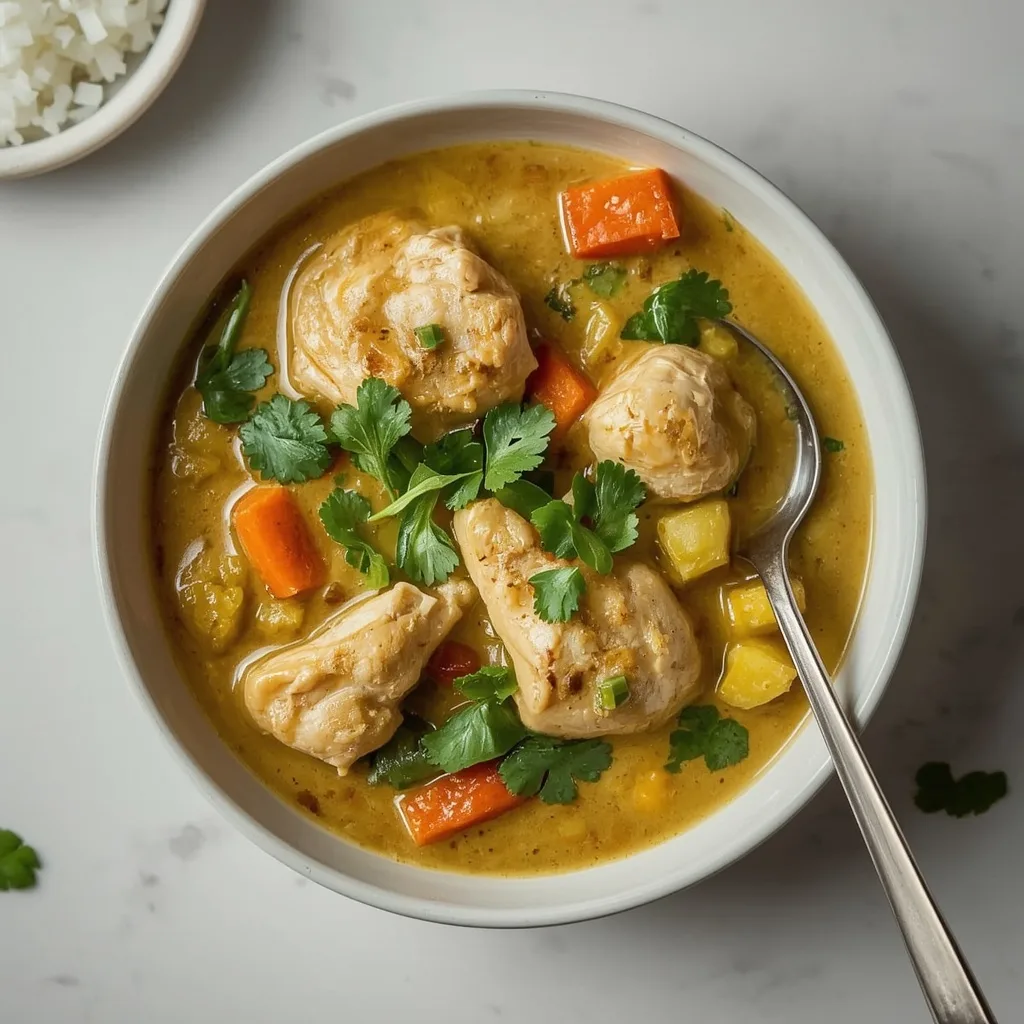
- Finish and serve — Stir in the fresh lime juice. Taste and add kosher salt as needed. Serve immediately over steamed jasmine rice, garnished with torn basil and cilantro.
Expert Tips for a Standout Instant Pot Thai Chicken Curry With Vegetables
- Bloom the paste properly — Stirring the curry paste in hot oil for a full 60 seconds is not optional. This step eliminates the raw, gritty taste and gives the sauce a deeper, more rounded flavor.
- Do not skip deglazing — After sautéing, scrape the bottom of the pot well when you add the coconut milk and broth. Any stuck-on bits will trigger the Burn sensor and stop the pressure cooking cycle.
- Keep vegetables out of the pressure cooker — Adding the bell pepper, green beans, and snap peas after pressure cooking lets them stay bright and snappy. They only need a few minutes in the residual heat to soften slightly.
- Use full-fat coconut milk only — Lite coconut milk makes a thin, watery sauce that does not coat the chicken well. Full-fat gives you the creamy texture this curry is known for.
- Taste before salting — Fish sauce and green curry paste both contain significant sodium. Add kosher salt only after you have tasted the finished curry, not before.
- Cut chicken thighs into even 1-inch cubes — Consistent pieces ensure even cooking under pressure. Larger chunks may need an extra minute, smaller ones will overcook.
- Let the curry rest 5 minutes before serving — The flavors meld together during this short rest, and the sauce thickens slightly as it cools.
Common Mistakes to Avoid
- Skipping the paste-blooming step — Adding curry paste directly to the liquid without cooking it first leaves a raw, pungent flavor. That one minute of stirring in oil is the difference between a flat curry and a deeply aromatic one.
- Pressure cooking the vegetables — Bell peppers, green beans, and snap peas turn limp and drab when pressure cooked for even a few minutes. Stirring them in after the pressure is released keeps them vibrant and crisp.
- Using low-fat or lite coconut milk — The sauce will separate and look thin rather than creamy. Full-fat coconut milk is non-negotiable for the right texture and mouthfeel.
- Cutting chicken pieces unevenly — Some pieces end up overcooked while others remain underdone. Take the extra 30 seconds to cube them uniformly.
- Forgetting to scrape the pot bottom — Browned bits left on the bottom trigger the Burn warning, which stops the pressure cycle early. A quick scrape with a wooden spoon prevents this.
- Adding all the salt at the beginning — Between the fish sauce, curry paste, and broth, the dish accumulates salt as it cooks. Season at the end after tasting to avoid an overly salty curry.
Variations & Ways to Customize Instant Pot Thai Chicken Curry With Vegetables
- Swap the protein — Use 1 1/2 pounds of peeled shrimp and cook on high pressure for 0 minutes (just come to pressure and quick release). Or substitute cubed firm tofu for a vegetarian version.
- Change the vegetables — Replace the green beans and snap peas with 1 cup of broccoli florets or 1 cup of sliced zucchini. Add them after pressure cooking the same way.
- Adjust the heat level — Use 2 tablespoons of green curry paste for a milder curry, or add 1/2 teaspoon of red chili flakes with the paste for extra fire.
- Make it dairy-free naturally — This recipe is already dairy-free. Just double-check your curry paste label if you have a strict intolerance, as some brands contain shrimp paste.
- Add more vegetables for bulk — Toss in 1 cup of baby spinach or chopped bok choy after pressure cooking. Stir until wilted, about 1 minute.
- Turn it into a soup — Add an extra 1 cup of chicken broth and 1/2 cup more coconut milk after pressure cooking. Serve with rice noodles instead of jasmine rice.
What to Serve With Instant Pot Thai Chicken Curry With Vegetables
This curry is hearty on its own, but the right sides turn it into a full meal.
- Steamed jasmine rice — The classic base. The fluffy rice soaks up the coconut sauce perfectly and balances the spice.
- Cucumber salad with rice vinegar — A cool, tangy side cuts through the richness of the curry. Thinly slice cucumber, toss with rice vinegar and a pinch of sugar.
- Fresh spring rolls — Light and refreshing, spring rolls with shrimp or tofu and herbs make a great starter before the main curry.
- Coconut sticky rice — For a sweeter twist, serve sticky rice drizzled with a little extra coconut milk on the side.
- Thai iced tea — The creamy, sweet tea balances the heat of the curry and makes the meal feel special.
- Mango with sticky rice for dessert — Ripe mango slices with a small portion of sticky rice and coconut cream end the meal on a refreshing, sweet note.
Make-Ahead Instructions
- Prepare the aromatics — Dice the onion, mince the garlic, grate the ginger, and smash the lemongrass up to 2 days ahead. Store them together in an airtight container in the fridge.
- Cut the chicken — Cube the chicken thighs and refrigerate in a sealed container for up to 1 day before cooking. Do not cut them farther ahead or they can dry out.
- Slice the vegetables — Cut the bell pepper, green beans, and snap peas up to 24 hours ahead. Keep them in a separate container so they do not get soggy.
- Cook the full curry — Make the entire recipe, then cool and refrigerate for up to 4 days. The flavors deepen overnight, so leftovers taste even better.
Storage and Reheating
Storage
- Refrigerate in an airtight container — Store leftover curry for up to 4 days. Keep the curry and rice separate to prevent the rice from getting mushy.
- Freeze in a freezer-safe container — Leave 1/2-inch headspace for expansion. The curry freezes well for up to 3 months. Label with the date.
- Cool completely before freezing — Hot curry in the freezer raises the temperature of surrounding items and can cause ice crystals. Let it cool at room temperature for 30 minutes first.
Reheating
- Stovetop reheating — Thaw overnight in the fridge if frozen. Warm in a saucepan over medium-low heat, stirring occasionally, until bubbly (about 5-7 minutes). Add a splash of water or coconut milk if the sauce has thickened too much.
- Microwave reheating — Transfer a single serving to a microwave-safe bowl. Heat on high in 1-minute increments, stirring between each, until steaming hot throughout (about 2-3 minutes total).
- Do not reheat in the Instant Pot — The pressure cooker will overcook the chicken and make the vegetables mushy. Stick to the stovetop or microwave.
- Reheat only the portion you need — Repeated cooling and reheating degrades the texture of the chicken and vegetables. Take out what you plan to eat and leave the rest stored.
Nutritional Breakdown (Per Serving)
Based on 1 serving = 1/4 of the total recipe (about 1 1/2 cups curry without rice).
- Calories: 476
- Protein: 33g
- Fat: 28g
- Saturated Fat: about 18g
- Carbohydrates: about 22g
- Fiber: 4g
- Sugar: roughly 11g
- Sodium: 890mg
- Cholesterol: around 140mg
Frequently Asked Questions
Can I freeze Instant Pot Thai Chicken Curry With Vegetables?
Yes, this curry freezes very well for up to 3 months. Let it cool completely, then transfer to a freezer-safe container with 1/2-inch headspace. Thaw overnight in the fridge before reheating on the stovetop.
How long does Instant Pot Thai Chicken Curry With Vegetables last in the fridge?
It stays good for up to 4 days in an airtight container in the refrigerator. The flavors actually deepen and improve after a day or two.
Can I use chicken breast instead of thighs?
Yes, you can substitute boneless skinless chicken breast cut into 1-inch cubes. Reduce the pressure cooking time to 3 minutes, then quick release immediately to avoid overcooking the leaner meat.
What can I use instead of fish sauce?
Low-sodium soy sauce works as a substitute. Use the same amount (2 tablespoons) and add a pinch of salt if needed after tasting.
Is this curry spicy?
It has a moderate heat level from the green curry paste, but it is not overwhelmingly hot. The coconut milk and brown sugar balance the spice. For a milder version, use only 2 tablespoons of curry paste.
Can I make this in a regular pot instead of an Instant Pot?
You can, but the cooking method changes. After sautéing the aromatics and chicken, add the coconut milk, broth, fish sauce, and sugar. Simmer covered over medium-low heat for 20 minutes, then add the vegetables and cook 5 more minutes before finishing with lime juice and herbs.
Final Words
This Instant Pot Thai Chicken Curry With Vegetables proves that bold, authentic Thai flavors do not require hours of simmering. The pressure cooker handles the chicken in minutes while you prepare the vegetables, and the final stir-in step keeps everything bright and fresh.
Give it a try on a busy weeknight, and you will see why this curry earns a regular spot in my dinner rotation.
Similar Recipes
PrintInstant Pot Thai Chicken Curry With Vegetables

This fragrant Thai green chicken curry is cooked entirely in the Instant Pot, delivering tender chicken and crisp-tender vegetables in a rich, spicy coconut broth. The curry is deeply aromatic with lemongrass and ginger, balanced by creamy coconut milk and a hint of lime. Serve over jasmine rice for a complete, satisfying weeknight meal.
- Prep Time: 15
- Cook Time: 12
- Total Time: 27
- Yield: 4 1x
- Category: Main Course
- Method: Pressure Cooker
- Cuisine: Thai
Ingredients
- 1 1/2 pounds boneless skinless chicken thighs, cut into 1-inch cubes
- 1 tablespoon coconut oil or vegetable oil
- 1/2 cup onion, finely diced
- 3 cloves garlic, minced
- 1 tablespoon fresh ginger, peeled and grated
- 1 stalk lemongrass, trimmed and smashed, cut into 2-inch pieces
- 3 tablespoons Thai green curry paste
- 1 (14-ounce) can full-fat coconut milk
- 1/2 cup low-sodium chicken broth
- 2 tablespoons fish sauce (or low-sodium soy sauce for non-fish version)
- 1 tablespoon brown sugar, packed
- 1 red bell pepper, seeded and sliced into 1/4-inch strips
- 1 cup green beans, trimmed and cut into 2-inch pieces
- 1 cup snap peas, trimmed
- 2 tablespoons fresh lime juice (from 1 lime)
- 1/4 cup fresh basil leaves, torn (Thai basil if available)
- 1/4 cup fresh cilantro leaves, roughly chopped
- Kosher salt, to taste
Instructions
- Select the Sauté function on the Instant Pot and set to Normal. Add the coconut oil and let heat until shimmering, about 1 minute. Add the diced onion and cook, stirring occasionally, until softened and translucent, about 3 minutes. Add the minced garlic, grated ginger, and smashed lemongrass pieces; cook for 1 minute until fragrant.
- Add the Thai green curry paste to the pot. Stir constantly for 1 minute to bloom the paste in the oil, which deepens its flavor and removes any raw taste.
- Add the chicken thigh cubes and stir to coat with the curry paste mixture. Cook, stirring occasionally, until the chicken is no longer pink on the outside, about 3 minutes. This step ensures the meat sears slightly and absorbs the aromatics.
- Pour in the full-fat coconut milk and chicken broth. Add the fish sauce and brown sugar. Stir well to combine, scraping up any browned bits from the bottom of the pot to prevent a Burn warning.
- Press Cancel to stop the Sauté function. Secure the lid, making sure the pressure valve is set to Sealing. Select Manual/Pressure Cook (High Pressure) and set the timer for 4 minutes. The Instant Pot will take about 10 minutes to come to pressure.
- Once the cooking cycle is complete, perform a Quick Release by carefully turning the pressure valve to Vent. Allow all steam to escape, then open the lid when the pin drops. The curry will be bubbling and aromatic.
- Remove and discard the lemongrass pieces. Add the sliced red bell pepper, green beans, and snap peas to the pot. Stir them into the hot curry; the residual heat will cook them to crisp-tender in 2 to 3 minutes. Do not pressure cook the vegetables, or they will become mushy.
- Stir in the fresh lime juice. Taste and adjust seasoning with kosher salt as needed. The curry should be savory, slightly sweet, and tangy.
- Serve immediately over steamed jasmine rice. Garnish each bowl with torn basil leaves and chopped cilantro. For extra heat, serve with sliced fresh red chili or a drizzle of chili oil.
Notes
Store leftover curry in an airtight container in the refrigerator for up to 4 days. The flavors will deepen overnight. Freeze for up to 3 months in a freezer-safe container, leaving 1/2-inch headspace. To reheat, thaw overnight in the fridge, then warm in a saucepan over medium-low heat, stirring occasionally, until bubbly (about 5-7 minutes) or microwave on high in 1-minute increments. Add a splash of water or coconut milk if the sauce has thickened too much. Do not reheat in the Instant Pot, as it may overcook the chicken.
Nutrition
- Calories: 476
- Sugar: 11g
- Sodium: 890mg
- Unsaturated Fat: 18g
- Trans Fat: 28g
- Carbohydrates: 22g
- Fiber: 4g
- Protein: 33g
- Cholesterol: 141mg
Keywords: Instant Pot Thai chicken curry, Thai green curry, chicken curry with vegetables, pressure cooker curry, coconut curry chicken, weeknight dinner, Thai chicken recipe, easy curry, one pot meal, gluten free curry