 Kendric adan
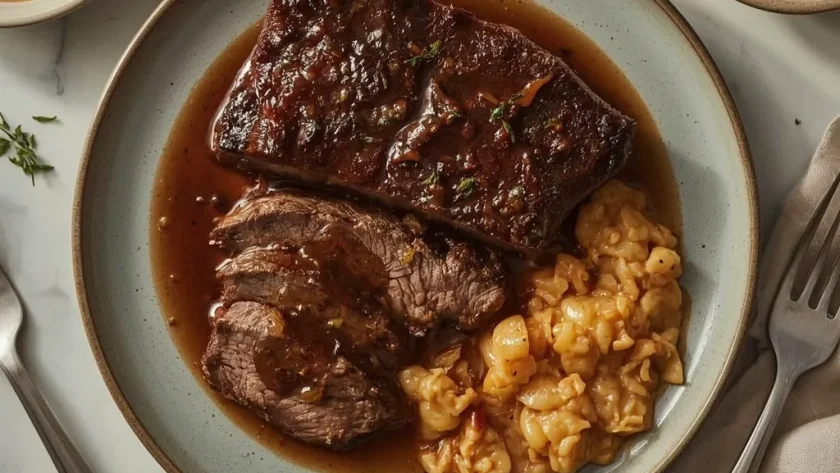
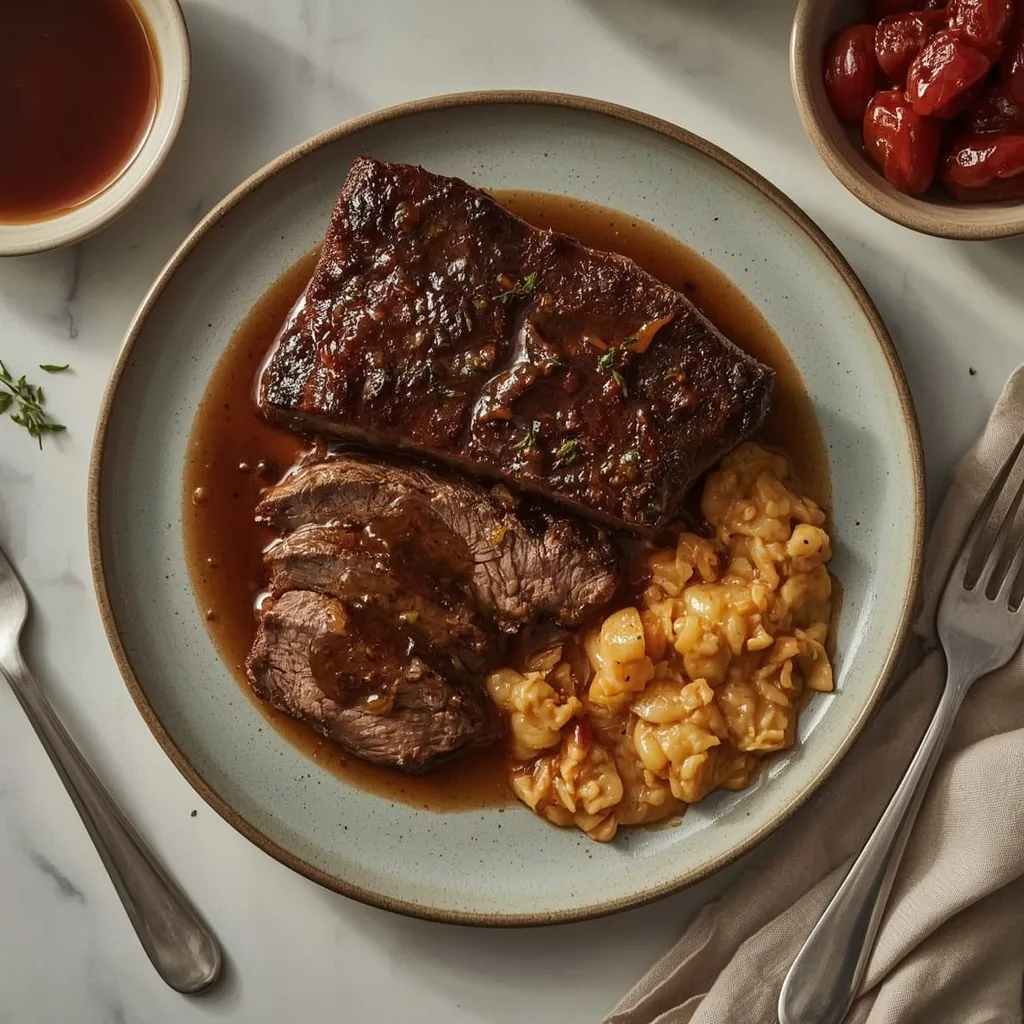
 Beef Brisket is a classic comfort dish that transforms a tough cut of meat into something incredibly tender and flavorful. The slow braising process creates a rich, savory crust and a deeply satisfying jus that coats every slice.
This recipe takes about 4 hours and 20 minutes total and is perfect for a Sunday dinner or a special occasion. The only tricky part is getting the sear right, but with a little patience, it’s completely doable for any home cook.
Why You’ll Love This Recipe
- Tender results every time — The low-and-slow braising method guarantees meat that pulls apart with a fork, never dry or tough.
- Rich, layered flavor — The combination of a dark crust, aromatic vegetables, and a savory tomato-based jus creates depth without any complicated steps.
- Simple ingredients — You probably have most of these on hand already, and there is nothing exotic or hard to find here.
What Makes This Recipe Special
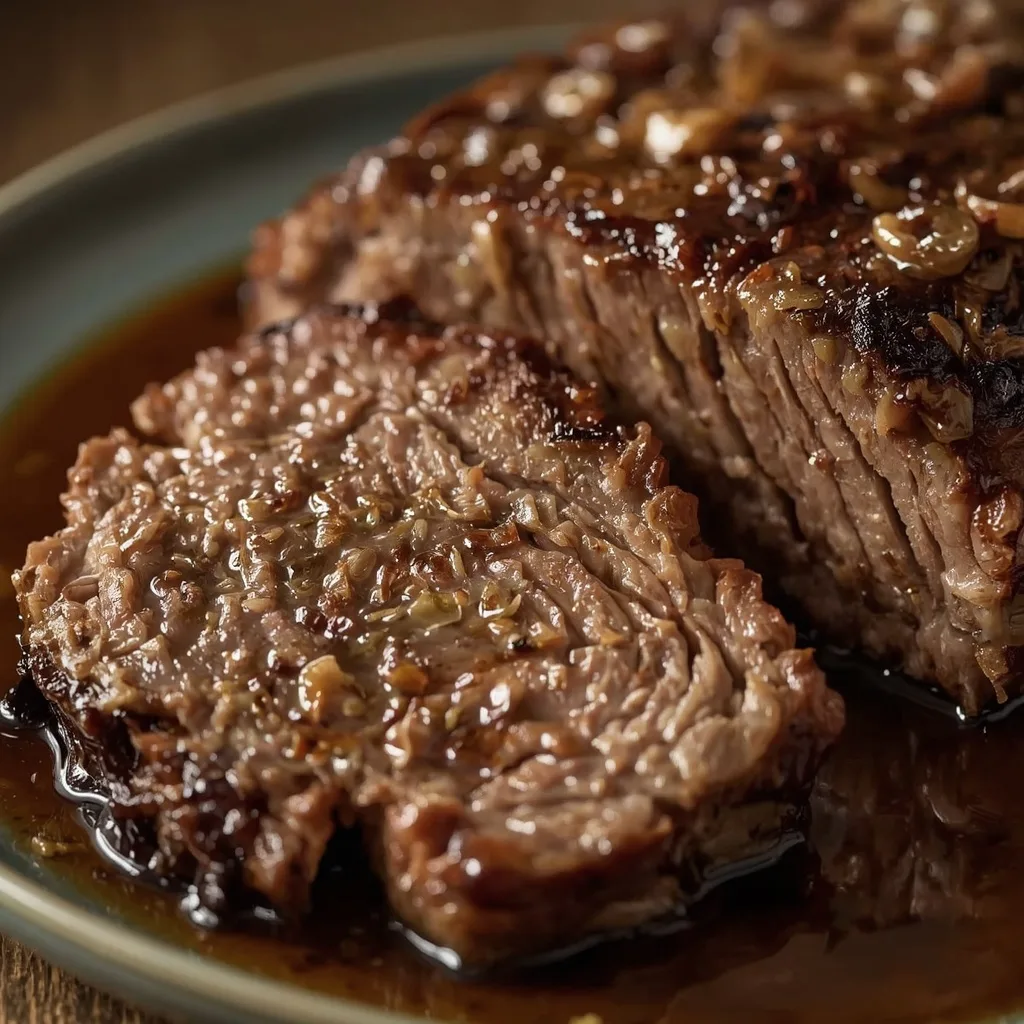
The secret is the careful searing of the brisket before braising. This step builds a deep mahogany crust that gives the finished dish its signature savory intensity. The result is meat that is silky and moist, with a jus that is rich but not heavy.
Ingredients You’ll Need
Here is everything you need to make this dish. Most items are pantry staples.
For the Brisket and Seasoning
- 3 lb beef brisket, flat cut, with 1/4 inch fat cap — The fat cap keeps the meat moist during the long cook. Look for a piece with even thickness for consistent cooking.
- 2 tsp kosher salt — Use kosher for better adherence and flavor; avoid fine table salt which can be too salty.
- 1 tsp black pepper, freshly ground — Freshly ground pepper adds a more robust punch than pre-ground.
For the Aromatics and Braising Liquid
- 2 tbsp olive oil — A neutral oil with a medium smoke point is perfect for searing at high heat.
- 1 large yellow onion, cut into 1/2-inch dice — Onions add sweetness and body to the braising liquid as they soften.
- 2 medium carrots, peeled and cut into 1/2-inch rounds — Carrots provide subtle sweetness and hold up well after hours of cooking.
- 3 cloves garlic, minced — Fresh garlic is essential; jarred can taste flat and bitter.
- 1 can (14.5 oz) whole peeled tomatoes, crushed by hand — Hand-crushing gives a chunkier texture than pureed, adding body to the sauce.
- 1 cup low-sodium beef broth — Low-sodium lets you control the final salt level; full-sodium can make the dish too salty after reduction.
- 2 tbsp tomato paste — This concentrates the tomato flavor and deepens the color of the braising liquid.
- 1 tbsp Worcestershire sauce — Adds a savory, umami kick that beef loves.
- 2 sprigs fresh thyme — Fresh thyme holds up better than dried during the long braise.
- 1 bay leaf — A classic aromatic that infuses the liquid with a subtle herbal note. Remove before serving.
Equipment Needed
Having the right tools makes the process smoother. Here is what you will need.
- Large, heavy-bottomed Dutch oven (7-quart recommended) — This holds heat evenly and lets you sear and braise in one pot, saving cleanup. A heavy roasting pan with a lid works as an alternative.
- Tongs — Essential for flipping the brisket without piercing the meat, which would release juices.
- Thin spatula — Helpful for lifting the brisket to check the crust without tearing it.
- Wooden spoon — The best tool for scraping up browned bits from the pot bottom without damaging the surface.
- Cutting board with a well — Catches any juices when you slice the rested brisket, which you can add back to the sauce.
Instructions to Prepare Beef Brisket
Follow these steps closely, and you will get perfect results every time. The key is not rushing the sear or the rest.
- Prep the brisket — Remove the brisket from the fridge 30 minutes before cooking to take the chill off. Pat dry with paper towels. Season all over with kosher salt and black pepper, pressing the seasoning into the meat so it adheres.
- Preheat and sear — Position a rack in the lower third of the oven and preheat to 325°F / 163°C. Heat olive oil in a large, heavy-bottomed Dutch oven over medium-high heat until the oil shimmers. Carefully place the brisket fat-side down into the oil. Sear without moving for 4–5 minutes, until a deep mahogany brown crust forms. Flip with tongs and sear the opposite side for another 4 minutes. Use a thin spatula to lift and check doneness—the crust should be dark and crisp. Transfer brisket to a plate.
- Cook the vegetables — Reduce heat to medium. Add diced onion and carrot to the pot. Cook, stirring occasionally with a wooden spoon to scrape up browned bits, for 6–8 minutes until the onion is translucent and starting to brown at edges.
- Add garlic and tomato paste — Add minced garlic and cook, stirring constantly, for 30 seconds until fragrant. Do not let the garlic burn. Stir in tomato paste and cook for 1 minute, until it darkens slightly and smells rich.
- Build the braising liquid — Pour in the crushed tomatoes, beef broth, and Worcestershire sauce. Add thyme sprigs and bay leaf. Bring to a simmer over medium-high heat, then reduce heat to medium-low and let bubble gently for 2 minutes. Taste the liquid and adjust salt or pepper if needed—it should taste slightly salty to balance the meat.
- Return brisket to pot — Return the brisket to the pot, fat-side up, settling it into the liquid so the braising liquid comes about halfway up the meat. The top of the brisket should be exposed; this prevents it from becoming waterlogged.
- Braise in the oven — Cover the Dutch oven with a tight-fitting lid. Transfer to the preheated oven. Braise for 3 hours, undisturbed. At the 3-hour mark, test for tenderness: insert a fork into the thickest part of the brisket; it should go in with little resistance. If still firm, return to oven for 30-minute intervals until easily pierced.
- Rest and reduce the sauce — When tender, remove pot from oven. Transfer brisket to a cutting board and tent loosely with foil. Let rest for 15 minutes—this allows juices to redistribute so slices stay moist. Meanwhile, skim excess fat off the braising liquid with a spoon. Discard thyme sprigs and bay leaf. Place the pot with the braising liquid over medium-high heat and bring to a boil. Cook for 3–5 minutes, stirring occasionally, until the liquid reduces by about one-quarter and thickens slightly to a sauce-like consistency.
- Slice and serve — Slice the brisket across the grain into 1/4-inch-thick slices. When slicing across the grain, you are cutting perpendicular to the visible muscle fibers, which shortens them for maximum tenderness. Arrange slices on a serving platter. Spoon some of the sauce over the meat and serve the remaining sauce on the side. Serve immediately with the braised carrots and onions.
Expert Tips for a Standout Beef Brisket
These tips come from years of trial and error. They will help you avoid common pitfalls.
- Pat the meat dry before seasoning — Moisture on the surface prevents a good sear. Dry brisket browns faster and develops a deeper crust.
- Let the brisket come to room temperature — Starting with a cold brisket lowers the pan temperature and can lead to steaming rather than searing. Thirty minutes off the fridge is enough.
- Sear undisturbed for the full time — Moving the meat too early tears the crust. The crust releases naturally when it is ready, so trust the process.
- Use a fork to test tenderness, not a thermometer — Brisket is done when it is fork-tender, not at a specific internal temperature. A fork should slide in like butter.
- Rest the meat before slicing — Slicing too soon lets all the juices run out, leaving dry meat. A 15-minute rest under foil makes a noticeable difference.
- Slice against the grain every time — Cutting with the grain leaves long, tough fibers that are hard to chew. Always cut perpendicular to the muscle lines.
Common Mistakes to Avoid
Here are the most frequent issues I have seen in my kitchen and how to sidestep them.
- Not searing long enough — A pale crust means less flavor. Aim for a deep brown, almost dark mahogany, before moving on.
- Overcrowding the pot — Too many vegetables in the pan at once lowers the temperature and they steam instead of browning. Cook them in batches if needed.
- Adding too much liquid — The braising liquid should only come halfway up the brisket. Submerging it completely makes the meat waterlogged and dilutes the flavor.
- Forgetting to skim fat — Excess fat in the sauce makes it greasy and masks the other flavors. Skim it off before reducing for a cleaner taste.
- Skipping the rest time — Cutting into the brisket immediately dries it out. That 15-minute rest is non-negotiable for juicy slices.
Variations & Ways to Customize Beef Brisket
This recipe is a great starting point. Here are some easy ways to change it up.
- Swap the vegetables — Replace the carrots with parsnips or add diced celery for a classic mirepoix base. Both hold up well to long cooking.
- Add heat — Stir in a pinch of red pepper flakes or a minced chipotle pepper in adobo sauce to the braising liquid for a smoky kick.
- Use a different herb — Substitute the thyme with fresh rosemary or oregano for a different herbal note. Use about half the amount since they are stronger.
- Go sweeter — Add a chopped apple or pear to the vegetables during softening. The fruit adds a subtle sweetness that complements the beef beautifully.
- Make it smoky — Add a teaspoon of smoked paprika or a few drops of liquid smoke to the braising liquid for a campfire flavor without actual smoke.
What to Serve With Beef Brisket
This dish stands well on its own, but the right sides make it a complete meal. Here are my favorite pairings.
- Mashed potatoes — The creamy texture soaks up the rich jus perfectly, making every bite taste like a warm hug.
- Roasted root vegetables — A mix of carrots, parsnips, and sweet potatoes roasted with olive oil and thyme complements the savory meat beautifully.
- Simple green salad — A crisp salad with a tangy vinaigrette cuts through the richness of the brisket without overwhelming it.
- Buttered egg noodles — Wide egg noodles tossed in butter and parsley provide a soft, satisfying bed for the sliced brisket and sauce.
- Steamed broccoli or green beans — Bright green vegetables add color and freshness that balance the heaviness of the dish.
Make-Ahead Instructions
This brisket actually tastes better the next day. Here is how to prep it in advance.
- Braise up to 3 days ahead — Cook the brisket completely, then let it cool in the pot. Refrigerate the whole pot covered, or transfer meat and sauce to a container. Reheat as directed.
- Slice after resting — Slice the brisket before storing if you want to serve it cold in sandwiches. Otherwise, leave it whole and slice after reheating.
- Freeze for up to 3 months — Place sliced brisket and sauce in a freezer-safe container. Label with the date and freeze. Thaw overnight in the fridge before reheating.
Storage and Reheating
Storage
- Refrigerator — Store leftover brisket in the sauce in an airtight container. It will stay fresh for up to 4 days.
- Freezer — Freeze sliced brisket and sauce together in a freezer-safe container for up to 3 months. Squeeze out as much air as possible to prevent freezer burn.
- Separate meat and sauce if preferred — If you plan to use the sauce separately later, store it in its own container. The meat stays moister when stored in the sauce though.
Reheating
- Oven method — Place slices and sauce in a covered baking dish at 300°F / 149°C for 15–20 minutes, until steaming. This is the best method for keeping the meat moist.
- Microwave method — For a quick single portion, place a slice with a little sauce on a plate. Cover with a damp paper towel and microwave on high for 1–2 minutes. Check after 1 minute to avoid overcooking.
- Stovetop method — Put the brisket slices and sauce in a small skillet over medium-low heat. Cover and warm gently for 5–7 minutes, turning once.
Nutritional Breakdown (Per Serving)
Based on 1 serving out of 4 total.
- Calories: 580
- Protein: 52g
- Fat: 34g
- Carbohydrates: about 12g
- Fiber: 2g
- Sugar: around 6g
- Sodium: 810mg
Frequently Asked Questions
Can I make Beef Brisket in a slow cooker?
Yes, but the searing step is still important to build flavor. After searing the brisket and cooking the vegetables on the stovetop, transfer everything to a slow cooker and cook on low for 8–10 hours or on high for 5–6 hours.
How long does Beef Brisket last in the fridge?
Stored properly in an airtight container with the sauce, it will keep for up to 4 days. If you plan to keep it longer, freeze it instead.
Can I freeze this dish?
Yes, it freezes well for up to 3 months. The sauce helps protect the meat from drying out in the freezer. Thaw overnight in the fridge before reheating.
Why is my brisket tough?
It likely needed more cooking time. The connective tissue in brisket takes hours to break down—keep braising in 30-minute increments until a fork slides in easily. Also, make sure you sliced against the grain.
Do I have to remove the fat cap before cooking?
No, leave the 1/4-inch fat cap on. It bastes the meat during cooking and prevents it from drying out. You can trim excess fat off the sauce after cooking if you prefer less richness.
What is the best cut of brisket for this recipe?
The flat cut works best here because it is leaner and slices cleanly. The point cut has more marbling and is also delicious, but it may fall apart more easily when sliced.
Final Words
This Beef Brisket recipe is one of those dishes that feels special without being complicated. Give it a try, and I think you will agree that the reward is well worth the time.
Similar Recipes
- White Bean Chicken Chili
- Taco Spaghetti
- Chicken Casserole
- Instant Pot Thai Chicken Curry With Vegetables
Slow-Braised Beef Brisket
This beef brisket is melt-in-your-mouth tender with a rich, savory crust and a deeply flavored jus. Low-and-slow braising transforms a tough cut into succulent slices, perfect for a hearty main course.
- Prep Time: 20
- Cook Time: 240
- Total Time: 260
- Yield: 4 1x
- Category: Main Course
- Method: Braising
- Cuisine: American
Ingredients
- 3 lb beef brisket, flat cut, with 1/4 inch fat cap
- 2 tsp kosher salt
- 1 tsp black pepper, freshly ground
- 2 tbsp olive oil
- 1 large yellow onion, cut into 1/2-inch dice
- 2 medium carrots, peeled and cut into 1/2-inch rounds
- 3 cloves garlic, minced
- 1 can (14.5 oz) whole peeled tomatoes, crushed by hand
- 1 cup low-sodium beef broth
- 2 tbsp tomato paste
- 1 tbsp Worcestershire sauce
- 2 sprigs fresh thyme
- 1 bay leaf
Instructions
- Remove brisket from refrigerator 30 minutes before cooking to take the chill off. Pat dry with paper towels. Season all over with kosher salt and black pepper, pressing the seasoning into the meat so it adheres.
- Position a rack in the lower third of the oven and preheat to 325°F / 163°C. Heat olive oil in a large, heavy-bottomed Dutch oven (preferably 7-quart) over medium-high heat until the oil shimmers.
- Carefully place the brisket fat-side down into the oil. Sear without moving for 4–5 minutes, until a deep mahogany brown crust forms. Flip with tongs and sear the opposite side for another 4 minutes. Use a thin spatula to lift and check doneness—the crust should be dark and crisp. Transfer brisket to a plate.
- Reduce heat to medium. Add diced onion and carrot to the pot. Cook, stirring occasionally with a wooden spoon to scrape up browned bits, for 6–8 minutes until the onion is translucent and starting to brown at edges.
- Add minced garlic and cook, stirring constantly, for 30 seconds until fragrant. Do not let the garlic burn. Stir in tomato paste and cook for 1 minute, until it darkens slightly and smells rich.
- Pour in the crushed tomatoes, beef broth, and Worcestershire sauce. Add thyme sprigs and bay leaf. Bring to a simmer over medium-high heat, then reduce heat to medium-low and let bubble gently for 2 minutes. Taste the liquid and adjust salt or pepper if needed—it should taste slightly salty to balance the meat.
- Return the brisket to the pot, fat-side up, settling it into the liquid so the braising liquid comes about halfway up the meat. The top of the brisket should be exposed; this prevents it from becoming waterlogged.
- Cover the Dutch oven with a tight-fitting lid. Transfer to the preheated oven. Braise for 3 hours, undisturbed. At the 3-hour mark, test for tenderness: insert a fork into the thickest part of the brisket; it should go in with little resistance. If still firm, return to oven for 30-minute intervals until easily pierced.
- When tender, remove pot from oven. Transfer brisket to a cutting board and tent loosely with foil. Let rest for 15 minutes—this allows juices to redistribute so slices stay moist. Meanwhile, skim excess fat off the braising liquid with a spoon.
- Discard thyme sprigs and bay leaf. Place the pot with the braising liquid over medium-high heat and bring to a boil. Cook for 3–5 minutes, stirring occasionally, until the liquid reduces by about one-quarter and thickens slightly to a sauce-like consistency.
- Slice the brisket across the grain into 1/4-inch-thick slices. When slicing across the grain, you are cutting perpendicular to the visible muscle fibers, which shortens them for maximum tenderness.
- Arrange slices on a serving platter. Spoon some of the sauce over the meat and serve the remaining sauce on the side. Serve immediately with the braised carrots and onions.
Notes
Store leftover brisket in the sauce in an airtight container in the refrigerator for up to 4 days. To freeze, place sliced brisket and sauce in a freezer-safe container for up to 3 months. To reheat, place slices and sauce in a covered baking dish at 300°F / 149°C for 15–20 minutes, or microwave individual portions covered with a damp paper towel for 1–2 minutes until steaming.
Nutrition
- Calories: 580
- Sugar: 6g
- Sodium: 810mg
- Unsaturated Fat: 11g
- Carbohydrates: 12g
- Fiber: 2g
- Protein: 52g
- Cholesterol: 155mg
Keywords: beef brisket, braised brisket, slow-cooked brisket, tender brisket recipe, American comfort food, brisket main dish, oven braised beef, kosher salt brisket, brisket with carrots, weekend dinner